Yellowstone with Kids: A Family Guide to the Figure-Eight Loop (2026)
Plan Yellowstone with kids using a Lower Loop and Upper Loop split, stroller-friendly boardwalks, wildlife safety distances, and a 3-day itinerary.
On this page
Yellowstone with Kids: A Family Guide to the Figure-Eight Loop
Last updated July 2026. Yellowstone with kids works best when you split the park's 2.2-million-acre figure-eight loop into two separate days instead of one long drive. This guide ranks the boardwalks by stroller access, times geysers against toddler attention spans, and fits into a broader family national park guide. Expect specific wait times, wildlife distances, and lodging trade-offs here, not generic scenery advice.
Free guide: Stress-Free Flying with Kids
The pre-flight checklist, carry-on packing list, and in-flight survival plan we use on every family trip — from toddlers to teens.
Yellowstone with Kids: Taming the Figure-Eight Loop
Yellowstone with kids starts with a logistics problem, not a sightseeing list. The park's main road forms a figure eight covering roughly 2.2 million acres, and driving the whole loop without stopping takes seven to eight hours. That number alone rules out seeing both loops in a single day with young kids in the car. Split the trip instead: treat one day as a Lower Loop day and a separate day as an Upper Loop day. Many families pair this trip with Grand Teton National Park, just south of Yellowstone's south entrance, since the drive between the two parks adds only a couple of hours. Compared with a smaller, boardwalk-dense park like the one covered in an Acadia family trip, Yellowstone simply demands more driving time between stops. Old Faithful and the Grand Prismatic boardwalk are the highest-engagement stops for young kids, since both deliver a payoff within minutes. Long wildlife drives through Lamar or Hayden Valley ask for more patience, so budget snacks and a portable activity for the slower stretches. Cell service is unreliable to nonexistent across most of the park's interior. Download offline maps in the NPS app or Google Maps before you reach the entrance gate, since you won't be able to load them once you're inside.
The Lower Loop: Geysers, Paint Pots, and the Grand Canyon of the Yellowstone
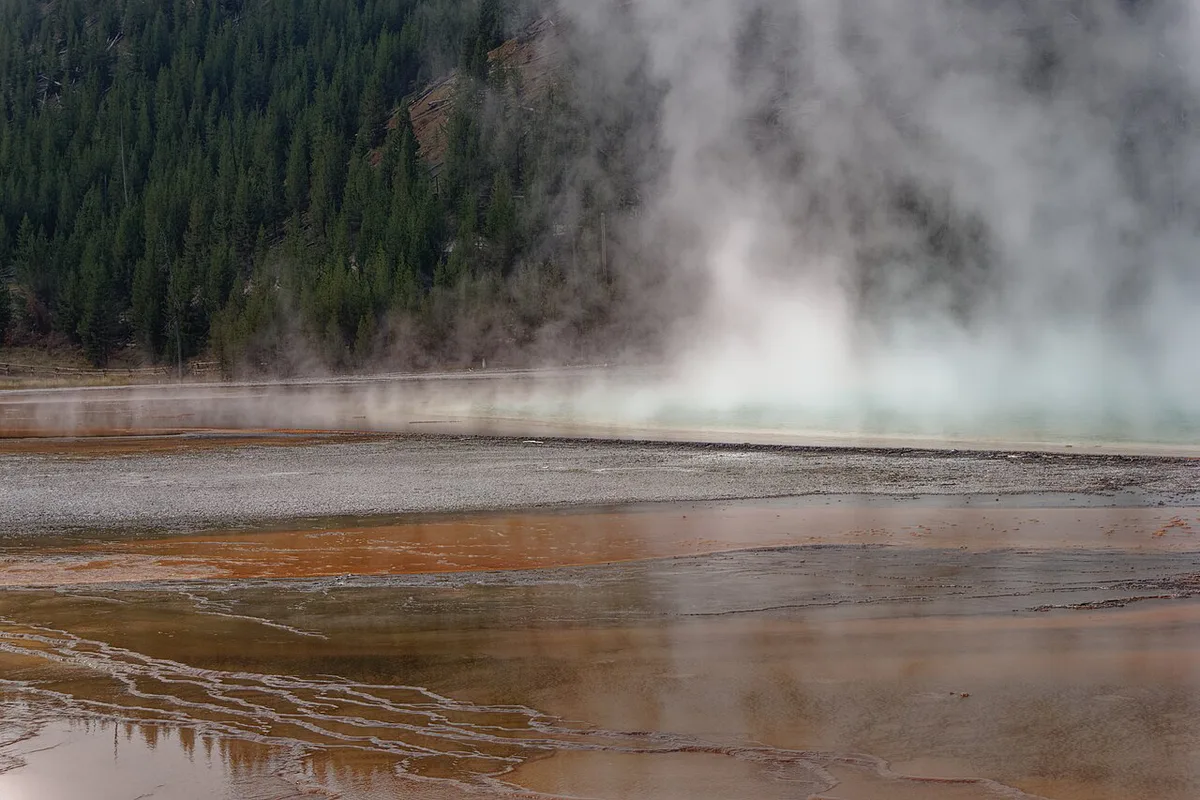
The Lower Loop covers the park's biggest geyser basins and its canyon overlooks, and it easily fills a full day. Old Faithful erupts every 60 to 100 minutes. The visitor center posts predicted eruption times. Use that window to plan a snack break or a bathroom stop instead of standing at the rail the whole time. Grand Prismatic Spring offers two viewing options. The overlook trail runs 1.6 miles round trip and is mostly stroller-friendly. The final stretch is steep and unpaved. Plan on carrying a toddler for that last short climb. The boardwalk option stays flat the entire way, but it puts kids within arm's reach of near-boiling water. Hold hands the whole time, or keep a stroller positioned between your child and the edge. Fountain Paint Pot sits on a short boardwalk loop mixing bubbling mud pots with steam vents, an easy add for a Lower Loop day. Nearby, Great Fountain Geyser erupts far less predictably, every 9 to 15 hours, so treat any eruption there as a bonus rather than something to plan around. Morning Glory Pool, a smaller color-graded hot spring similar to Grand Prismatic, sits along an easy, stroller-friendly boardwalk on the Upper Geyser Basin trail near Old Faithful. Artist Point looks down into the Grand Canyon of the Yellowstone from a boardwalk viewpoint. This canyon is a different landmark from Arizona's Grand Canyon. Families weighing that separate trip instead can compare notes with a Grand Canyon family visit.
- Old Faithful: boardwalk viewing, stroller-friendly, eruption every 60-100 minutes
- Grand Prismatic Overlook Trail: 1.6 miles round trip, stroller-friendly except a steep final stretch
- Grand Prismatic Boardwalk: flat and stroller-friendly, keep toddlers within arm's reach of hot water
- Fountain Paint Pot: short boardwalk loop, stroller-friendly
- Great Fountain Geyser: boardwalk viewing, stroller-friendly, eruption every 9-15 hours
- Morning Glory Pool: boardwalk viewing on the Upper Geyser Basin trail, stroller-friendly
- Artist Point: boardwalk viewpoint over the Grand Canyon of the Yellowstone, stroller-friendly
- West Thumb Geyser Basin: boardwalk loop on Yellowstone Lake, stroller-friendly, easy add to a Lower Loop day
The Upper Loop: Wildlife and Waterfalls
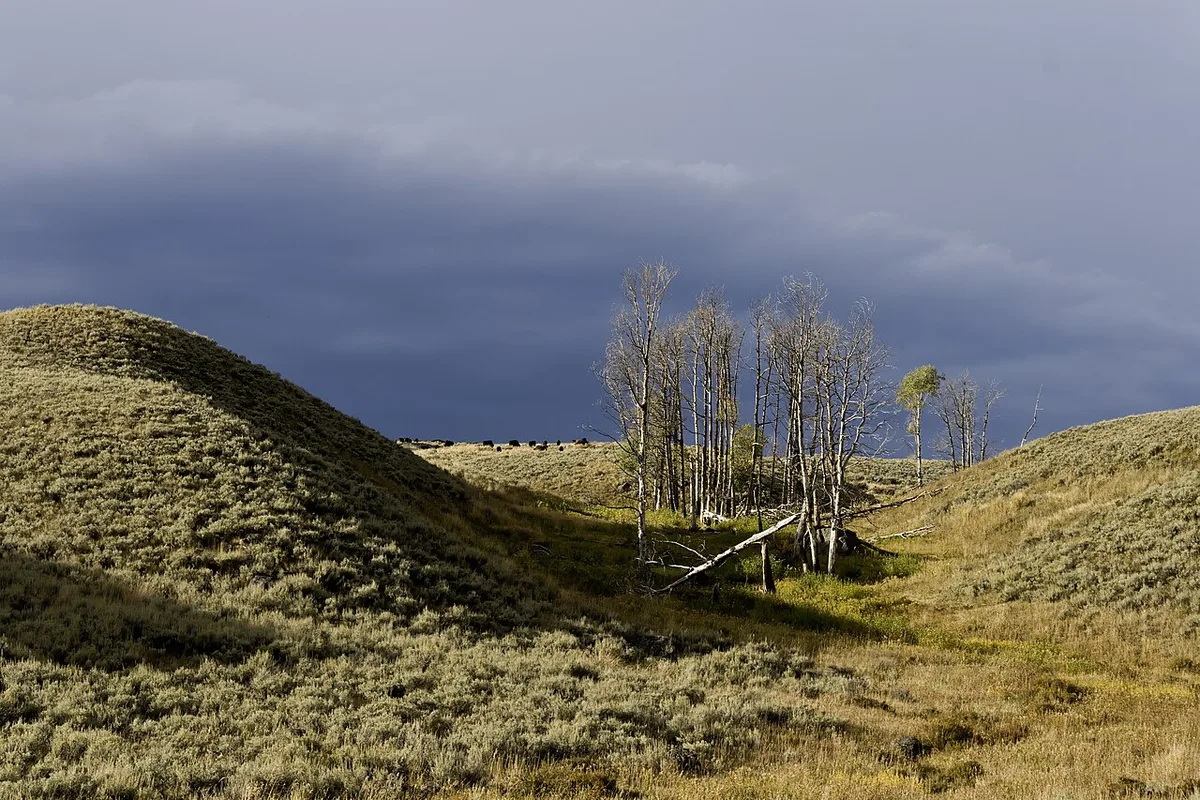
The Upper Loop trades geysers for wildlife and waterfalls, and it works well as its own dedicated day. Mammoth Hot Springs anchors the park's north end with travertine terraces that look like an inside-out cave. A lower terrace boardwalk and an upper terrace boardwalk both cover the formations. The terraces shift gradually as mineral deposits build, so the exact shapes you see can differ from photos taken even a season earlier. Plan on at least half a day here, since kids tend to tire out mid-morning and a lunch break helps reset everyone. Lamar Valley is often called the American Serengeti, and driving it slowly with binoculars and patience is the whole activity. A cluster of parked cars usually means someone has spotted wildlife nearby. Pull over only where it's legal and safe, and stay inside the vehicle if an animal is close to the road. Tower Fall makes a good stretch-your-legs stop on the way to Lamar Valley. A small store at the parking area sells food, and restrooms are on site. It's not worth a special trip on its own, but it's an easy add if you're already driving through. Roosevelt Lodge nearby is one of the more rustic in-park lodging options, away from the crowds around Old Faithful and Canyon Village.
Lamar Valley's remote northeast corner is where cell service drops and peak-hour dining involves 45-minute store lines. Families can sidestep both bottlenecks by downloading maps and packing snacks before entering the park.
Best Wildlife Spotting: Hayden Valley vs. Lamar Valley
Lamar Valley and Hayden Valley are Yellowstone's two best wildlife-viewing corridors, and each rewards a different rhythm. Lamar Valley sits in the park's northeast corner, favored for wolf and bison sightings, and rewards a slow drive with a long lens. Hayden Valley sits along the Grand Loop Road between Canyon Village and Lake, and dawn or dusk drives there tend to turn up the most activity. Neither location guarantees a sighting. Treat both as a scenic drive first and a wildlife safari second, with snacks and patience budgeted for the kids in the back seat.
Wildlife distances of 25–100 yards are enforced by rangers and can result in citations. Families planning wolf or bison spotting in Lamar or Hayden Valley must budget for staying inside the vehicle rather than close-up photography.
| Valley | Location in Park | Best Viewing Time | Known For |
|---|---|---|---|
| Lamar Valley | Northeast corner, Upper Loop | Early morning and late day | Wolves and bison herds |
| Hayden Valley | Grand Loop Road, between Canyon Village and Lake | Dawn and dusk | Bison and occasional bears |
Yellowstone Family Lodging: In-Park Lodges vs. West Yellowstone
Where you sleep decides how much of each day gets eaten by driving. In-park lodges like the Old Faithful Inn and Canyon Lodge put you minutes from the geyser basins and canyon overlooks. Rooms there skip air conditioning and TV, and dining options nearby are limited. West Yellowstone sits just outside the park's west entrance and trades that proximity for amenities. Either base works for a Lower Loop and Upper Loop split. The deciding factor is whether your family values a shorter drive or an evening pool break.
| Base | Distance to Park | Amenities | Trade-off |
|---|---|---|---|
| In-park (Old Faithful Inn, Canyon Lodge) | Inside the park, minutes from sights | Historic rooms, on-site dining | No air conditioning or TV, limited food options nearby |
| West Yellowstone (e.g. Explorer Cabins) | Just outside the West Entrance | Indoor pool, cabin bunk beds, grocery stores nearby | Longer drive into the park each morning |
The Junior Ranger Program: Earning the Yellowstone Badge
The Junior Ranger program gives kids roughly ages 4 to 12 a workbook of park activities to complete during the visit. Pick up the booklet at any staffed visitor center, including Old Faithful, Canyon, or Mammoth. Kids complete a set number of activities and, at some locations, attend a ranger talk. Bring the finished booklet back to a ranger for review. A ranger then swears the kids in and hands over the badge on the spot. The program works well on drive-heavy days, since kids can fill out pages in the car between stops instead of sitting idle during the long transitions. Check the current booklet price and program details at the visitor center desk when you arrive, since specifics can change season to season.
Essential Planning: Yellowstone Entrance Fees and Seasonal Timing
Yellowstone entrance runs on the standard National Park Service fee structure. Two main options apply to most families. Check nps.gov for the current 2026 rate before you go, since fees are adjusted periodically. Families comparing Yellowstone against a Yosemite family trip or a Zion family visit in the same year often save money with the annual pass. Paying each park's entrance fee separately usually costs more. Yellowstone's high season runs summer, when roads are fully open and crowds peak at popular boardwalks. Spring and fall bring thinner crowds, but also partial road closures for plowing or weather. Roads inside the park reopen in phases each spring. Some sections can stay closed into May, so check current status before locking in early-season dates. Confirm which roads and entrances are open on the NPS site before you finalize your route.
- Private vehicle pass: covers one vehicle for seven consecutive days
- America the Beautiful annual pass: covers entrance to every NPS site for a year
Safety First: Boardwalk and Wildlife Rules for Families
Yellowstone's geothermal features are dangerous, not decorative. The ground crust around geysers and hot springs is thin, and scalding water sits just beneath it. Stay on the boardwalk at every thermal site, no exceptions. Keep a hand on toddlers the entire time. Wildlife rules are just as strict, and the distances below are enforced, not just suggested. These distances aren't just guidelines. A ranger can cite you for closing the gap. Treat every boardwalk railing and every parked-car wildlife jam the same way. Slow down, stay contained, and give the animal or the geyser the space it needs.
- Bears, wolves, and cougars: stay at least 100 yards away
- Bison, elk, and other large animals: stay at least 25 yards away
- Thermal features: boardwalks and marked trails only, every time
- If wildlife blocks the road: stay inside the vehicle and wait it out
Dining and Connectivity: Two Yellowstone Realities to Plan Around
Food options inside the park are limited, and general stores near popular stops can run 45-minute lines at peak hours. Pack a cooler with lunch and snacks, and eat at a pullout or picnic area instead of waiting in line. Refill water bottles at visitor centers where filling stations are available. Gas stations inside the park are limited too, so top off the tank in a gateway town like West Yellowstone or Gardiner before you start a loop day. Cell service drops out across most of the park's interior. Download offline maps in the NPS app or Google Maps before you pass through any entrance gate. Save lodging and dinner reservations somewhere that doesn't need a live signal.
A 3-Day Yellowstone Itinerary for Families
This sample route assumes a West Yellowstone or in-park base and splits sightseeing across the Lower and Upper Loops. Build slack into every day. Kids move slower than the map suggests, and the best wildlife sightings happen when you're not rushing to the next parking lot.
- Day 1 - Lower Loop: Old Faithful eruption timed with the posted prediction, Grand Prismatic Spring boardwalk or overlook, Fountain Paint Pot, and Artist Point at the Grand Canyon of the Yellowstone
- Day 2 - Upper Loop: Mammoth Hot Springs terraces in the morning, a stop at Tower Fall, and a Lamar Valley wildlife drive at dusk
- Day 3 - Buffer day: Junior Ranger badge review at a visitor center, West Thumb Geyser Basin on Yellowstone Lake, or a slower repeat drive through Hayden Valley for wildlife
Best Visitor Centers for Kid Breaks and Ranger Help
Use Yellowstone visitor centers as reset stops, not just information desks. They give kids a place to regroup after long drives, and rangers can confirm current geyser predictions, road delays, and wildlife activity.
Old Faithful Visitor Education Center is the most useful stop on a Lower Loop day. It has eruption prediction boards, indoor exhibits, restrooms, and easy access to the Old Faithful viewing area. Canyon Visitor Education Center works well before or after Artist Point because its exhibits explain the Yellowstone volcano and canyon geology. Mammoth Hot Springs Visitor Center is the best Upper Loop stop for Junior Ranger questions and a break near the terraces.
- Old Faithful: geyser predictions, exhibits, restrooms, Lower Loop base.
- Canyon: volcano exhibits, canyon context, central location.
- Mammoth: Junior Ranger help, wildlife displays, Upper Loop reset stop.
For trip-planning details, see Yellowstone National Park — NPS.
Further reading: Travelling with children on Wikivoyage · Family travel on Wikipedia
Frequently Asked Questions
How many days do you need for Yellowstone with kids?
Plan on at least two full days: one for the Lower Loop and one for the Upper Loop. Add a travel day on each end, so three nights total gives families room without back-to-back long drives.
Are Yellowstone's boardwalks stroller-friendly?
Most boardwalks at Old Faithful, Grand Prismatic Spring, Fountain Paint Pot, and West Thumb Geyser Basin are flat and stroller-friendly. Trails with a hiking component, like the Grand Prismatic Overlook, have a short unpaved, steep stretch where you'll likely carry a toddler instead.
How far should kids stay from Yellowstone wildlife?
Stay at least 100 yards from bears, wolves, and cougars. Stay at least 25 yards from bison, elk, and other large animals. These distances are enforced, and the safest viewing usually happens from inside a parked car.
Is cell service available inside Yellowstone?
Cell service is unreliable to nonexistent across most of the park's interior. Download offline maps in the NPS app or Google Maps, and save any reservations, before you drive through the entrance gate.
Should you stay inside Yellowstone or in West Yellowstone?
In-park lodges like the Old Faithful Inn and Canyon Lodge put you closest to the sights, but rooms skip air conditioning and TV. West Yellowstone, just outside the west entrance, adds pools and grocery access with a longer drive each morning.
Free guide: Stress-Free Flying with Kids
The pre-flight checklist, carry-on packing list, and in-flight survival plan we use on every family trip — from toddlers to teens.
You might also like


Continue reading
More guides you'll find useful