Grand Canyon with Kids: The Ultimate Family Planning Guide
Plan a Grand Canyon with kids trip: compare South Rim hikes by age, use the free shuttle system, and find Junior Ranger and safety tips for 2026.
On this page
Grand Canyon with Kids: Best Hikes, Activities, and Logistics
Last updated July 2026, this Grand Canyon with kids guide focuses on the South Rim, the side of the park built for family logistics and short legs. It belongs on any national parks bucket list, but the trip only works when the rim, trail, and shuttle plan match the ages along for the ride. Below: which hikes suit toddlers versus tweens, how the free shuttle bails out tired hikers, and the safety rules rangers repeat most often.
Free guide: Stress-Free Flying with Kids
The pre-flight checklist, carry-on packing list, and in-flight survival plan we use on every family trip — from toddlers to teens.
Why the South Rim Works Best for a Grand Canyon with Kids Trip
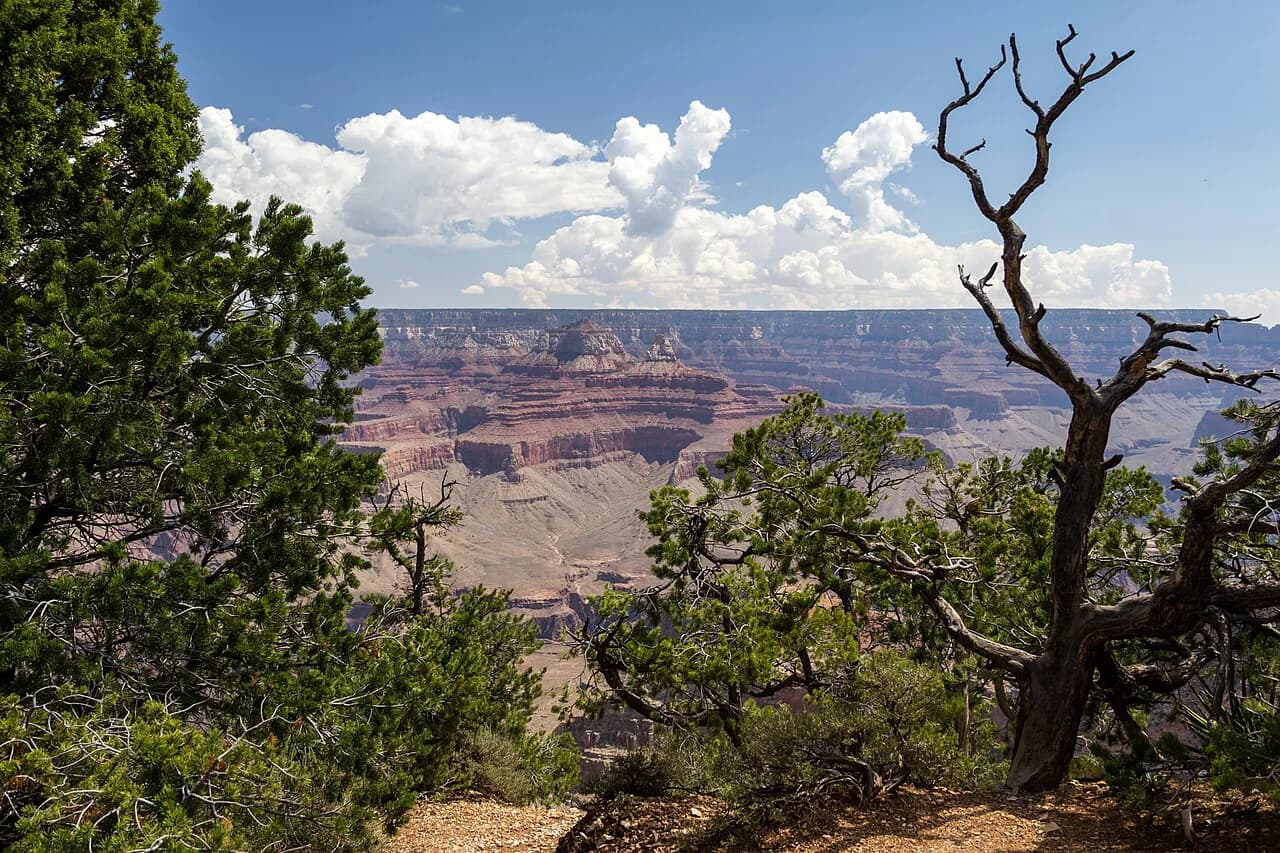
The South Rim carries almost all of the park's family-facing infrastructure: paved viewpoints, a free shuttle network, a geology museum, and a visitor center running the Junior Ranger program. South Rim facilities generally run year-round. The North Rim closes to vehicle traffic for winter and keeps a shorter operating season, so confirm current dates before adding it to any itinerary. For a first visit with children, base the day around Grand Canyon Village, where Mather Point, the Yavapai Geology Museum, and the main shuttle hub sit within walking distance of each other.
Top Family Activities at the South Rim
These four stops cover the range of ages and attention spans, and none require a long hike below the rim. Junior Ranger booklets exist at parks nationwide, so a badge started here can continue on a later Yellowstone family trip or Acadia family trip.
- Junior Ranger Program: pick up the activity booklet at a visitor center, complete the age-appropriate pages, and return for a ranger-led badge ceremony.
- Yavapai Geology Museum: a glassed-in observation room built into the rim, with exhibits on the canyon's rock layers.
- Desert View Watchtower: a historic stone tower at the eastern end of Desert View Drive, with a viewing platform over the canyon.
- Mather Point: the closest major overlook to the main visitor center, a practical first stop for tired travelers.
Family Hikes: From Strollers to Scramblers
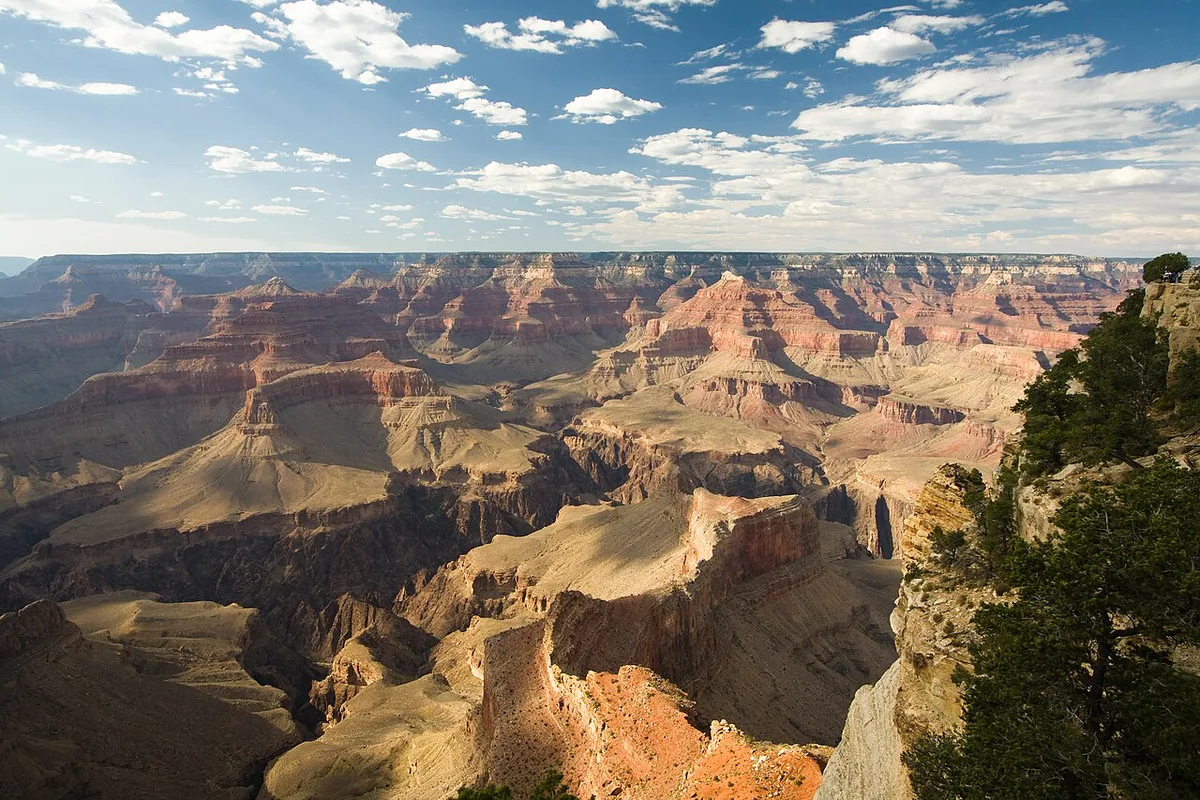
Match the trail to the least experienced hiker in the group, not the most. The Rim Trail is the default stroller route: pick one paved segment, walk it, then board the shuttle instead of retracing your steps. Below-rim trails are steeper and unpaved, so treat any turnaround point as optional and stop earlier if kids are dragging.
Bright Angel's water refill sits 1.5 miles down with 1,000 feet of elevation loss. By the 1:2 rule, reaching this modest water stop and returning takes most of a morning, so carrying a single bottle isn't an option.
| Trail | Round-Trip Distance | Elevation Change | Stroller Access | Meltdown Factor |
|---|---|---|---|---|
| Rim Trail (paved segments) | Pick your own distance; total one-way length is 12.8 miles | Minimal, flat | Yes | Low |
| Bright Angel to 1.5-Mile Resthouse | 3 miles | Drops over 1,000 ft in the first 1.5 miles | No, sandy switchbacks | High |
| South Kaibab to Ooh Aah Point | 1.5 miles | Steep switchbacks straight off the rim | No | Medium-High |
| South Kaibab to Cedar Ridge | 3 miles | Continued steep switchbacks past Ooh Aah Point | No | High |
| Shoshone Point | 2 miles | Flat forest path, narrow unfenced ledge at the end | No | Medium |
Sun vs Shade: What Trail Descriptions Leave Out
South Kaibab Trail follows an exposed ridge line, so it carries little natural shade once the sun climbs. Bright Angel Trail cuts through the canyon wall itself, and its upper switchbacks hold morning shade longer. Some family trip reports describe shaded patches on South Kaibab during an early hike, but that is not the typical pattern rangers describe for ridge trails. Plan for full sun exposure on South Kaibab regardless of start time, and treat any shade on Bright Angel's upper section as a bonus, not a guarantee.
South Kaibab's full-sun exposure combined with the 1:2 rule for return climbs and afternoon heat means starting after 9 a.m. won't work in warm months. Even a 1.5-mile descent leaves too little time to climb back before the heat peaks.
Unique Ways to Experience the Canyon
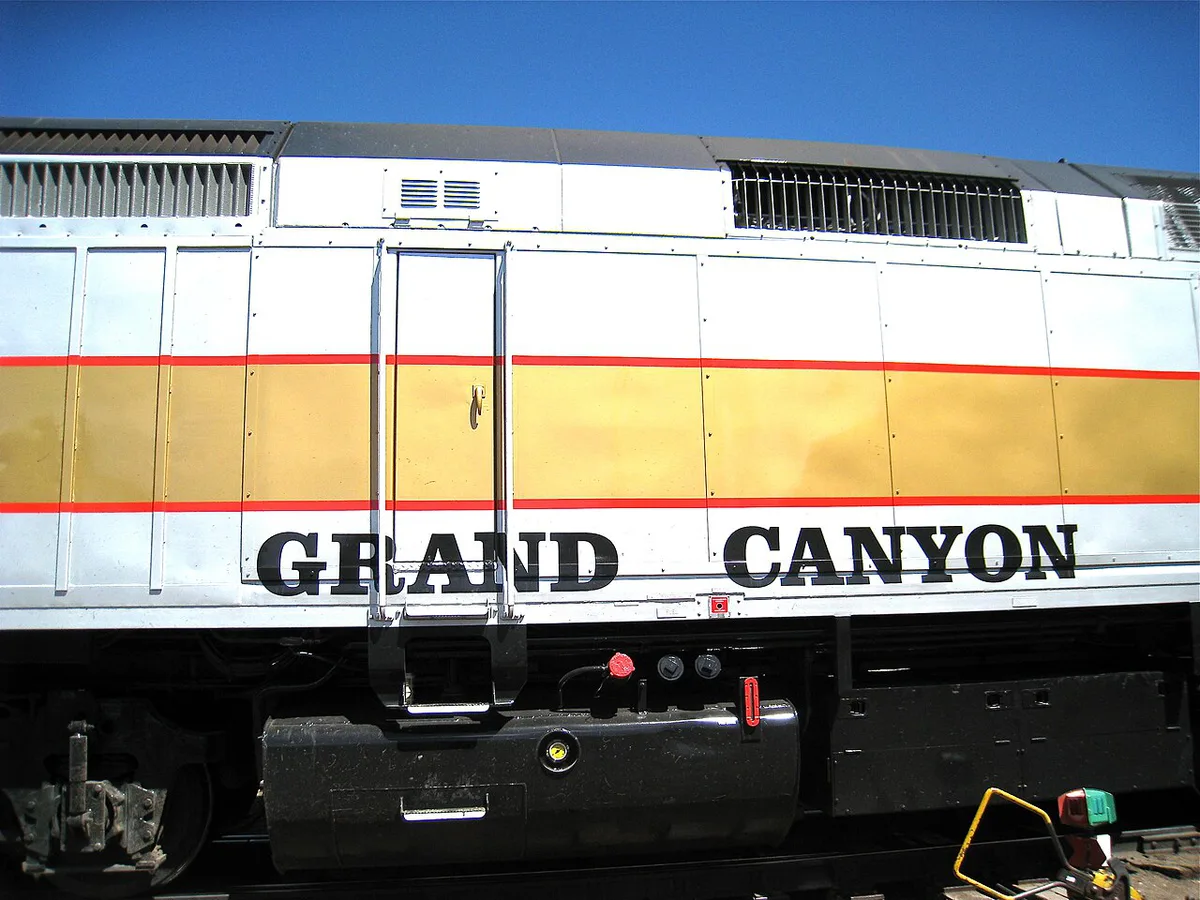
Beyond hiking and viewpoints, three options change the pace of a visit. The Grand Canyon Railway runs a historic train from Williams, Arizona, into the South Rim, an alternative to driving that keeps kids out of car seats for the approach. Mule rides carry riders below the rim on a guided descent; age, height, and weight limits apply, so check current rules on the operator's booking site before planning a day around one. Helicopter tours give an aerial view of the canyon and cost more than either the railway or a mule ride; compare current rates directly with operators based near the park entrance in Tusayan before booking.
Getting Around: Free Shuttle Buses vs Driving Desert View Drive
The free shuttle system is the single biggest advantage for families with young hikers. Routes are grouped by color, typically a Village loop connecting lodges and the visitor center, and a Hermits Rest route running past the western Rim Trail viewpoints; confirm the current shuttle map at the visitor center since routes shift by season. Because stops sit close together, a family can walk one paved Rim Trail segment, then board the next bus instead of walking back. Desert View Drive, on the eastern side of the park, stays open to private vehicles and leads to Desert View Watchtower, so it works for families who would rather drive than wait for a shuttle.
Where to Stay: In-Park Lodging vs Tusayan
In-park lodging near Grand Canyon Village puts you within walking distance of rim shuttle stops, so mornings start without a drive. Tusayan sits just outside the park's south entrance on Highway 64 and typically costs less than in-park lodges, at the tradeoff of a short drive in each direction. Families prioritizing extra sleep or an easy overnight bathroom run should check the official in-park booking site first, since rooms sell out months ahead in peak season; Tusayan is the practical backup once park lodges are full.
Essential Safety Rules for Grand Canyon Hikes with Kids
These four rules cover the risks that catch families off guard most often below the rim.
- Mules have the right of way on every inner-canyon trail. Step to the uphill side and hold kids still until the mule train passes.
- The 1:2 rule: for every hour spent hiking down, plan on roughly two hours to hike back up, since the return climb gets hotter as the day goes on.
- Refill water at the spigot near Bright Angel's 1.5-Mile Resthouse instead of carrying a single bottle for the whole hike.
- Below-rim temperatures run hotter than the rim itself, so start hikes at first light and turn around well before early afternoon.
Sample 1-Day and 2-Day Itineraries for Families
Use the one-day plan for a drive-through visit and add the second day only if hiking below the rim is the priority.
- Day 1 morning: start at Mather Point, then walk to the Yavapai Geology Museum for the glassed-in canyon view.
- Day 1 midday: walk one paved Rim Trail segment toward Grand Canyon Village, then catch the shuttle back before peak heat.
- Day 1 afternoon: pick up a Junior Ranger booklet at the visitor center and finish the activity pages ahead of the badge ceremony.
- Day 1 evening: drive Desert View Drive to Desert View Watchtower for sunset.
- Day 2 early morning: hike South Kaibab to Ooh Aah Point or Bright Angel to the 1.5-Mile Resthouse before full sun arrives.
- Day 2 late morning: ride the shuttle to a western Rim Trail viewpoint reached only by bus.
- Day 2 afternoon: ride the Grand Canyon Railway from Williams or rest at the lodge before the next activity.
- Day 2 evening: pick a second, quieter sunset viewpoint away from the Mather Point crowds.
Common Mistakes to Avoid When Visiting the Grand Canyon with Kids
Most family trip problems trace back to one of these five habits.
- Starting a below-rim hike after 9 a.m. in warm months, when heat multiplies fatigue on the climb back out.
- Ignoring the 1:2 rule and hiking further down than the uphill return can handle.
- Driving to every viewpoint instead of using the free shuttle, then fighting for parking at each stop.
- Treating South Kaibab and Bright Angel as interchangeable trails, when one is an exposed ridge route and the other holds more morning shade.
- Skipping nearby parks on a longer trip; pair the Grand Canyon with Zion family hikes or Yosemite family hikes if the schedule allows.
Best Stroller-Friendly Rim Trail Segments
The easiest stroller plan is to stay on the paved Rim Trail between Mather Point, Yavapai Geology Museum, and Grand Canyon Village. Start at Grand Canyon Visitor Center, roll to Mather Point, then continue west toward Yavapai for an easy geology stop with bathrooms nearby.
The Trail of Time section, between Yavapai Geology Museum and Grand Canyon Village, is especially good for school-age kids. Bronze markers and rock samples turn the walk into a simple timeline, so it feels less like another viewpoint stop.
- Best short roll: Visitor Center to Mather Point, then back before crowds build.
- Best longer roll: Mather Point to Yavapai Geology Museum, with wide paved path and frequent rim views.
- Skip with strollers: below-rim trails, Shoshone Point, and any unpaved connector after rain or snow.
For trip-planning details, see Grand Canyon National Park — NPS.
Further reading: Travelling with children on Wikivoyage · Family travel on Wikipedia
Frequently Asked Questions
Which rim of the Grand Canyon is better for kids?
The South Rim is the better choice for most families. It stays open year-round and carries the paved Rim Trail, the free shuttle system, the Yavapai Geology Museum, and the Junior Ranger program, all within walking distance of Grand Canyon Village.
How much time should families plan for a Grand Canyon visit with kids?
Plan on a full day for viewpoints, the museum, and a short Rim Trail walk. Add a second day if the goal is a below-rim hike, since the 1:2 rule means a short morning hike can take most of the day round trip.
Is the Grand Canyon safe for young kids near the edge?
The Rim Trail and most main viewpoints have paved paths and barriers. Some spots, including the end of Shoshone Point, finish on a narrow, unfenced ledge, so hold hands and stay back from any unmarked edge.
Do kids need a permit to hike below the rim?
Day hikes below the rim, such as to the 1.5-Mile Resthouse on Bright Angel or Ooh Aah Point on South Kaibab, do not require a permit. Overnight backcountry trips do, so check current permit rules before planning one.
What is the Junior Ranger Program and how do kids join?
Kids pick up an activity booklet at a park visitor center, complete pages matched to their age group, then return to have a ranger review the work and lead a short badge ceremony.
Free guide: Stress-Free Flying with Kids
The pre-flight checklist, carry-on packing list, and in-flight survival plan we use on every family trip — from toddlers to teens.
You might also like


Continue reading
More guides you'll find useful