8 Best Family Road Trips in the USA: Routes, Costs & Age-Fit Guide (2026)
Plan the best family road trips in the USA for 2026: age-fit picks, hidden costs, and drive-block pacing for the Grand Circle, California Coast, and more.
On this page
8 Best Family Road Trips in the USA for Every Age Group
Last updated July 2026. Family road trips remain the most flexible way to cover ground with kids in the back seat, whether you're chasing wildlife in Yellowstone or working through a theme-park itinerary in Orlando. This guide ranks eight family road trip routes across the USA by age-fit and activity level, flags the hidden costs each one carries, and walks you through the drive-block pacing, timing, and toddler-specific logistics that keep any of them on schedule.
Free guide: Stress-Free Flying with Kids
The pre-flight checklist, carry-on packing list, and in-flight survival plan we use on every family trip — from toddlers to teens.
Why the Family Road Trip Still Wins
A road trip trades airline certainty for flexibility. There's no fixed gate time, no per-seat fare for each additional child, and an itinerary that can bend around a missed exit or an unplanned nap. That same flexibility is the biggest planning risk: an ambitious route can turn into a week of car time instead of vacation time. Build your trip around a simple decision matrix instead. Start with your youngest traveler's age bracket: toddler (under about 4), school-age (5 to 12), or teen (13 and up). Each bracket changes how many hours a day you can realistically spend behind the wheel, and how many hiking-heavy stops the itinerary can absorb. Then weigh that bracket against your total PTO, since a route built for a long weekend needs a tighter loop than one built around a full week off. For an eastern run, an I-75 road trip with kids threads the Midwest down to Florida in stages, a natural fit for a shorter PTO window. A western cross-country pull instead often follows an I-40 road trip with kids route toward the Grand Canyon corridor, which usually needs more days end to end. Either direction, the most reliable pacing rule is to drive in two-to-three-hour blocks between real stops, not generic highway rest areas, and to start early enough that a toddler's nap window covers the least interesting stretch of highway.
Toddlers under four have strict daily driving limits, ruling out active, trail-heavy itineraries like the Grand Circle—which requires age six and up. Route selection thus depends first on age bracket before any destination preference enters planning.
8 Best Family Road Trips in the USA
Each pick below carries two quick labels, plus one thing to watch for. Age-fit flags the youngest traveler the route suits, from toddler-friendly to teens-and-up. Intensity marks whether most days run relaxed (beach or resort time) or active (hiking and multiple daily stops). A hardest-part note flags the one logistics snag worth planning around before you leave, since that's usually the difference between a smooth trip and a scramble at the gate.
- 1. The Grand Circle: Las Vegas, Zion & the Grand Canyon
- The route starts in Las Vegas, then runs through Zion National Park and Bryce Canyon before finishing at the Grand Canyon's South or North Rim.
- Age-fit: six and up. Intensity: active, since most days center on a real trail rather than a scenic pullout.
- Hardest part: Zion's shuttle and several Grand Canyon viewpoints run on advance timed entry, so reserve those slots before you go.
- 2. The California Coast: Highway 1 from San Francisco to Los Angeles
- The classic run follows Highway 1 through Monterey, Big Sur, San Luis Obispo, and Santa Barbara, ending near Los Angeles or San Diego depending on your time.
- Age-fit: all ages. Intensity: relaxed, with pacing that bends around naps, beach stops, and aquarium visits.
- Hardest part: cell service drops out through Big Sur, and hotel and fuel costs run higher than inland routes, so book lodging before you leave.
- 3. National Park Classics: Glacier, Yellowstone & Grand Teton
- This Rockies loop links Glacier, Yellowstone, and Grand Teton National Parks across Montana and Wyoming.
- Age-fit: all ages, though the full loop works best across a ten-to-fourteen-day trip rather than a rushed long weekend.
- Hardest part: trying to see all three parks in five days; slow down instead and build a day around wildlife-watching loops like Yellowstone's Lamar Valley.
- 4. Orlando's Theme Park Trio: Walt Disney World, Universal & LEGOLAND
- Walt Disney World's four parks, Magic Kingdom, Epcot, Hollywood Studios, and Animal Kingdom, sit near Universal Orlando and LEGOLAND Florida.
- Age-fit: LEGOLAND suits toddlers through about age 12, while Universal's Wizarding World lands suit older kids and teens.
- Hardest part: resort shuttles, security lines, and park-hopping add hidden time between three separate resorts, so budget more transition time than the park map suggests.
- 5. City Break Loop: Washington DC, Chicago & New York City
- This urban loop pairs Washington DC's National Mall and free Smithsonian museums with Chicago's lakefront path, Navy Pier, and the Museum of Science and Industry.
- New York City rounds out the loop if you're comfortable navigating transit with kids in tow.
- Age-fit: all ages. Hardest part: driving inside these cities; park once, then rely on transit or a park-and-walk approach instead.
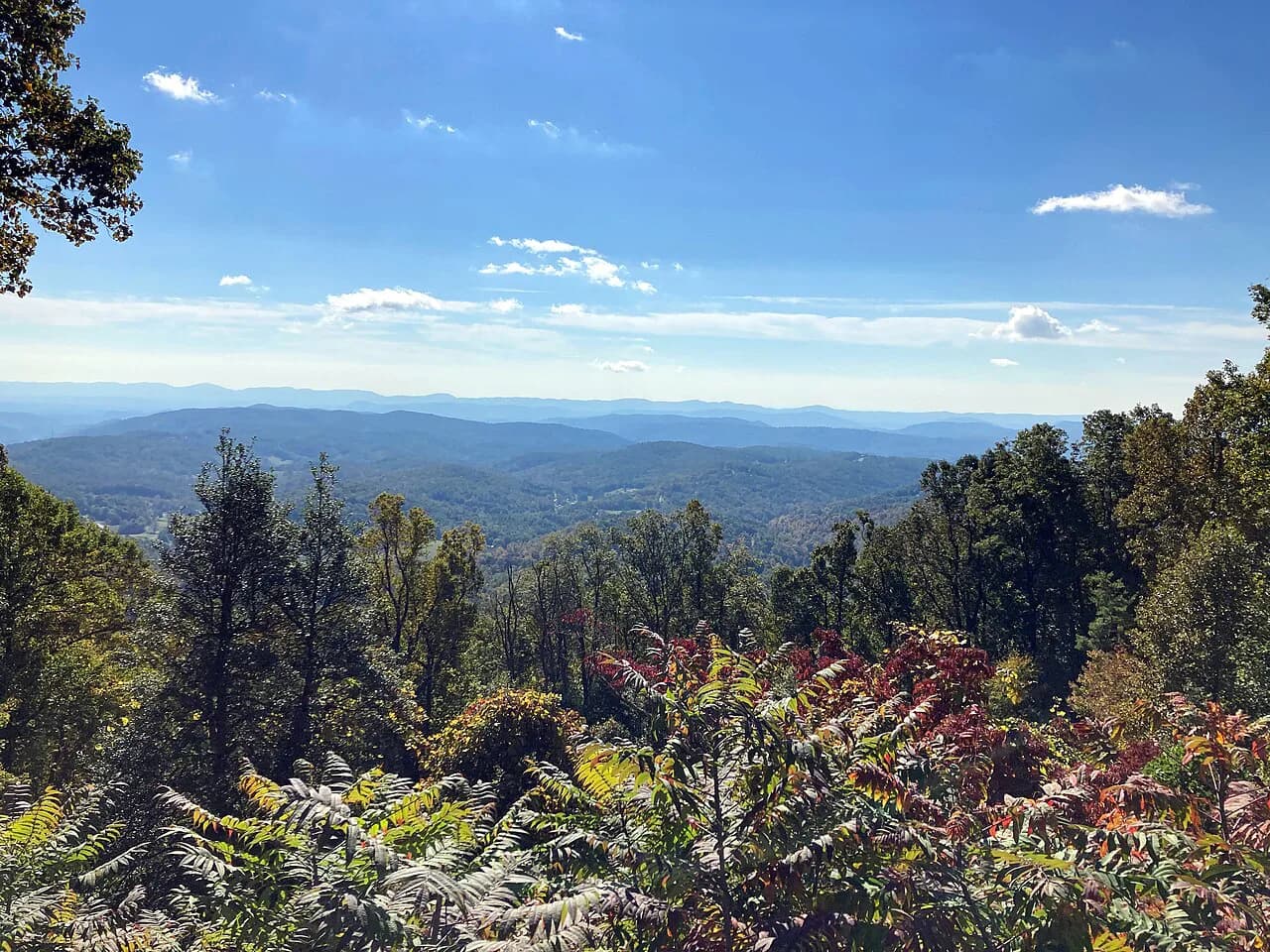
- 6. The Great Smoky Mountains & Gatlinburg
- The Blue Ridge Parkway leads into the Great Smoky Mountains, with Gatlinburg's attraction strip at the park's edge.
- Age-fit: all ages. Intensity: relaxed to moderate, since the Smokies charge no entrance fee, unlike many national parks.
- Hardest part: Gatlinburg's paid attractions add up fast, so pair the free park side with a few Southeast roadside attractions instead of stacking every ticketed stop.
- 7. Niagara Falls: The USA Side Loop
- The USA-side loop covers the American Falls and Goat Island on the New York side, with the Canadian side visible across the gorge from several overlooks.
- Age-fit: all ages, including toddlers, thanks to short walking distances between viewpoints.
- Hardest part: crossing to the Canadian side requires a passport, so confirm everyone's documents before you add that leg.
- 8. Black Hills & Badlands, South Dakota
- The Black Hills and Badlands pair short drives between stops with lower crowds than the major Western parks.
- Age-fit: all ages. Intensity: moderate, mixing easy overlooks with a few longer hikes.
- Hardest part: distances between stops run longer than on the Grand Circle, so plan fuel stops around small towns rather than assuming frequent stations.
Reservations and Fees Worth Locking In Early
A few reservations make or break specific routes on this list, and they're easy to miss until it's too late to book. Zion National Park's shuttle and several Grand Canyon viewpoints run on advance timed entry, so check the current reservation system on NPS.gov before the Grand Circle leg. Some national parks also layer a separate timed-entry fee on top of the standard entrance fee, which changes your total faster than gas prices do. Theme park park-hopping tickets at Universal Orlando and Walt Disney World add cost beyond a single-park ticket, so price those add-ons before the trip instead of at the gate. A Niagara Falls crossing into Canada requires a passport for every traveler, including kids, so confirm expiration dates well before the trip.
Theme park routes stack hidden costs (park-hopping beyond single-park admission) with hidden time costs (resort shuttles and security lines); budgeting both money and time before arrival prevents scrambling at the gate and between separate resorts.
Choosing How You'll Travel: Rental Car, RV, or Family SUV
A three-row SUV works for most routes, but a few trade-offs are worth weighing before you book. A rental car keeps costs predictable and swaps out easily if you're flying into a hub city first. An RV adds built-in kitchen and sleeping space, at the cost of lower fuel economy and tighter parking near national park entrances. Hotel suites often work out cheaper than booking two standard rooms once a family passes four travelers, and they keep everyone under one roof for an early start. Indoor waterpark resorts such as Great Wolf Lodge or Wisconsin Dells staples like Kalahari give you a self-contained rainy-day option along northern routes, useful as a stopover rather than a full trip on their own.
Stacking Routes for a Longer Vacation
If you have more PTO, combine two routes into one longer loop instead of choosing a single week. A western combination might pair the Grand Circle with the California Coast, driving from Las Vegas to the parks, then west to Highway 1. An eastern combination often pairs the Great Smoky Mountains with an Orlando theme-park stop, since both sit along the same north-south corridor. Universal Orlando expanded further when Epic Universe opened on May 22, 2025. The new gate is home to the Wizarding World's Paris streets and the Ministry of Magic, giving Orlando a third park worth an extra day. Stacking two routes usually pushes total drive time past a single week, so budget at least one full non-driving rest day between legs.
Budgeting a Family Road Trip: Gas, Food, Lodging & Hidden Fees
Three cost categories move the most on any family road trip: fuel, lodging, and park-related fees. Regional fuel prices swing enough between states that it's worth checking a current fuel-price tracker like GasBuddy before you set a per-tank budget. Many national parks now layer a separate timed-entry reservation fee on top of the standard entrance fee, so confirm the current fee schedule directly on NPS.gov before you go. Walt Disney World has long waived park admission for children under three, a small but real savings worth folding into an Orlando add-on. Food costs drop fast once a cooler and a mid-trip grocery stop replace a full sit-down meal at every exit, especially across multi-day stretches like the Grand Circle or the Black Hills. Price family travel insurance before departure too, since a canceled park reservation or a missed shuttle window can otherwise mean a forfeited fee.
| Cost Category | What Drives It Up | How to Trim It |
|---|---|---|
| Fuel | Long legs through remote stretches like Big Sur or the Badlands | Check GasBuddy before setting a per-tank budget |
| Lodging | Peak summer rates and multi-night resort stays | Shift a few nights to shoulder season or book a suite instead of two rooms |
| Park fees | Added timed-entry reservations on top of standard entrance fees | Confirm the current fee schedule on NPS.gov before booking activities |
| Theme park add-ons | Park-hopping tickets and priority-access options | Price add-ons ahead of time instead of at the gate |
When to Go: Summer vs. Shoulder Season
Summer gives you full park access, warm coastal water, and every seasonal program running, but it also brings peak lodging rates and the heaviest crowds at stops like the Grand Canyon rims and Gatlinburg's strip. Shoulder-season trips, spring or early fall, trade a few closed high-elevation trails and shorter daylight for thinner crowds and lower nightly rates. Coastal stops like the California Coast route hold up well in shoulder season, since ocean temperatures change less than mountain trail conditions. If you're anchored to a school calendar, you'll likely default to summer regardless, which makes early booking and early starts even more important for beating both the heat and the crowds at popular trailheads.
The Toddler Factor: Adjusting Miles per Day
A route built for school-aged kids rarely survives contact with a toddler without adjustment. Shorter drive blocks, more frequent stops, and a nap-anchored schedule matter more than the destination itself once a car seat is involved. Build in one full no-driving day for every three travel days once a toddler is along, rather than assuming the same pace a school-aged itinerary can hold. A closer breakdown of that pacing, including nap-window scheduling and what to keep within reach of the car seat, lives in the toddler road-trip pacing guide. Relaxed-intensity routes like the California Coast or the Niagara Falls loop typically absorb that slower pace better than an active, hike-heavy itinerary like the Grand Circle.
Essential Family Road Trip Checklist
A short pre-departure checklist prevents most on-the-road scrambles, especially on routes with long gaps between towns.
- Offline maps and downloaded routes
- Download offline map areas for any stretch with weak signal, including Big Sur and the rural sections of the Black Hills and Badlands loop, before you leave home.
- A real safety kit, not just a phone charger
- Pack a first-aid kit, extra water, and a paper copy of your reservation confirmations in case a phone loses signal or battery.
- A snack and water rotation
- Rotate snacks and refill water at each drive-block stop instead of relying on one gas-station stock-up for the whole day.
- Entertainment that avoids the tablet trap
- Mix audiobooks, car games, and window-facing stops so a tablet stays a backup option instead of the only option.
- Printed or saved copies of park reservations
- Save your timed-entry confirmations and hotel bookings offline, since remote park entrances often have no signal to pull up an email.
Niagara Falls: Choosing the USA or Canada Side with Kids
Niagara Falls works best when you choose the side that matches your family's priorities. The New York side keeps logistics simple for a USA road trip. Goat Island, Luna Island, Cave of the Winds, and the Niagara Gorge trails are close together, so families can park once and walk between viewpoints.
The Ontario side is better for a fuller resort-style stop. Clifton Hill has arcades, casual restaurants, the Niagara SkyWheel, and more hotels within walking distance of the falls. The trade-off is documentation: every traveler needs valid border-crossing documents before entering Canada.
- Best for simple logistics: New York side, especially Goat Island and Niagara Falls State Park.
- Best for kid-friendly extras: Ontario side, especially Clifton Hill and the promenade.
- Best view of all three falls together: Ontario's riverfront overlook near Table Rock.
For trip-planning details, see NHTSA road safety and Road trip on Wikipedia.
More Family Destinations
Planning the next trip? Explore more of our family guides across family trip ideas.
Frequently Asked Questions
How long should a family road trip be?
Length depends on the route's intensity. A relaxed loop like the California Coast works over a long weekend or a full week, while an active loop covering Glacier, Yellowstone, and Grand Teton works best across a ten-to-fourteen-day trip.
What's the best family road trip for a toddler?
Relaxed-intensity routes travel best with a toddler, since they allow shorter drive blocks and more stops. The California Coast and the Niagara Falls loop both fit that pattern, and adjusting miles per day matters more than the destination itself.
How much does a family road trip cost?
Costs vary widely by route, but fuel, lodging, and park fees move the total the most. Check a current fuel tracker like GasBuddy before setting a per-tank budget, and confirm any timed-entry reservation fees directly on NPS.gov before booking national park activities.
Do you need a passport for a Niagara Falls family road trip?
Not for the USA side. You'll need a passport only if your itinerary crosses to the Canadian side of the falls, so confirm everyone's documents before adding that leg.
When is the best time of year for a USA family road trip?
Summer offers full park access and every seasonal program running, but it also brings peak rates and the heaviest crowds. Shoulder-season trips in spring or early fall trade a few closed high-elevation trails for thinner crowds and lower nightly rates.
Explore More Family Road Trip Guides
Plan your next drive with these corridor guides and backseat survival tactics.
Classic Corridors
Stops & Survival
Free guide: Stress-Free Flying with Kids
The pre-flight checklist, carry-on packing list, and in-flight survival plan we use on every family trip — from toddlers to teens.
You might also like


Continue reading
More guides you'll find useful