13 Thai Foods Your Kids Will Ask For Again
Thai food kids love, ranked: 13 mild dishes from Pad Thai to Mango Sticky Rice, plus the exact phrases to order no-spice at any Thai stall in 2026.
On this page
Thai Food Kids Love: 13 Dishes They'll Ask For Again
Last updated July 2026. Thai food kids love rarely matches the fiery reputation the cuisine gets abroad, and most of the dishes on this list are naturally mild rather than dialed down for tourists. This guide orders 13 kid-friendly dishes from the most familiar to the more adventurous, then adds the exact ordering phrases that keep a plate chili-free. Families building a wider Thailand itinerary with kids can treat it as a standing food list for the whole trip.
Free guide: Stress-Free Flying with Kids
The pre-flight checklist, carry-on packing list, and in-flight survival plan we use on every family trip — from toddlers to teens.
Why Thai Cuisine Isn't as Spicy as Its Reputation Suggests
Thai cooking balances sweet, salty, and sour more than it relies on chili heat. Many staple dishes contain no fresh chilies at all. Texture matters just as much as flavor for young eaters: chewy noodles, crunchy fried skins, and soft stewed meats each suit a different sensory preference. Some dishes on this list are fried, like Gai Tod. Others are steamed, stewed, or grilled, like Kai Palo and Gai Yang. That mix lets parents balance treat foods with everyday meals.
How to Order No-Spice Thai Food: Mai Pet and Pet Nid Noy
Two phrases cover most situations. Mai pet tells a vendor or kitchen to leave out chili entirely, and it works at street stalls, food courts, and sit-down restaurants alike. Pet nid noy asks for a little heat, useful once a kid wants to test tolerance without a full-strength dish.
- Mai pet: no spice at all - the safest default for young kids and toddlers.
- Pet nid noy: a little spice - a good next step for older kids.
- Ask for sauce on the side with khao man gai and gai tod, since the heat usually lives in the dip, not the meat.
- If a dish arrives spicier than expected, ask for extra cucumber or a side of plain rice to cool the palate.
13 Thai Foods Kids Love: The Full Ordering List
The list below runs from the most familiar dishes to the more adventurous ones. Each entry gives the Thai name, what the dish is, why kids tend to like it, and one ordering tip.
- Khao Pad (Thai fried rice): jasmine rice stir-fried with egg, onion, and a touch of white pepper. The familiar shape and mild salt make it a first-order safe bet. Tip: ask for gai (chicken) and skip the raw cucumber garnish if a kid prefers plain rice.
- Pad Thai: chewy rice noodles in a sweet-and-sour tamarind sauce with crushed peanuts, egg, and tofu. The sweetness reads as familiar to most Western palates. Tip: request peanuts on the side, since they're mixed through the noodles by default.
- Pad See Ew: wide rice noodles wok-charred in dark soy sauce with egg and Chinese broccoli. It's saltier and simpler than Pad Thai, good for kids who skip sweet-sour combinations. Tip: ask for the broccoli chopped small if a child avoids vegetables.
- Moo Ping (grilled pork skewers): sweet, garlicky marinated pork grilled on a stick, usually sold with sticky rice. The skewer format turns dinner into finger food. Tip: pair it with khao niew (sticky rice) to keep hands busy on the go.
- Sate Gai (chicken satay): mildly curried chicken skewers served with a creamy peanut dipping sauce. Tip: this is a peanut dish first and foremost, so confirm ingredients before ordering for allergic kids.
- Gai Tod (Thai fried chicken): crisp, rice-flour-battered fried chicken, salted rather than spiced in its base form. Tip: ask for it without added curry paste, which some stalls mix into the batter for extra flavor.
- Gai Yang (Thai grilled chicken): marinated, grilled chicken with charred skin, usually served with sticky rice. Tip: confirm the marinade is the mild version, since some vendors add fresh chili to the baste.
- Khao Man Gai (chicken and rice): poached chicken over garlic-and-ginger rice, Thailand's version of chicken-and-rice comfort food. Tip: hold the accompanying sauce, which is often spicy, and serve the chicken and rice plain.
- Kai Palo (five-spice stew): a sweet-salty stew of pork belly and hard-boiled eggs in a five-spice broth, a dish many Thai school cafeterias serve. Tip: spoon extra egg and broth over rice for a fuller toddler-sized meal.
- Kai Jeow (Thai omelet): a fish-sauce-seasoned egg fried until the edges crisp, served over rice. Tip: order it on its own if a kid is sensitive to fish sauce aroma, and add plain soy sauce instead.
- Pad Woon Sen (glass noodle stir-fry): clear mung bean noodles stir-fried with egg and vegetables, low on spice and easy on the budget. Tip: a good next step once a kid has moved past plain fried rice.
- Kabocha Squash Stir-Fry: sliced kabocha squash stir-fried with egg and Thai basil, one of the few vegetable-forward dishes kids ask for again. Tip: order it without extra chili paste; the squash itself carries the flavor.
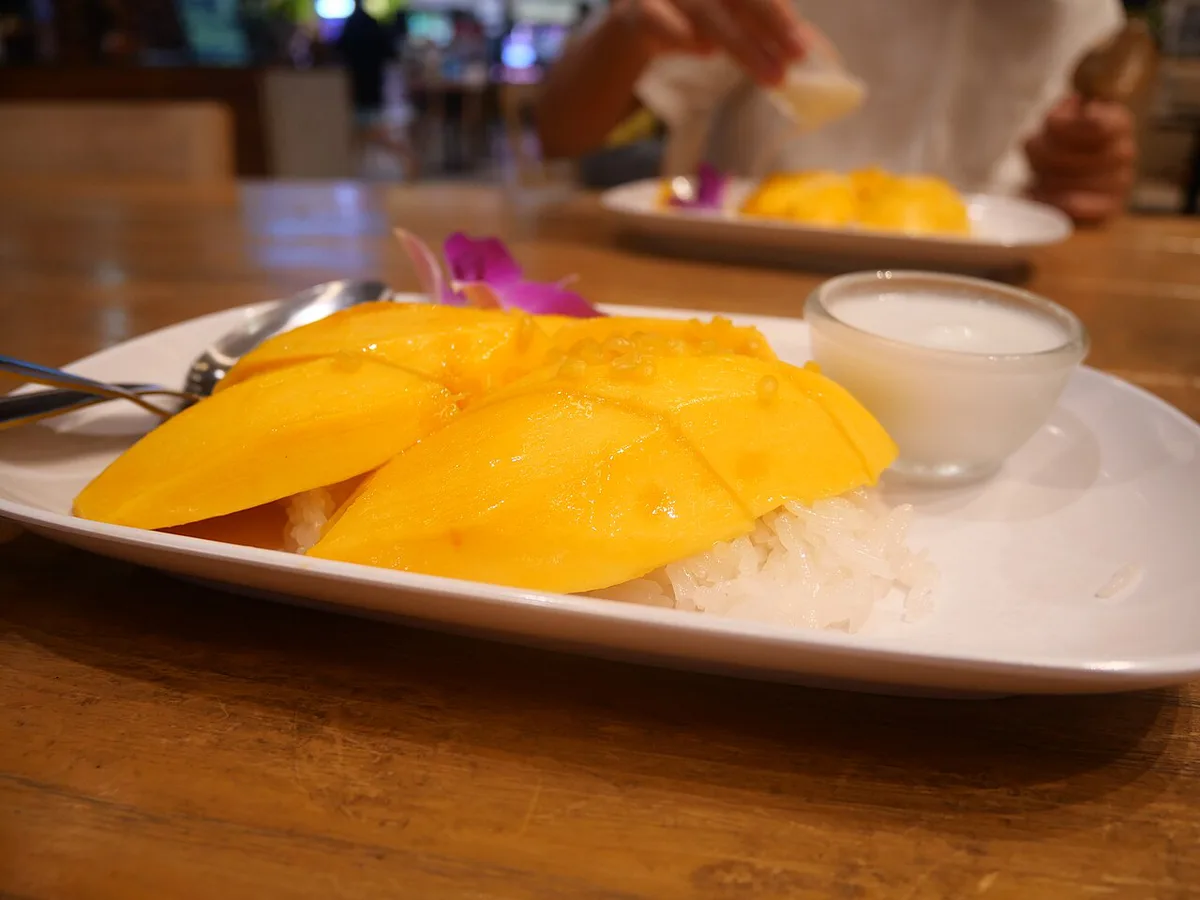
- Mango Sticky Rice: sweet coconut sticky rice with fresh mango slices, the dessert that shows up on every kid-friendly Thai food list. Tip: serve it as the closing dish after a savory meal, not as a stand-alone snack.
Quick-Pick Table: Taste, Texture, and Spice Risk by Dish
Use this table to match a dish to a specific kid's preferences before ordering.
Individual tips across the menu offer texture and allergy refinements beyond the table: ask for broccoli chopped small, peanuts on the side, sauce on the side, or add extra vegetables to common bases. These adjustments let parents fine-tune dishes to sensory and allergy needs simultaneously without ordering separate modifications.
| Dish | Taste Profile | Texture | Spice Risk | Ease of Finding |
|---|---|---|---|---|
| Khao Pad | Salty, mild | Soft, separate grains | Low | Everywhere - stalls, courts, restaurants |
| Pad Thai | Sweet-sour | Chewy noodles, crunchy peanuts | Low | Everywhere |
| Moo Ping | Sweet-salty | Chewy, charred edges | Low | Night markets, street stalls |
| Khao Man Gai | Savory, mild | Soft chicken, soft rice | Low | Food courts, dedicated stalls |
| Kai Palo | Sweet-salty | Soft stew, soft egg | Low | Local diners, cafeteria-style spots |
Vegetable Wins Beyond the List
Two dishes above already sneak in vegetables: Kabocha Squash Stir-Fry and Pad Woon Sen. A few additional swaps work well once a kid is comfortable with those two.
- Pad Pak Ruam Mit (stir-fried mixed vegetables): a simple stir-fry that pairs well with rice for a plate with more color and fiber.
- Tau Hu Tod (fried tofu): crispy-edged tofu triangles, best served with a mild peanut sauce instead of the usual spicy dip.
- Ask kitchens to add extra vegetables to Khao Pad or Pad See Ew rather than ordering a separate vegetable side.
Street Stalls vs Food Courts: Where to Order With Kids
Both settings serve the same dishes, but the experience differs. Street stalls and night markets cook to order and let a family point at whatever looks good. Food courts add air-conditioning, seating, and menus with photos, which helps when a child can't read a Thai menu yet.
- Street stalls and night markets: dishes made to order, priced from about 50-80 THB in 2026, strongest for skewers like Moo Ping and Sate Gai.
- Sit-down restaurants: the same dishes run roughly 150-300 THB, plus air-conditioning, high chairs, and printed menus.
- Mall food courts such as MBK, Siam Paragon, or Terminal 21-style courts pack multiple stalls under one roof. Photo menus and high table turnover make it easy for a picky eater to point rather than read.
Regional Differences: Spicier South, Milder North
Where a family bases itself changes the baseline heat level. Southern Thailand, including family trips to Phuket, tends to run spicier by default. The mai pet request matters more there than elsewhere. Northern Thailand is generally milder and more savory. Dishes like khao soi can work for kids when ordered without chili oil on top. That approach is covered in the Chiang Mai road trip guide. Coastal stops such as Ko Samet's beachside food stalls add grilled seafood as a milder alternative to the dishes above.
Southern Thailand's naturally spicier baseline means mai pet becomes essential rather than optional. In the North, where dishes run milder and savory, the same phrase still works but may matter less for many dishes, allowing families to test tolerance with pet nid noy more safely.
Food Safety and Allergy Notes for Kids in Thailand
Two ingredients show up across the kid-favorite list above: peanuts and eggs. Confirm both before ordering for any child with allergies.
- Ask for peanut sauce and peanuts on the side for Pad Thai and Sate Gai if a child has a peanut allergy.
- Kai Jeow, Pad Thai, and Kai Palo all use egg; flag egg allergies before ordering any of the three.
- Stick to bottled or sealed water, and ask whether ice is made from filtered water before it goes into a child's drink.
- Shellfish sometimes appears as a default add-in for fried rice and noodle dishes; ask kitchens to leave it out for shellfish allergies.
Mistakes to Avoid When Feeding Kids in Thailand
A few habits cause most of the ordering trouble parents run into.
- Don't trust a 'not spicy' label at face value; confirm with mai pet every time, even at familiar-looking restaurants.
- Don't assume curry dishes are automatically mild; ask before ordering, since preparation varies stall to stall.
- Don't skip planning food stops on day trips outside Bangkok. A Saraburi family day trip benefits from scouting rice-and-noodle stalls along the route in advance, as shown in this Saraburi family itinerary.
- Don't limit kids to hotel restaurants only; local diners post photo menus and prices just as clearly as tourist-facing spots.
Building a Kid-Friendly Thai Food Routine
Most families settle into a rotation within a few days. With the phrases and dishes above on hand, ordering becomes routine instead of a guessing game by the second or third meal.
- Lunch: a noodle or rice dish, ordered mai pet.
- Afternoon snack: a skewer, like Moo Ping or Sate Gai, from a street stall.
- Dinner: something from the comfort-food list, such as Khao Man Gai or Kai Palo.
- Dessert: Mango Sticky Rice, saved as an end-of-day reward rather than an everyday treat.
For trip-planning details, see Thai cuisine on Wikipedia.
Frequently Asked Questions
What does 'mai pet' mean when ordering Thai food for kids?
Mai pet tells a vendor or kitchen to leave out chili entirely. It's the safest default phrase to use when ordering any dish on this list for a young child.
Which Thai dish works best for a kid with a peanut allergy?
Khao Man Gai, Kai Jeow, and Khao Pad are lower-risk starting points, since none of them rely on peanuts by default. Pad Thai and Sate Gai both use peanuts, so confirm ingredients before ordering those two.
Is tap water or ice safe for kids in Thai restaurants?
Stick to bottled or sealed water for young kids. For ice, ask whether it's made from filtered water; most restaurants and food courts serving families use filtered-water ice as standard.
How much does street food cost compared to a sit-down restaurant?
Street stalls run about 50-80 THB per dish as of 2026, while the same dish at a sit-down restaurant runs roughly 150-300 THB. Food courts usually land between the two.
Should I expect Northern Thai food to be milder than Southern Thai food?
Northern Thailand generally serves milder, more savory dishes, while Southern Thailand, including Phuket, tends to run spicier by default. Ordering with mai pet still matters in both regions.
Free guide: Stress-Free Flying with Kids
The pre-flight checklist, carry-on packing list, and in-flight survival plan we use on every family trip — from toddlers to teens.
You might also like


Continue reading
More guides you'll find useful