Thailand With Kids: 6 Best Bangkok-Plus-One Family Routes (2026)
Thailand with kids, mapped as six Bangkok-plus-one routes: Phuket, Krabi, Chiang Mai, Saraburi, and more, plus 2026 safety and car-seat tips.
On this page
6 Best Thailand With Kids Routes: Bangkok Plus One
Last updated July 2026, this guide turns thailand with kids planning into one simple route: Bangkok plus one region. Choose a beach for pool days with toddlers, or go north to Chiang Mai for temples and elephants with teens. You'll find safety context, regional trade-offs, transit logistics, and the food and car-seat details that trip up first-time visitors below.
Free guide: Stress-Free Flying with Kids
The pre-flight checklist, carry-on packing list, and in-flight survival plan we use on every family trip — from toddlers to teens.
Is Thailand Safe for Kids? Addressing the Real Worries
Thailand is one of the more manageable Southeast Asia destinations for a first family trip. You'll find most parental worries turn out smaller in practice than in the planning stage. Petty theft happens, as in any tourist destination, but it rarely targets families directly. Thai culture treats children as a shared responsibility, and staff at restaurants, temples, and markets tend to make space for kids without being asked. Thailand's adult nightlife clusters in a few known strips: Patpong and Soi Cowboy in Bangkok, and Bangla Road in Phuket's Patong area. These sit apart from the malls, parks, and attractions that fill a typical family day, so you can avoid them without any special detour. The more common issue is gastrointestinal upset, not crime. Stick to bottled or filtered water, including for brushing teeth, and pick busy food stalls with fast turnover, since food that has sat out is the real risk. Comprehensive travel insurance matters more than any packing-list item, since private emergency care in Thailand is good but not free.
Gastrointestinal upset, not crime, is the real concern in Thailand. Water safety anchors risk mitigation: use bottled or filtered water, including for brushing teeth, and choose busy food stalls where food is cooked to order. A local queue of customers signals a safe establishment better than restaurant versus cart.
- Schedule temples and markets for morning or early evening, then rest indoors during peak midday heat.
- Carry a refillable bottle and stick to bottled or filtered water, even for brushing teeth.
- Order fresh fruit shakes for a hydrating treat most kids ask for again the next day.
- Treat ice as generally fine at established restaurants, and use judgment at informal stalls.
Choosing Your Region: Bangkok Plus One
Almost every family trip to Thailand follows the same pattern: Bangkok, plus one region. Bangkok anchors the trip with the international airport and the widest range of museums and markets. From there, you'll typically add a beach region for pool and ocean days. Phuket, Krabi, and Ko Samet each fit that role at a different pace and distance from Bangkok. Alternatively, you can head north to Chiang Mai for temples, hill country, and ethical elephant encounters. The right pairing depends more on ages and heat tolerance than on any single best region. Toddlers generally do better with fewer transfers and more pool time. Teenagers get more out of the north's activity variety and the south's water sports. In our editorial assessment, here is how the three most common home bases compare.
| Region | Ease of Transit | Activity Variety | Heat Intensity |
|---|---|---|---|
| Bangkok | Extensive: Grab, metered taxis, and citywide public transit | Broad: temples, markets, museums, malls | High, with little shade along old city streets |
| Chiang Mai | Good: Grab and taxis, plus an easily walkable Old City | Broad: elephants, temples, mountains, night markets | Moderate: cooler and less humid than the coast |
| Phuket | Moderate: resort transfers, taxis, and boat transfers for island days | Narrower: beaches, boat trips, resort pools | High, with humidity year-round |
The 6 Best Bangkok-Plus-One Routes for Thailand With Kids
Route-build your trip around these six Bangkok-plus-one combinations. Each pairs Bangkok with a single region, so transfers stay simple and kids are not living out of a suitcase every two days.
- Bangkok + Phuket
- Phuket's beach resorts sit on the Andaman Sea coast, giving you swimming pools, calm bays, and organized kids' clubs for a full beach week.
- A short domestic flight from Bangkok keeps this pairing workable even with toddlers, since the transfer is the only major logistics hurdle.
- See family favorite moments in Phuket for specific beaches and activities that worked well for other families.
- Bangkok + Krabi
- Krabi sits on the same Andaman coast as Phuket but moves at a slower pace, with limestone karsts, longtail boats, and Railay's beaches.
- Kayaking through the karst formations and swimming off quieter beaches suit families who want scenery over resort infrastructure.
- This pairing works best for kids old enough to enjoy a full boat day, roughly school age and up.
- Bangkok + Ko Samet
- Ko Samet sits in the Gulf of Thailand, closer to Bangkok than the Andaman coast beaches, which trims your travel time on a short trip.
- The shorter transfer makes it a practical choice for a long weekend or a first Thailand trip with young kids.
- Read a Ko Samet family beach trip for what a quieter island alternative near Bangkok looks like in practice.
- Bangkok + Chiang Mai
- Chiang Mai's walled Old City is packed with temples, and the surrounding hills hold ethical elephant sanctuaries and hill-tribe encounters.
- This route suits older kids and teens who can handle more walking and more culture per day than a beach week allows.
- Evenings at Chiang Mai's night markets give kids room to explore stalls and pick their own dinner.
- Bangkok + Saraburi
- Saraburi sits in Central Thailand, closer to Bangkok than the northern or southern regions, and sees far fewer tourists.
- It works as an off-the-beaten-path weekend add-on rather than a full second base, useful when your total trip time is tight.
- See a Saraburi family getaway for what a lower-key Central Thailand stop involves.
- Bangkok + Ayutthaya and Kanchanaburi Day Trips
- Both sit within day-trip range of Bangkok, so this route skips flights and extra hotel changes entirely.
- Ayutthaya's ancient temple ruins and Kanchanaburi's Bridge on the River Kwai give you an easy dose of history without a long transfer.
- This is the lowest-logistics option on the list, and it suits toddlers, first-time visitors, or families short on total trip days.
Toddlers vs Teens: Adjusting Pace and Packing
Thailand works for both ends of childhood, but your trip should look different depending on age. Toddlers need fewer transfers, more downtime, and easy access to naps. Teenagers get more out of activity variety, independence, and full days of movement. Packing shifts accordingly. Toddlers need a portable car seat, a baby carrier for uneven sidewalks, and a stocked diaper bag, all of which 7-Eleven can restock in a pinch. Teenagers do better with a local SIM or eSIM for connectivity, since Wi-Fi at guesthouses and cafes is not always reliable. Build in a little independence too, like a supervised market visit on their own timeline.
Match activities to energy levels: toddlers thrive with one temple or market per day, paired with pool time or swimming—resorts' afternoon pools become the default activity. Teens handle more varied days but still need physical breaks from cultural sightseeing. Over-scheduling guarantees exhaustion and missed naps.
- Toddlers: build the day around nap time, and treat the resort pool as a full activity, not a filler.
- Toddlers: bring a portable, foldable car seat, since Thai rentals and taxis rarely carry one.
- Teens: add adventure activities, kayaking, a cooking class, or a kickboxing class, to break up sightseeing.
- Teens: pack a local SIM or eSIM, since reliable Wi-Fi is not guaranteed everywhere you stay.
Getting Around Thailand With Kids
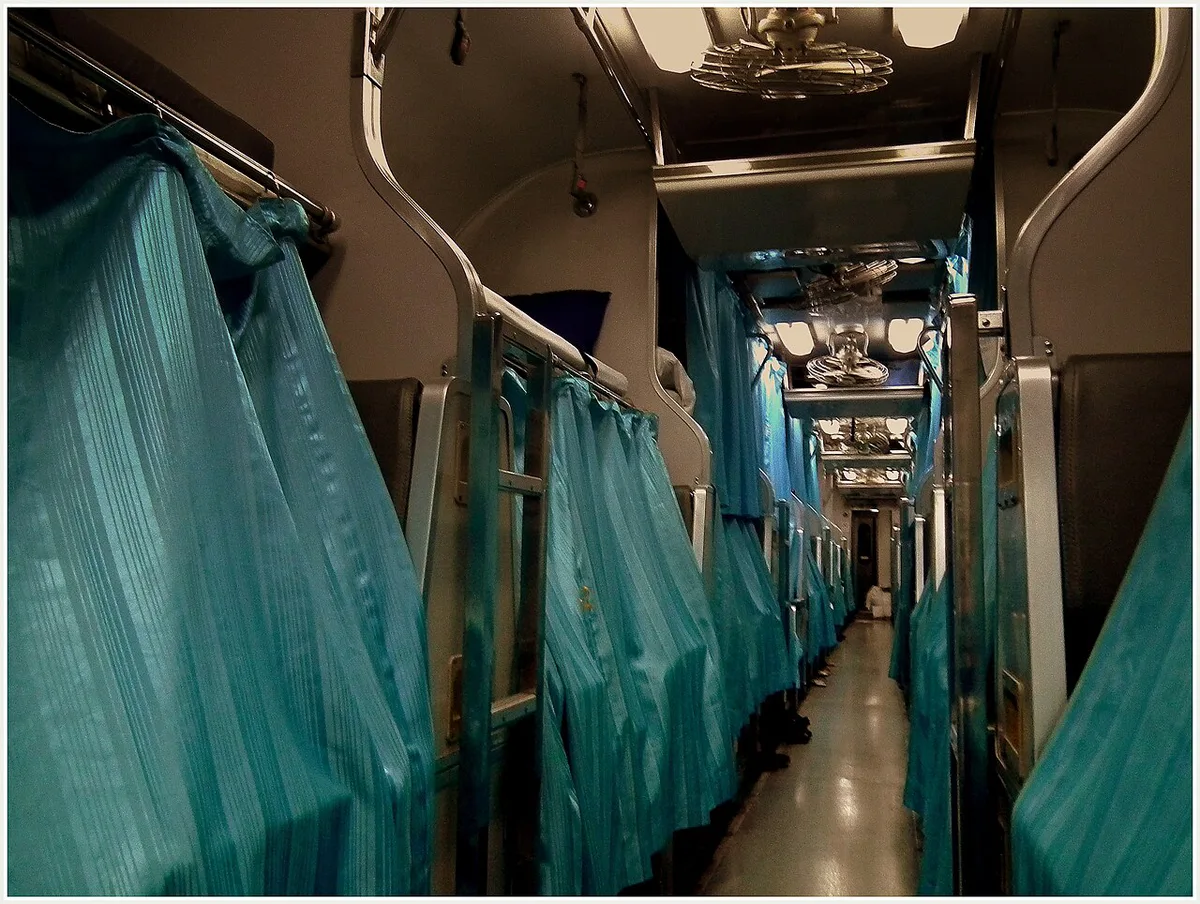
Domestic flights and overnight trains solve the same problem differently: how to cover Thailand's distances without losing a full day. Flights suit short trips and tired toddlers best. Overnight trains turn a travel day into part of the adventure for older kids. The road trip to Chiang Mai covers what the overland route north actually looks like, including the odd roadside stops along the way. Inside Bangkok, Chiang Mai, and Phuket, Grab is the easiest way to book a metered car without haggling. Bangkok's sidewalks are uneven and often blocked by vendor stalls, so a baby carrier works better than a stroller for most of the trip.
- Tuk-tuks: fine for a short, novelty ride, but skip them for real transit with a stroller or a sleeping toddler.
- Car seats: Thailand requires them for young children in private vehicles, yet taxis, tuk-tuks, and many rental cars still lack them.
- Fix: bring a lightweight, foldable car seat from home rather than relying on availability once you land.
- Trains vs flights: choose trains for the experience with older kids, and flights when nap schedules or trip length are tight.
Accommodation: Family Suites to Boutique Guesthouses
Family suites and connecting rooms solve the biggest annoyance of hotel stays with kids: needing to share a space without paying for two full rooms at adult rates. Many resorts in Phuket, Krabi, and Chiang Mai offer both, and it is worth asking about connecting rooms even when a hotel's website only lists standard doubles. A pool matters more than almost any other amenity, since afternoon heat makes it the default activity most days. Kids' clubs at beach resorts give you a few hours off, and they are common at larger properties in Phuket and Krabi. In Bangkok, proximity to public transit cuts down on taxi time with tired kids far more than a marginally nicer room does.
- An on-site pool, since it is where the afternoon actually gets spent.
- Connecting or family suite rooms instead of two separate standard rooms.
- A kids' club at beach resorts, for a few hours of parent downtime.
- Walking distance to transit or the beach, to cut taxi time with tired kids.
Food and Health: Feeding Picky Eaters in Thailand
Street food in Thailand is not the risk that first-time visitors assume. Stalls with a long queue of local customers are generally the safest bet. Food cooked to order in front of you beats a dish that has sat out for hours, even in an air-conditioned restaurant. Thai dishes kids actually love runs through specific staples worth ordering by name. When kids need a break from Thai flavors, 7-Eleven stores stock formula, diapers, and familiar snacks. Starbucks and international fast-food chains fill the gap in most tourist areas too.
- Mild fried rice, khao pad, ordered without chili, works as an easy first Thai dish for a picky eater.
- Grilled meat skewers, known as moo ping, are sold everywhere and easy to hand to a toddler.
- Plain noodle soup, with chili and fish sauce served on the side instead of mixed in.
- 7-Eleven, on nearly every block, covers formula, diapers, and familiar snack brands in a pinch.
Planning Your Itinerary: Mistakes to Avoid
Over-scheduling is the most common planning mistake with kids in Thailand. Two temples, a market, and a cooking class in one day sounds efficient on paper. In practice, it produces exhausted, cranky kids and skipped naps. Temple fatigue is real. After the second ornate temple in a day, most kids stop noticing the difference between them. Thailand's wet season brings short, heavy downpours, and outdoor-heavy days need a backup plan. A museum, a mall, or a cooking class works well as an indoor swap when rain cancels the original plan.
- Cap temple visits at one or two per day, and pair them with something physical, like swimming.
- Build in a pool or beach afternoon between big sightseeing days rather than back-to-back touring.
- Keep an indoor backup, a museum, a mall, or a cooking class, ready for wet-season afternoons.
- Leave buffer time before flights and trains, since Bangkok traffic can turn a short transfer long.
Health Prep: Vaccines, Mosquitoes, and Rural Risks
Before you lock the itinerary, schedule a travel-clinic visit at least a month ahead and check the CDC Thailand traveler page. For families, the usual discussion includes routine vaccines, hepatitis A for unvaccinated travelers, typhoid for trips beyond major resort areas, and whether Japanese encephalitis matters for rural stays, hiking, or month-long travel.
Mosquito prevention is the bigger everyday habit. Dengue, Zika, and chikungunya can occur in Thailand and are managed by avoiding bites: pack child-safe repellent such as DEET or picaridin, choose air-conditioned or screened rooms, and use long sleeves at dusk near gardens, canals, and forested areas. Malaria risk is mainly in rural forest or border areas near Myanmar, Cambodia, and Malaysia; Bangkok, Chiang Mai, Phuket, Koh Samui, and the Krabi islands are not where most family routes need malaria tablets, but a clinician should confirm your exact route.
For trip-planning details, see Tourism Authority of Thailand official site.
More Family Destinations
Planning the next trip? Explore more of our family guides across asia.
Frequently Asked Questions
Is Thailand safe for kids?
Yes, in the sense that matters most to parents: violent crime targeting families is rare, and Thai culture generally welcomes kids in restaurants, temples, and markets. The bigger practical risk is gastrointestinal upset, so stick to bottled or filtered water and busy food stalls with fast turnover. Nightlife strips like Patpong, Soi Cowboy, and Bangla Road sit apart from family attractions, so you avoid them without any special routing.
Do you need a car seat in Thailand?
Thailand requires car seats for young children in private vehicles, but availability lags the law. Taxis, tuk-tuks, and many rental cars do not carry one. Bring a lightweight, foldable car seat from home so you are not relying on what shows up at the curb.
Should you choose Chiang Mai or Phuket with kids?
It depends on your travel personality more than either region being objectively better. Chiang Mai offers broader activity variety, temples, elephants, and mountains, at moderate heat. Phuket offers a narrower but deeper beach-and-pool routine with year-round humidity. Toddlers often do better with Phuket's lower-transfer beach pace; teens often get more out of Chiang Mai's variety.
How long should a Thailand-with-kids trip be?
A week comfortably covers one Bangkok-plus-one pairing, such as Bangkok and Phuket or Bangkok and Chiang Mai. Two weeks allows Bangkok plus two regions without feeling rushed. On a short trip, Ko Samet or Saraburi trim travel time compared with Phuket or Chiang Mai, since both sit closer to Bangkok.
Is street food safe for kids in Thailand?
Generally yes, when you choose stalls with a steady queue of local customers and food cooked to order. That is a better indicator of safety than whether the food is sold from a restaurant or a cart. Pair it with bottled or filtered water and you cover most of the real risk.
What is the biggest logistics headache for families in Thailand?
Car seats and strollers, in our editorial assessment. Car seats are legally required but inconsistently available, and Bangkok's uneven, stall-crowded sidewalks make a stroller harder to use than a baby carrier. Planning around both before you land solves most of the friction.
Explore More Thailand Guides
Build the rest of your Thailand family trip with these kid-tested guides.
Islands & Beaches
North & Off-Path
Food & Cities
Free guide: Stress-Free Flying with Kids
The pre-flight checklist, carry-on packing list, and in-flight survival plan we use on every family trip — from toddlers to teens.
You might also like


Continue reading
More guides you'll find useful