Campground vs Cabin for Families: Cost, Comfort, and Setup Compared (2026)
Compare campground vs cabin stays for families: setup time, weather protection, and 2026 price ranges, so you can pick the right option for your trip.
On this page
Campground vs Cabin for Families: Which One Fits Your Trip?
Last updated July 2026, the campground vs cabin decision still comes down to trade-offs between cost, comfort, and how much gear a family wants to haul. Tent camping keeps nightly rates low and delivers the full campfire-and-stars experience, but it demands more setup time and offers no protection from a surprise storm. Cabins, yurts, and other in-between options trade some of that traditional feel for a mattress, a locked door, and a faster path to actually relaxing.
Free guide: Stress-Free Flying with Kids
The pre-flight checklist, carry-on packing list, and in-flight survival plan we use on every family trip — from toddlers to teens.
Campground vs Cabin for Families: The Quick Verdict
Your answer to campground vs cabin usually comes down to three questions: what's the budget, how much setup time is tolerable, and how do the kids sleep best. Answer those first, then use the comparison below to fill in the details. A middle ground exists too. Canvas-walled yurts and glamping tents pair a real bed with an outdoor feel, splitting the difference between a tent site and a fully enclosed cabin.
- Choose a campground if you already own a tent or RV, want the lowest nightly price, and want round-the-clock time outdoors.
- Choose a cabin if this is a first camping trip, you want to skip a lengthy setup and teardown, or you're traveling with infants or toddlers who need steady indoor temperatures.
The Decision Matrix: Setup Time, Weather, Privacy, and Price
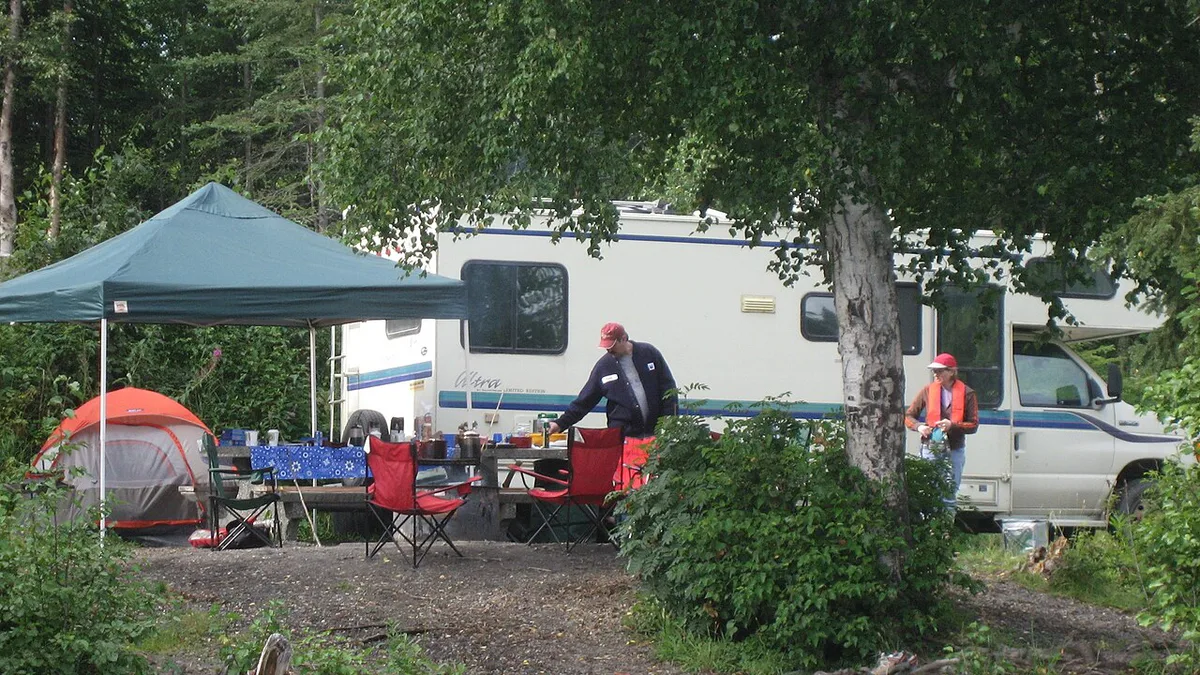
Five factors separate a night at a campsite from a night in a cabin. The table below lines them up side by side, so you can match the details against your own trip. Logistics differ just as much as comfort does. A cabin stay is close to a drive-in, drop-bags arrival. A campground stay means leveling an RV or staking a tent before anyone can relax, then reversing that process at checkout.
| Factor | Campground (Tent/RV) | Cabin |
|---|---|---|
| Setup Time | 45–90 minutes to pitch a tent or level an RV, plus teardown at checkout | Under 10 minutes: unload bags and unlock the door |
| Weather Protection | Canvas or camper walls only; wind and rain reach the site | Hard roof and insulated walls; some units add heat or AC |
| Privacy | Open loops; neighbors and foot traffic are visible and audible | Enclosed walls and a lockable door separate you from other guests |
| Average Price Range | $20–$45 a night for a basic tent site, per typical Recreation.gov and state park fee schedules | $100–$250+ a night depending on size, season, and amenities |
| Required Gear | Tent or RV, sleeping bags, cooking gear, coolers, camp chairs | Sleeping bag or linens only if the cabin is unfurnished; confirm before booking |
Cost and Time Trade-Offs: Gear Investment vs Nightly Rate
A campsite's lower nightly rate hides an upfront cost: gear. A tent, sleeping pads, a camp stove, and a cooler can add up to several hundred dollars before the first night is even booked. The family camping prep guide is a useful starting point for budgeting that initial investment. Cabins skip that step entirely. A nightly rate of $100–$250+ covers a bed frame, a mattress, and four walls, with no gear purchases required. Setup time is its own cost. Pitching a tent, staking a rainfly, and organizing a car's worth of gear can take 45 to 90 minutes at both check-in and checkout. Across a three or four night trip, that adds up to several hours spent on logistics instead of vacation. A cabin turns that time back into vacation time: unload the car, unlock the door, and the trip starts.
Campground sites ($20–45/night) require $100–500+ upfront gear investment and 45–90 minutes of setup/teardown per day; adding premium location and firewood fees often approaches cabin rates ($100–250+/night), which bundle amenities without the gear investment or daily logistics.
Why Families Choose Campgrounds: The Traditional Experience
A campsite offers what a cabin can't fully replace: sleeping under open sky, waking to birdsong instead of an alarm, and a living space that stretches across the whole site rather than four walls. Open campground loops also put kids within earshot of other campsites. Many families find their children make friends faster at a shared fire ring or bathhouse than inside a closed cabin. The campfire itself is part of the draw. Cooking dinner over the fire instead of a stovetop is often the highlight of the trip. The campfire recipes kids love guide is worth a look before departure. Pack the essentials using the family camping gear checklist so nothing critical gets left behind.
Why Families Choose Cabins: Comfort and Convenience
A hard roof changes how a family rides out a storm. Thunderstorms and high wind are a real risk on an exposed tent pad. NOAA's guidance on camping in varied terrain points to hard-sided shelter as the safer option when severe weather is forecast. A cabin removes that risk from the trip entirely. Amenities vary by tier, so check listings closely before booking. A rustic cabin is often a wooden shell with bunks and no linens, heat, or bathroom, closer to camping indoors than a hotel stay. A deluxe cabin adds a private bathroom, a kitchenette, and real mattresses, and it prices toward the top of the $100–$250+ range. For a first camping trip, a cabin lowers the odds of a bad first night. There's no tent to pitch incorrectly, no forecast to second-guess, and no gear list to double-check after dark. That's a large part of why cabins work as an entry point before a family tries a tent site.
Which Option Fits Each Age and Group
The right choice often shifts with the age of the kids and the size of the group.
Multi-generational groups who book a cabin for grandparents and a tent site for the rest must plan six to twelve months ahead to reserve both options within the same booking window.
- Infants and toddlers: cabins win for nap schedules, diaper changes, and steady indoor temperature.
- School-age kids: either option works well; campgrounds add open space and other kids to play with.
- Teenagers: a campsite with a separate tent gives more perceived independence than a shared cabin room.
- Multi-generational trips: book a cabin for grandparents and a nearby tent site for the rest of the group, so everyone gets the sleep setup they need.
- First trip of the season: try a hybrid stay. Spend two nights in a cabin to ease in, then move to a tent site for the rest of the trip.
Hidden Costs and Linens: What's Often Left Off the Price Tag
The advertised price rarely tells the whole story. Campgrounds often charge extra for a premium location, such as a waterfront or pull-through site, on top of the base nightly rate. Cabins can add a cleaning fee at checkout that isn't always shown in the initial quote. Linens are the biggest surprise for first-time cabin bookers. Some cabins include sheets, blankets, and towels. Others hand over a bare mattress and expect guests to bring their own bedding. Confirm this detail before booking, since it changes what needs to be packed. The same applies to kitchen equipment: a deluxe cabin might include a stove and cookware, while a rustic cabin includes neither. Campsites carry their own line-item costs. Firewood, extra vehicle fees, and pet fees are common add-ons at both public and private campgrounds. Factoring these in before arrival keeps the campground vs cabin comparison honest on total cost, not just the headline nightly rate.
Common Mistakes to Avoid When Booking Either Option
A few planning mistakes show up again and again on both sides of this decision.
- Assuming every cabin is furnished. Many rustic cabins are wooden shells with no linens, heat, or electricity; confirm what's included before packing.
- Booking too late. Cabins often sell out six to twelve months ahead through reservation systems like Recreation.gov and state park portals, while tent sites usually stay available closer to the date.
- Overpacking for a cabin. A unit with a stove or microwave doesn't need a full camp kitchen; check the listing first.
- Ignoring add-on fees. Waterfront or pull-through campsites often carry a premium, and some cabins add a cleaning fee at checkout.
Planning Logistics: Timing and Location
Season changes the calculation. In early spring and late fall, a heated cabin is far more comfortable than a tent pad, especially with young kids along. Summer narrows that gap, since warm nights make tent camping easier and some cabins run without heat or air conditioning. Location matters too. National Park Service cabins, like those inside Yellowstone or Yosemite, are booked and run differently from private, KOA-style cabin rentals near a campground office. For a trip centered on a national park stay, the national park camping trip guide covers what to expect from booking windows and on-site rules. NPS.gov also defines the line between primitive and developed campsites, which affects how much gear a tent camper needs to bring versus what a cabin already provides.
Check Family Amenities Before You Book
Before choosing campground vs cabin, compare the amenities map, not just the lodging type. A tent site beside a clean bathhouse may work better than a rustic cabin far from restrooms. On Recreation.gov, listings for places like Yellowstone’s Madison Campground and Yosemite’s Upper Pines show restroom access, potable water, food-storage rules, and site length before checkout.
- For young kids, check bathhouse distance, potable water, playgrounds, swim areas, and quiet-hour rules.
- For tent camping, confirm the tent pad size, shade, food locker rules, and whether fire rings are allowed.
- For RVs or cabins, verify shore power, heat, air conditioning, parking, and whether pets are allowed.
Private campgrounds such as KOA locations often list family extras separately, including pools, game rooms, camp stores, and organized weekend activities. Those extras can make a basic campsite easier with kids, while a remote cabin may still require more hauling and walking than expected.
For trip-planning details, see KOA — Kampgrounds of America and Recreation.gov.
Frequently Asked Questions
Is a campsite or cabin better for first-time campers?
Cabins tend to work better for a first trip, since there's no tent to pitch and no forecast to second-guess. Campsites suit campers who already enjoy hands-on outdoor living and want to build that skill early.
Can families stay at both campsites and cabins on the same trip?
Yes. A hybrid stay, two nights in a cabin followed by a few nights in a tent, lets a family ease into camping before the full outdoor setup. Multi-generational groups often split a cabin for grandparents and a tent site for everyone else.
Are cabins available for longer stays?
Availability depends on the season and the property. Cabins often book out six to twelve months ahead through systems like Recreation.gov and state park reservation portals, so a longer stay needs earlier planning than a tent site typically does.
How much time should you plan for campground vs cabin setup?
Budget 45 to 90 minutes to pitch a tent or level an RV, plus a similar block for teardown at checkout. A cabin needs closer to 10 minutes: unload the car and unlock the door.
Do cabins include linens and bathrooms?
It depends on the tier. A rustic cabin is often a bare wooden shell with no linens, heat, or bathroom. A deluxe cabin usually adds a private bathroom, real mattresses, and sometimes a kitchenette. Confirm which tier is booked before packing.
What's a good option for families who want to try both styles?
Book a cabin for the first two nights to handle the learning curve, then move to a nearby tent site for the rest of the trip. That hybrid approach gives kids a comfortable first night indoors and the full campfire experience once everyone is settled in.
Free guide: Stress-Free Flying with Kids
The pre-flight checklist, carry-on packing list, and in-flight survival plan we use on every family trip — from toddlers to teens.
You might also like


Continue reading
More guides you'll find useful