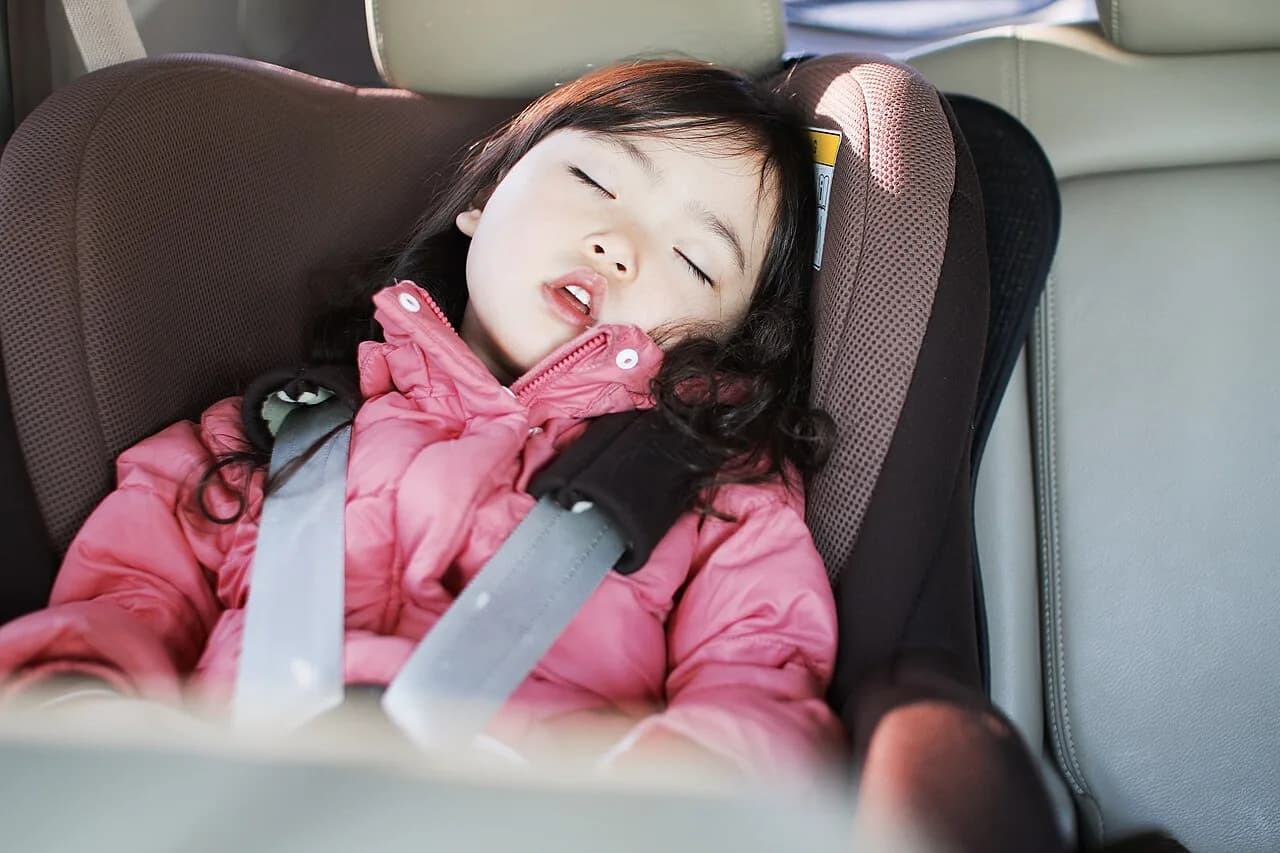
Toddler Sleep While Traveling: Routines, Gear & Jet Lag Tips
Master toddler sleep while traveling with practical tips on jet lag, hotel room setups, airplane naps, and the gear you actually need to pack.
On this page
Toddler Sleep While Traveling: A Practical Survival Guide
Last updated July 2026. Toddler sleep while traveling comes down to a repeatable system built from a well-rested start, the right gear, and a dark, quiet room. This guide covers airplane naps, sleep gear, and time zone shifts, so a shared hotel room doesn't mean a 5 a.m. wake-up for everyone.
Free guide: Stress-Free Flying with Kids
The pre-flight checklist, carry-on packing list, and in-flight survival plan we use on every family trip — from toddlers to teens.
The Golden Rule: Start Every Trip With a Well-Rested Toddler
The single biggest predictor of good toddler sleep while traveling is how rested your toddler is before the trip even starts. Packing, errands, and last-minute chores in the days before departure often eat into naps and push bedtime later.

A common instinct is to deliberately tire a toddler out before a flight or a long drive, hoping exhaustion guarantees sleep. That plan usually backfires. An overtired toddler doesn't fall asleep faster. Overtiredness spikes stress hormones and makes settling harder, both on the plane and in a new room.
Protect the sleep schedule for at least 48 hours before departure, even if it means saying no to one more pre-trip errand or playdate. A toddler who starts the trip with a sleep deficit carries that deficit forward. It shows up during the flight, the first night in a new room, and often the first vacation day too.
Toddler Sleep While Traveling by Air: Naps at 30,000 Feet
Airplane sleep is a trade-off between two flight strategies. A flight scheduled over a naptime lets a tired toddler doze through takeoff in a familiar rhythm. A red-eye or evening flight banks on bedtime sleepiness carrying through boarding, though a new environment, engine noise, and cabin lighting can work against that. Weigh naptime timing, total flight length, and how well your toddler generally sleeps outside their crib before choosing.
Plane cabins bring their own set of triggers: unfamiliar seatbelt clicks, strangers nearby, and a seat that doesn't feel like a crib. A toddler who resists sleep here isn't misbehaving. They're reacting to an unfamiliar environment. Keeping a familiar comfort item within reach, such as the same stuffed animal or blanket used at home, helps bridge that gap.
Getting a toddler to actually settle in a seat is its own project. Three gear options come up most often, and airlines differ on which they allow in which seats, so confirm compatibility with the specific carrier before departure.
When sleep does not happen, keep a backup plan ready. A mix of quiet toys and screen-free games can bridge an awake toddler through descent without a meltdown. The guide to airplane activities for toddlers covers that backup plan in more depth.
- A car seat installed on the plane, which mimics a familiar reclining position for toddlers who already nap in the car.
- A CARES harness, an FAA-approved restraint that clips into the existing seatbelt without checking a full car seat.
- An inflatable footrest that turns the floor space in front of the seat into a flat sleeping surface for smaller toddlers.
Choosing a Sleep Setup: Hotel Crib, Travel Crib, or Rental Gear
Hotels often list a crib on the room amenities page. What arrives at the door is usually a Pack 'n Play-style portable crib, not a full-size hotel crib. Request it when booking, not at check-in, since inventory is limited and first-come families get priority.
Whichever crib arrives, do a quick safety check. Look for a snug-fitting mattress, no gaps at the rails, and no extra padding, blankets, or pillows added inside that could be a suffocation risk. Because these portable cribs use a standard mattress pad, packing a fitted crib sheet from home also makes a strange bed feel familiar.
For a toddler who still fits a travel crib, this is usually the simplest option. There's no gear to check on the flight. Just inspect it on arrival for a torn mesh or missing rail.
For an inflatable toddler bed, floor pallet, or bed rail, gear rental services fill the gap. Baby's Away and rents4baby deliver cribs, bed rails, and other baby equipment to hotels and rental homes. Pricing a rental against airline baggage fees for bulky gear is often worth the five minutes it takes. Rental cost and availability vary by city and by how far in advance you book. Check current rates with the service directly rather than assuming a flat price.
| Sleep Solution | Best For | Portability | What to Check |
|---|---|---|---|
| Hotel-provided crib (usually a Pack 'n Play) | Toddlers still crib-sized, short stays | Nothing to pack | Request at booking; bring your own fitted sheet |
| Your own travel crib | Frequent travelers, multi-stop trips | Packs in a bag or checked luggage | Weight and set-up time before the trip |
| Inflatable toddler bed or bed rail | Toddlers who've outgrown a crib but aren't ready for an open bed | Deflates for packing; some models are bulky | Firmness and edge height for a toddler who moves at night |
| Rental service (Baby's Away, rents4baby) | Longer stays, vacation rentals, avoiding flight gear fees | Delivered and picked up on site | Confirm rates and delivery windows directly with the provider |
The Sleep Environment: Blackout, White Noise, and the Bathroom Nursery
A toddler's sleep space matters as much as the gear inside it. When a hotel room has only one bed and one crib, a bathroom or walk-in closet can double as a makeshift nursery. Make sure it has a vent or gap under the door for airflow. Never close a toddler into a fully sealed space, for ventilation and safety reasons.
Portable blackout shades and white noise help recreate familiar sleep conditions. However, the bedtime routine—bath, pajamas, book, and song in roughly 15 minutes—sets the actual sleep signal more than any piece of gear.
A vacation rental with a separate bedroom solves this more cleanly. A closing door plus portable blackout shades comes closer to a toddler's usual dark room than any hotel setup.
Three items do most of the work of recreating a familiar sleep environment away from home. Together, they make it possible to put a toddler down at a normal bedtime in a shared room, without the rest of the family tiptoeing in the dark for hours afterward.
- Portable blackout shades or curtains that suction or clip onto a hotel window, blocking hallway and streetlight glow that can trigger a 5 a.m. wake-up.
- A white noise machine, or a phone app in a pinch, to mask hallway noise, room service carts, and a shared-room parent's own movements.
- A privacy canopy such as a SlumberPod, which fits over a travel crib and combines blackout with a physical boundary in one piece of gear.
The 2.5-Year-Old Problem: When a Toddler Outgrows the Travel Crib
Somewhere around two to three years old, many toddlers outgrow a travel crib. They get too tall, too heavy, or too skilled at climbing out. At the same time, they aren't yet reliable in an open hotel bed. This gap is one of the most common travel sleep questions parents run into, and there is no single fix.

Inflatable bed rails turn a portion of an adult bed into a walled-off toddler space, which works well on a firm mattress. A floor pallet works too. Build one from couch cushions or a portable mattress topper, with pillows or rolled towels as a soft perimeter. That keeps a toddler low enough that a roll-out is a short drop, not a fall from bed height.
Some families use a tuck-in method instead. Line pillows along the open edge of the bed. An adult sleeping on the open side works as the last line of defense. Whichever setup you choose, test it at home before the first night away. That way a toddler already understands the new boundaries before lights-out.
Managing Time Zones and Toddler Jet Lag
Not every trip needs a full schedule change. For a time difference of one to three hours, or a trip lasting only two to three days, keeping a toddler on home time is often the easier strategy. Eat, nap, and handle bedtime by the clock they already know. That might mean an early dinner or a late breakfast relative to local time.
Toddler sleep strategies use consistent time adjustments: protecting 48 hours before travel, shifting time zones gradually by 15 to 30 minutes daily, and moving bedtime 30 to 60 minutes earlier after missed naps. These phased approaches prevent sudden changes that trigger overtired, harder-to-settle states.
For a longer stay or a bigger time change, shift bedtime and wake time by 15 to 30 minutes a day. Do this in the days before and after the trip, rather than jumping the full difference in one night.
Here's the time zone math in practice. A toddler with a 7:00 PM home bedtime traveling three zones east finds that 7:00 PM home time lands around 10:00 PM local time. Their body clock hasn't caught up yet, so anything near 7:00 PM local still feels like mid-afternoon, and early wake-ups the first morning are common.
Traveling three zones west reverses the math. 7:00 PM local time is only 4:00 PM to a toddler's internal clock. Bedtime typically needs to shift later by 10 to 30 minutes each evening. Daylight and outdoor time help the body clock catch up faster. Natural light exposure is what cues the body to produce melatonin at the right time, which is why bright mornings and a dim room in the evening matter more than any gadget for resetting a toddler's circadian rhythm.
Keep a toddler active and in bright light during the local daytime. Dim the room and start the wind-down routine as local bedtime approaches. Whichever direction the shift runs, hold onto the one-good-nap-a-day rule. Protect at least one nap at the accommodation instead of letting every nap happen on the move. A toddler who gets solid rest for part of the day handles a shifted schedule with far less meltdown risk.
Keeping the Bedtime Routine Intact in an Unfamiliar Room
Consistency does more work than any single piece of gear. If the at-home routine is bath, pajamas, a book, and a song in roughly 15 minutes, run that same sequence in the hotel room or rental. Do this even if the room looks nothing like the toddler's own. The steps themselves become the sleep cue, not the wallpaper.
Packing a blanket or sleep sack straight from the toddler's own bed, unwashed, keeps a familiar smell in the new space. It's a small detail with an outsized effect on how quickly a toddler settles somewhere new. This matters most on the first night or two of a longer trip, before the new environment has had time to feel normal.
Families weighing which kind of trip minimizes this disruption in the first place can start with low-stress toddler vacation ideas. For the rest of the planning around it, general toddler travel guidance covers the logistics beyond sleep.
Troubleshooting: What to Do When Toddler Sleep Falls Apart Anyway
Even with every strategy in place, some toddlers hit a rough patch a few days into a trip, sometimes called vacation sleep regression. New surroundings, extra stimulation, and a packed itinerary all add up.
When bedtime resistance or early waking sets in, the fastest fix is usually to strip the day back down. Cut activities, move bedtime earlier, and return firmly to the usual wind-down routine. Avoid experimenting with something new mid-trip.
If a nap gets skipped or cut short, shift bedtime 30 to 60 minutes earlier that evening to head off a second night of overtired waking. This applies just as much on an active beach day as it does after a long travel day. For families building beach time into the schedule, toddler beach vacation planning has more on pacing a sun-heavy itinerary around nap windows.
Sleep disruption from travel is temporary. Most toddlers return to their normal pattern within a few days of getting home, once the familiar room, crib, and routine are back in place.
For trip-planning details, see HealthyChildren.org (American Academy of Pediatrics).
Further reading: Travelling with children on Wikivoyage · Family travel on Wikipedia
Frequently Asked Questions
What age do toddlers typically outgrow a travel crib?
There's no fixed cutoff, but many toddlers outgrow a travel crib somewhere between two and three years old, once they're tall or agile enough to climb out. At that point, options like inflatable bed rails, a floor pallet, or a tuck-in method on an adult bed usually work better than forcing a too-small crib.
Should a toddler stay on home time zone or adjust to local time?
For a time change of one to three hours, or a trip of only two to three days, keeping a toddler on home time is usually simpler. For bigger time changes or longer stays, shift bedtime and wake time by 15 to 30 minutes a day instead of changing everything at once.
Is it safe for a toddler to sleep in a hotel bathroom?
A bathroom or walk-in closet can work as a makeshift nursery when a hotel room only has one sleeping space. Make sure there's a vent, an open door crack, or another source of airflow. Never seal a toddler into a fully closed room, for ventilation and safety reasons.
What's the best white noise option for travel?
A dedicated portable white noise machine is the most reliable option, since it doesn't depend on phone battery or signal. A phone app works as a backup. Pair it with portable blackout shades or a privacy canopy like a SlumberPod for the biggest difference in a bright or noisy hotel room.
How much earlier should bedtime move after a missed nap?
Shift bedtime 30 to 60 minutes earlier on any day a nap gets skipped or cut short. That head start helps prevent a toddler from swinging into an overtired, harder-to-settle state by the time night actually falls.
Free guide: Stress-Free Flying with Kids
The pre-flight checklist, carry-on packing list, and in-flight survival plan we use on every family trip — from toddlers to teens.
You might also like


Continue reading
More guides you'll find useful