

Natural History Museum NYC With Kids: The Complete AMNH Family Guide
A complete natural history museum NYC with kids guide: Titanosaur, Blue Whale, and Gilder Center highlights, plus 2026 timed-entry, cost, and stroller tips.
On this page
Visiting the American Museum of Natural History With Kids in NYC
Last updated July 2026, this guide breaks down the natural history museum NYC with kids into a plan you can actually follow instead of a fatigue-inducing marathon. The American Museum of Natural History packs the fourth-floor dinosaur wing, the 122-foot Titanosaur, and the suspended blue whale into one building on the Upper West Side. Expect to prioritize rather than see everything, since 40-plus permanent halls plus the Rose Center for Earth and Space span the entire building.
Free guide: Stress-Free Flying with Kids
The pre-flight checklist, carry-on packing list, and in-flight survival plan we use on every family trip — from toddlers to teens.
Tickets, Timed Entry, and Entrances: Planning the Natural History Museum NYC Visit With Kids
AMNH requires advance timed-entry reservations for general admission, so book your entry window online before you arrive. Three entrances lead into different parts of the building, and picking one that matches your plan saves backtracking once inside.
- The 77th Street entrance leads into the historic fossil-hall wing.
- The 81st Street entrance sits closest to the Hayden Planetarium and the Rose Center for Earth and Space.
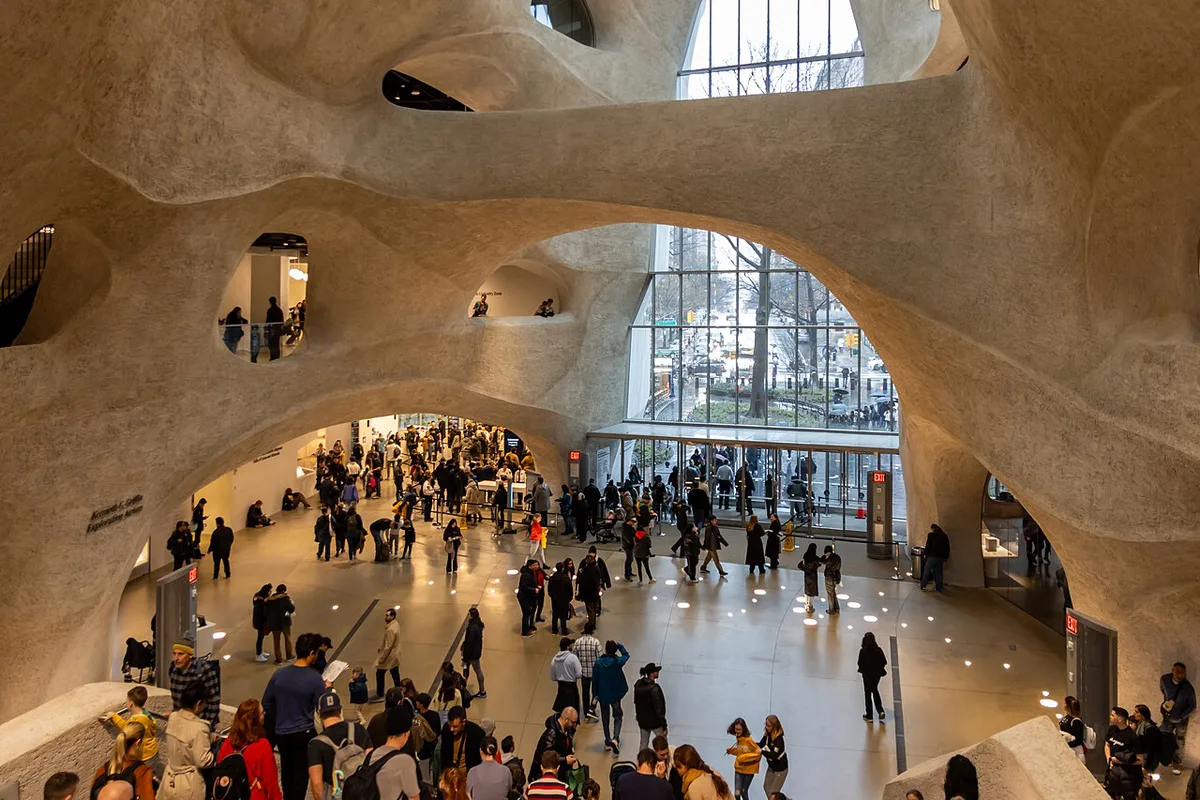
- The Gilder Center entrance opens into the newest wing, home to the Insectarium and Invisible Worlds.
Costs and Timed Entry: What General Admission Actually Covers
Security lines build through the morning at every entrance, so arriving right at opening matters more than which door you pick. Slot the museum into a four-day NYC family itinerary rather than stacking it against another full sightseeing day. Admission tiers scale with how many extras you want: General Admission covers the permanent halls, while Plus One and Plus All tiers unlock the Space Show, Butterfly Conservatory, and giant-screen films.
The Space Show requires same-day booking but prohibits stroller access, limiting add-on options for families with infants. This restriction, combined with the Butterfly Conservatory's October-to-May seasonal run, leaves few accessible special experiences beyond permanent halls during the typical two- to four-hour visit window.
| Ticket Type | What's Included | Cost Note |
|---|---|---|
| General Admission | Permanent halls: fossil wing, Milstein Hall of Ocean Life, Akeley Hall of African Mammals | Lowest-priced option; check the official AMNH ticketing page for the current rate |
| Plus One | General admission plus one special experience (Space Show, Butterfly Conservatory, or a giant-screen film) | Costs more than General Admission alone |
| Plus All | General admission plus every special exhibit and show running that day | Highest-priced tier; worth it only if the family will use every add-on |
| Pay-What-You-Wish | General admission for New York, New Jersey, and Connecticut residents | Suggested price; confirm current eligibility on the official site |
- New York, New Jersey, and Connecticut residents can typically use pay-what-you-wish suggested admission, one of the free NYC activities for kids worth checking before buying full-price tickets.
- Confirm current eligibility rules and pricing on the official AMNH ticketing page, since museum policies change year to year.
Top Things to Do With Kids at AMNH: The Must-See Halls
Forty-plus permanent halls compete for attention, but a handful reliably become the highlight of a family visit. Build the day around two or three of these rather than chasing every one in a single afternoon.
- Fourth-floor dinosaur wing: the 122-foot, roughly 70-ton Titanosaur fossil at the Wallach Orientation Center pokes its head through the gallery door because the room can't fully contain it. It's a cast of a titanosaur that lived in what's now Patagonia during the Late Cretaceous, added to the museum in 2016.
- Tyrannosaurus rex anchors the Hall of Saurischian Dinosaurs on the same floor.
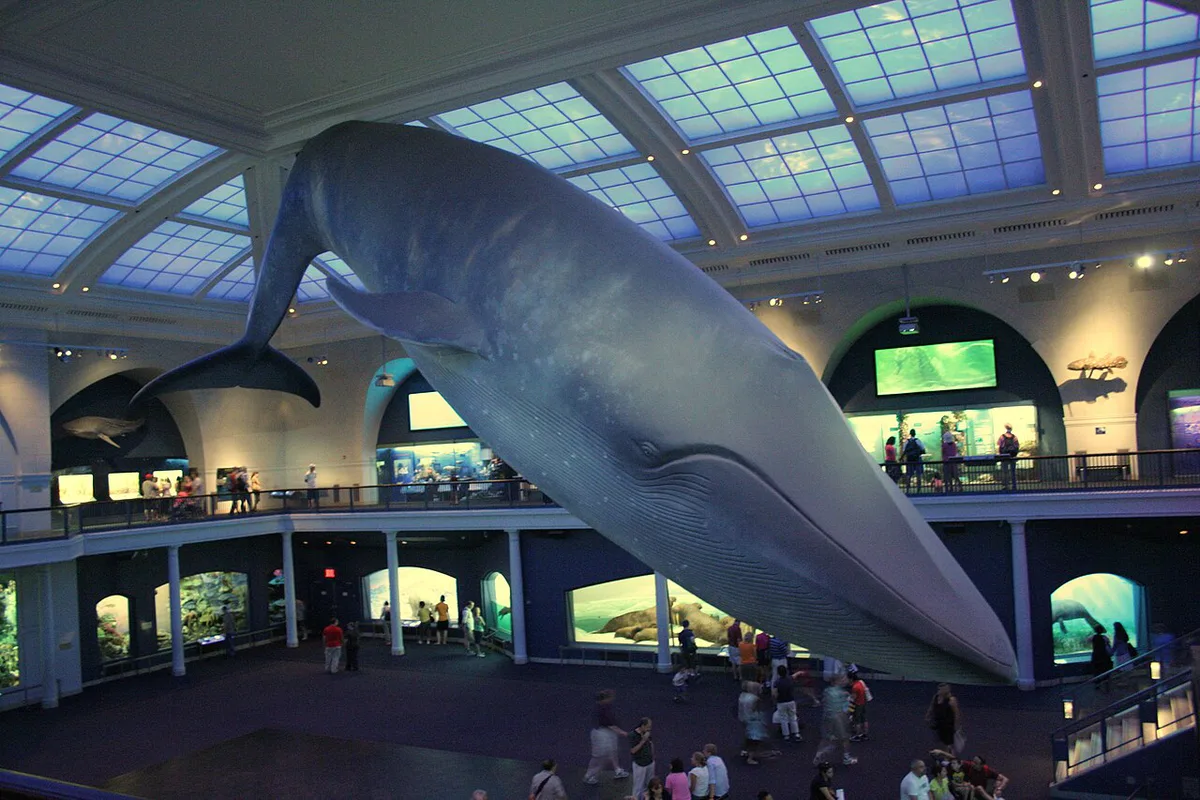
- Milstein Hall of Ocean Life: a suspended blue whale model overhead makes this hall a natural rest stop after the fourth floor.
- Akeley Hall of African Mammals: elephants posed mid-charge greet visitors, surrounded by 28 habitat dioramas.
- Hall of Biodiversity: a 100-foot Spectrum of Life wall and a walk-through rainforest diorama for families with extra time after the whale.
- Rose Center for Earth and Space: the Hayden Planetarium's Space Show suits older kids and teens better than toddlers.
- Butterfly Conservatory: a seasonal live exhibit open between October and May, set inside the Whitney Hall of Oceanic Birds.
Must-See Exhibits by Age: Toddlers, School Age, and Teens
Match halls to attention spans instead of covering the whole building. The table below sorts the highlights by age group so a route can be built around what each child will actually remember. For stroller routes and nap-time planning beyond the museum, toddler-friendly NYC planning covers the rest of the trip.
| Age Group | Best Halls | Why It Works |
|---|---|---|
| Toddlers (under 5) | Discovery Room, ground-floor Hall of Biodiversity, Milstein Hall of Ocean Life | Open sightlines and a suspended whale overhead hold short attention spans |
| School age (5-12) | Fourth-floor dinosaur halls, the Titanosaur, Akeley Hall of African Mammals | Scale and size drive curiosity at this age; the Discovery Room's activities are built for ages 5-12 |
| Teens | Rose Center for Earth and Space, the Hayden Planetarium Space Show, the Gilder Center's Invisible Worlds and Insectarium | Abstract science content and high-tech displays land better with older kids |
Planning Your Route to Avoid Museum Fatigue
Work top-down. Start on the fourth floor at opening, when the dinosaur halls are least crowded, then move down through Akeley Hall and Ocean Life as afternoon crowds build. The Discovery Room, a dedicated hands-on space for ages 5-12, is worth checking for current-day availability before committing time to it. Kids typically last two to four hours before museum fatigue sets in, so plan the visit around that window rather than a full day. Treat any extra time past the four-hour mark as a bonus, and build in a food break before energy dips.
The 122-foot Titanosaur and Tyrannosaurus rex should anchor the start of any fourth-floor route, not the finish, since kids typically have only two to four hours before museum fatigue sets in. Leaving these high-priority dinosaur halls for later after energy already dwindles is a common mistake that wastes the peak attention window.
Strollers, Food, and Restrooms: Practical Family Logistics
Logistics make or break a visit with young kids, and a few details are easy to miss until they cause a problem mid-visit.
- Strollers are allowed through most permanent halls but restricted inside some special theaters, including the Space Show.
- Elevators in the older wings run slow, so budget extra time between floors if you're pushing a stroller.
- The museum food court sits inside the historic building; the Gilder Center cafe is the newer option.
- Shake Shack and Levain Bakery sit nearby for a faster, cheaper bite than museum dining.
- The Gilder Center has the most modern restrooms in the complex.
The Night at the Museum Connection
Kids who've seen the Night at the Museum films recognize real halls and figures translated onto the screen. Rexy, the animated T. rex skeleton character, mirrors the Tyrannosaurus rex mount in the fourth-floor dinosaur halls. Dum-Dum, the wisecracking Easter Island head character, is modeled on the museum's moai cast. Teddy Roosevelt, another character from the films, ties back to Theodore Roosevelt's long association with the museum. Exhibit placement shifts over time, so confirm current signage once inside rather than relying on the films as a map.
Mistakes to Avoid When Visiting AMNH With Kids
A handful of planning mistakes turn a good AMNH trip into a rough one.
- Trying to see all 40-plus halls in one visit turns into a death march that ends in meltdowns.
- Skipping same-day booking for the Space Show time slot; reserve it immediately after arrival, before slots fill.
- Showing up on a weekend afternoon with no plan, right when crowds peak.
- Leaving the Titanosaur and fourth floor for last, after energy and patience have already run out.
Beyond the Museum: Central Park and Nearby Family Stops
The museum works well as half of a bigger day rather than the whole day. Central Park's Diana Ross Playground sits close enough for a same-day add-on once energy needs burning off. The New-York Historical Society, next door, houses the DiMenna Children's History Museum, making a double feature possible for families who want two stops without a long walk between them. Either stop works as a wind-down after a morning spent moving through dinosaur halls and ocean life exhibits. Cross-reference the citywide NYC kids guide for how this museum fits against the rest of the trip.
Bag Check and Security: Pack for Moving Between Wings
Security screening happens before you enter the museum, so keep the family load simple. A small backpack or diaper bag is easier than juggling loose coats, souvenirs, and extra layers through the fossil halls. The biggest friction comes after security, when you start moving between Central Park West, the Rose Center, and the Gilder Center.
If you enter near 77th Street, you are well placed for the fourth-floor dinosaur halls, but stroller elevator waits can slow the climb. The 81st Street entrance works better for families starting with the Hayden Planetarium or Rose Center for Earth and Space. The Gilder Center entrance is useful if the Insectarium, Invisible Worlds, cafe, or newer restrooms are early priorities.
Before leaving the lobby area, handle three basics:
- Confirm special-exhibit or Space Show times.
- Check the nearest elevator route on the museum map.
- Use the restroom before heading to the older wings.
For trip-planning details, see American Museum of Natural History official site.
Further reading: New York on Wikivoyage · New York on Wikipedia
Frequently Asked Questions
How long should you plan to spend at the American Museum of Natural History with kids?
Budget two to four hours for most families before museum fatigue sets in. Add extra time if you've booked the Space Show or the Butterfly Conservatory.
Do you need timed-entry tickets for AMNH?
Yes. Advance timed-entry reservations are required for general admission, so book your entry window online before you go, especially for weekend visits.
Which AMNH entrance is best for families with strollers?
Any entrance works for strollers, though elevators in the museum's older wings run slow. Build in extra time between floors regardless of which door you use.
Is the Butterfly Conservatory open year-round?
No. It runs as a seasonal exhibit between October and May inside the Whitney Hall of Oceanic Birds, so confirm current dates before planning around it.
Can New York-area residents visit AMNH for free?
New York, New Jersey, and Connecticut residents can typically use pay-what-you-wish suggested admission. Confirm current eligibility rules on the official AMNH ticketing page before you go.
Free guide: Stress-Free Flying with Kids
The pre-flight checklist, carry-on packing list, and in-flight survival plan we use on every family trip — from toddlers to teens.
You might also like


Continue reading
More guides you'll find useful


