

Huntington Beach State Park With Kids: A Complete Family Guide (2026)
Planning Huntington Beach State Park with kids? Get 2026 admission prices, alligator-safe viewing tips, Atalaya castle hours, and beach access advice for families.
On this page
Huntington Beach State Park With Kids: Tips, Costs, and Must-See Spots
Last updated July 2026, this guide to Huntington Beach State Park with kids breaks down admission costs, alligator-safe viewing spots, and whether the drive from Myrtle Beach is worth it. Roughly 30 minutes south of the main hotel strip, near Murrells Inlet, this park trades boardwalk crowds for marsh trails and a historic mansion. A nature center with touch tanks adds an easy indoor stop for younger kids.
Free guide: Stress-Free Flying with Kids
The pre-flight checklist, carry-on packing list, and in-flight survival plan we use on every family trip — from toddlers to teens.
Is Huntington Beach State Park With Kids Worth the Drive?
Huntington Beach State Park with kids works best as a change of pace from the Myrtle Beach boardwalk, not a full replacement for beach days there. The park sits about 30 minutes south of the main Myrtle Beach hotel strip, near Murrells Inlet, and covers roughly 2,500 acres of marsh, forest, and open beach. Expect a freshwater lake with resident alligators and a Moorish-style mansion instead of arcades, waterslides, and mini-golf. The short answer for most families: it is worth the drive if anyone in the group cares about wildlife, history, or a slower beach morning away from the crowds. Families with a full Myrtle Beach itinerary can treat this as one dedicated nature day rather than the whole trip's beach plan. Families who want something closer to the hotels, with less driving and a faster beach setup, may prefer the layout covered in the Family Decision Matrix further down this guide. Pack the day expecting more walking and more sun than a boardwalk afternoon, with less air-conditioned downtime unless you build in a Nature Center stop.
Quick Logistics: Admission Fees, Hours, and Peak-Hour Timing
Entry to Huntington Beach State Park follows South Carolina's standard state park pricing structure, charged by age bracket at the gatehouse. Atalaya costs extra on top of general park admission, billed separately once inside. Weekend mornings between 10 a.m. and 2 p.m. draw the heaviest crowds of the week. The park has reported temporary closures during those peak hours once the lots fill, so a family arriving at noon on a Saturday risks being turned away. Arriving before 10 a.m., or waiting until after 2 p.m., gives noticeably better odds of finding a parking spot without a wait. Families visiting several South Carolina state parks during the same trip can check the current South Carolina State Park family pass options at the official site; a pass can lower the per-visit cost across multiple stops. Note that fee amounts and hours can shift with the season, so confirm current admission and hours on the park's own site before the trip.
Atalaya opens at 9 a.m., Nature Center at 10 a.m., and peak crowds between 10 a.m.–2 p.m. trigger temporary lot closures, requiring families planning multiple attractions into one day to arrive before 9 a.m.
| Item | 2026 Price / Hours |
|---|---|
| Adult admission | $8 |
| S.C. senior admission | $5 |
| Youth admission (ages 6-15) | $4 |
| Children 5 and under | Free |
| Atalaya add-on (ages 6+) | $2 per person |
| Park hours | 6 a.m.-6 p.m. daily (9 p.m. during Daylight Saving Time) |
| Atalaya hours | 9 a.m.-4 p.m. daily (5 p.m. during Daylight Saving Time) |
| Nature Center hours | 10 a.m.-5 p.m. daily |

The Causeway: Alligator Spotting and Bird-Watching With Kids
The entrance causeway crosses the park's freshwater lake and is widely considered the single best wildlife-viewing stop inside the park. The lake habitually holds alligators, and the park has logged more than 300 bird species within its boundaries over time. Mink sightings also turn up near the causeway on occasion, though far less predictably than the alligators. Because the causeway doubles as the park's entrance road, cars move slowly, which makes it manageable to view wildlife with toddlers still buckled in or with school-aged kids leaning out a cracked window. Keep the stop safe by treating every alligator as wild and unpredictable, never as a photo prop or a pet.
- Stay inside the car or on the paved shoulder whenever an alligator is visible near the causeway.
- Keep children and pets several car-lengths back from the water's edge at all times.
- Never feed, approach, or crouch near an alligator, even for a photo.
- Hold hands with toddlers and preschoolers near any unfenced water along the causeway or lake.
- Turn the stop into a family game with a simple wildlife bingo card: check off herons, egrets, alligators, and turtles as the group spots them.
Atalaya Castle: A Family History Adventure
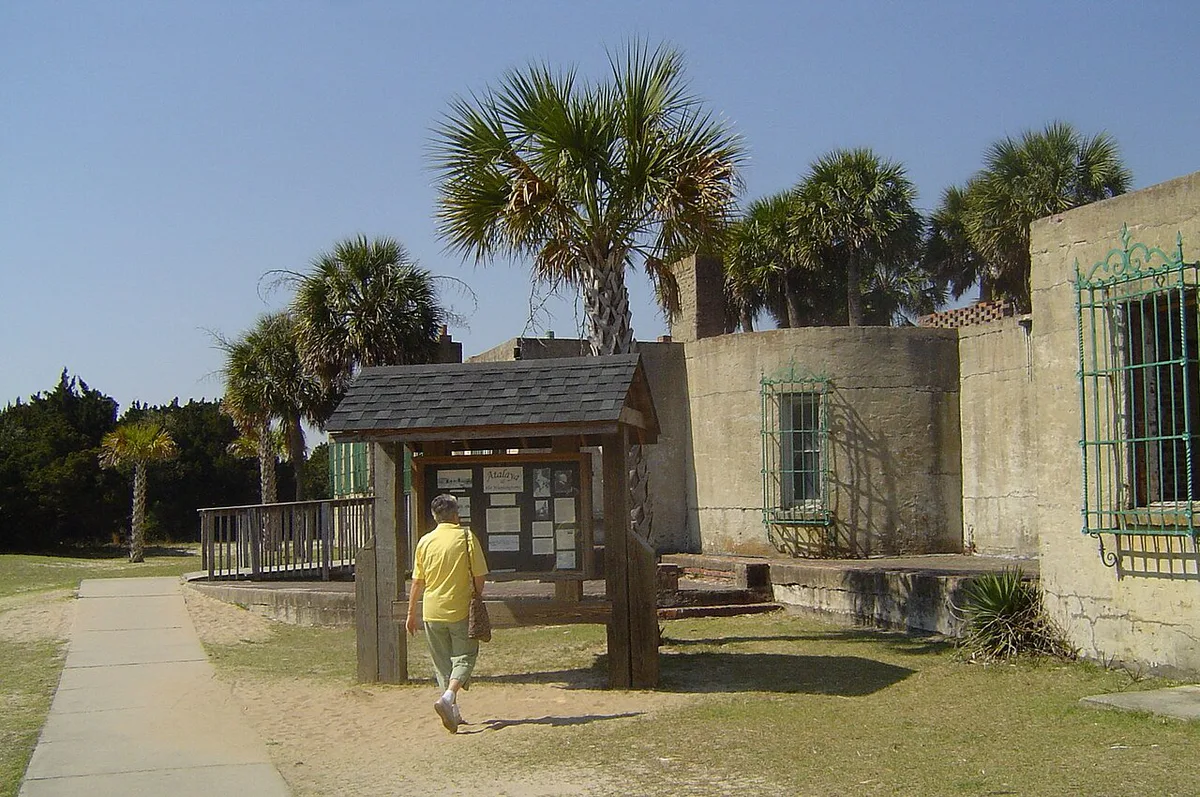
Atalaya is the Moorish-style winter home Archer and Anna Hyatt Huntington built on the property, and it now holds National Historic Landmark status. For kids, the easiest way to frame a visit is as a castle exploration rather than a formal historic-home tour. The courtyard, arched doorways, and maze-like room layout give the history lesson a hands-on feel that holds attention better than reading wall plaques. Entry costs $2 per person for ages 6 and up, on top of general park admission; children 5 and under get in free. Atalaya keeps separate hours from the rest of the park, open 9 a.m. to 4 p.m. daily, extended to 5 p.m. during Daylight Saving Time. It also hosts events such as the Atalaya Arts and Crafts Festival, held every September for more than 40 years, and it can close to visitors during private bookings or large events. Check the park's current advisories before building a family day around it, especially outside the standard visiting window.
The Nature Center and Touch Tanks
The Nature Center is open 10 a.m. to 5 p.m. daily and works well as a shaded, indoor break between outdoor stops. Exhibits include a touch tank stocked with local marine species, an alligator exhibit, a birding display, and several aquariums showing the park's marsh and shoreline wildlife up close. It is a smaller-scale, more low-key alternative to a full aquarium day at Ripley's Aquarium in Myrtle Beach, and it is included with regular park admission rather than a separate ticket. For a trip that mixes both parks, treat the Nature Center as the quick, free-with-admission stop and save the full aquarium visit for a dedicated day closer to the hotels.
Beach Day Logistics: North Jetty vs. South Beach for Families
Huntington Beach State Park has two main parking areas, and each sets up a different kind of beach day. The north lot sits closest to the jetty, where surf fishing and jetty fishing are popular activities; a valid South Carolina fishing license is required for anyone fishing. The south lot sits next to the gift shop and Spoonbills Ice Cream, with a more direct, easier walk to the sand for families hauling coolers and beach gear. There are no lifeguards on duty anywhere on the beach, so swimming in the Atlantic is at your own risk regardless of which lot the group parks in. A boat ramp at Oyster Landing, about a mile from the park entrance, gives access to the inlet for families bringing their own boat. Whichever lot the group starts from, plan to walk from parking to sand rather than expecting a drop-off directly on the beach.
- North parking lot: jetty and surf fishing access; dogs are not permitted on this stretch of beach.
- South parking lot: gift shop, Spoonbills Ice Cream, and the shortest walk to the sand.
- Spoonbills Ice Cream keeps limited hours, so pack a cooler as backup rather than planning around it being open.
Hiking and Biking: Sandpiper Pond Trail and the Marsh Boardwalks
Sandpiper Pond Trail runs two miles and works well as a family hike, flat enough for younger kids on foot or trailing behind on a bike. The quarter-mile Kerrigan Trail is much shorter, with boardwalks extending into the saltmarsh and freshwater lagoon for close-up wildlife viewing without a long walk. Biking is allowed on the park's roads and trails, which makes it easy to cover more ground with kids who tire out on foot partway through the day. The Nature Center's marsh boardwalk has been closed to the public due to ongoing construction; check current park advisories before planning a stop there, since access can change without much notice.
Huntington Beach State Park vs. Myrtle Beach State Park: Family Decision Matrix
Both parks work for a family beach day, but they solve different problems depending on where the group is staying. Huntington Beach State Park sits about 30 minutes south of central Myrtle Beach, near Murrells Inlet, and leans into marsh, forest, and undeveloped shoreline rather than a developed boardwalk feel. For families staying closer to the main hotel strip who want a shorter drive and a faster beach setup, the Myrtle Beach State Park guide covers that park's own fees, hours, and layout in detail. Use the table below as a quick gut check before committing a full day to either option.
| Feature | Huntington Beach State Park | Myrtle Beach State Park |
|---|---|---|
| Distance from central Myrtle Beach | About 30 minutes south, near Murrells Inlet | Inside city limits, shorter drive |
| Overall feel | Marsh, forest, undeveloped shoreline | More developed, closer to the boardwalk |
| Signature draw | Atalaya castle and alligator-spotting causeway | Fishing pier and quick beach access |
| Best for | A dedicated nature and history day | A shorter trip with less driving |
Know Before You Go: Pets, Golf Carts, Bugs, and Sunscreen
Huntington Beach State Park is dog-friendly year-round, and leashes cannot exceed six feet at any time. Dogs are allowed on the south end of the beach only; they are prohibited inside buildings, including Atalaya, and on the north end of the beach near the jetty. The park also maintains a golf cart policy for on-site use; check the current rules at the gatehouse before bringing one along, since requirements can change. Marsh areas can bring out biting flies and mosquitoes, especially near the causeway and the boardwalks, a detail many overviews of the park leave out. Pack insect repellent alongside sunscreen, and plan on reapplying both partway through a full day outdoors. With no shaded boardwalk stretch like the ones closer to the hotels, sun exposure adds up fast during a beach afternoon here. Bring closed-toe shoes for trail sections, since sandals are less practical once the path moves off pavement and onto sandy or root-covered ground.
Alligators and Atalaya castle are signature draws, but biting flies and mosquitoes in marshes are often overlooked in park guides, making insect repellent as important as sunscreen for a comfortable visit.
Nearby Add-Ons: Brookgreen Gardens and Murrells Inlet Dining
Brookgreen Gardens sits adjacent to the park and shares the same origin story. Archer and Anna Hyatt Huntington left both properties as their legacy, and Brookgreen's sculpture gardens make a natural pairing with a Huntington Beach morning for families who want to stretch the nature theme into a full day. For dinner, restaurants along the Murrells Inlet waterfront are a short drive from the park entrance, with more sit-down options than the immediate park area offers. Because Spoonbills Ice Cream and the gift shop are the only food options inside the park itself, and Spoonbills keeps limited hours, packing a cooler with snacks and drinks is worth doing regardless of dinner plans. If the group needs a higher-energy stop later in the trip, Broadway at the Beach offers a sharp contrast to the park's quiet trails, and the mini-golf courses guide covers options for a rainy-afternoon backup.
For trip-planning details, see South Carolina State Parks — Huntington Beach State Park and Brookgreen Gardens official site.
Frequently Asked Questions
Is Huntington Beach State Park better for kids than Myrtle Beach State Park?
It depends on what the day needs most. Huntington Beach State Park suits families who want alligator-spotting from a safe distance, a castle-style history stop at Atalaya, and marsh trails away from crowds. Myrtle Beach State Park suits families who want a shorter drive from the hotel strip and quicker beach access without as much planning. Neither is strictly better for every group. Use the Family Decision Matrix above to match the park to the day you actually want.
Can you see alligators at Huntington Beach State Park?
Yes. The freshwater lake along the entrance causeway is a reliable spot for alligator sightings, and park staff point to the causeway as one of the best wildlife-viewing areas on site. Always view alligators from inside the car or from the paved shoulder, keep a safe distance at all times, and never feed them. Treat every sighting as wildlife, not a photo opportunity.
How much does it cost for a family to visit Huntington Beach State Park?
As of 2026, Huntington Beach State Park charges $8 per adult, $5 per South Carolina senior, and $4 per youth ages 6 to 15; children 5 and under are free. Atalaya costs an extra $2 per person for ages 6 and up, with children 5 and under admitted free there as well. Two adults with young kids could pay as little as $16 for park entry alone.
Is Atalaya worth the extra fee for kids?
For most families, yes. The $2 add-on per person covers a Moorish-style mansion kids can explore room by room, with a courtyard and arched doorways that read more like a castle than a typical historic-home tour. Framing the visit as a castle exploration, rather than a straight history lesson, tends to hold younger kids' attention better than a standard guided walk-through.
Are there lifeguards at Huntington Beach State Park?
No. Swimming in the Atlantic Ocean at Huntington Beach State Park is at your own risk, with no lifeguards on duty at either the north or south beach access. Keep younger swimmers within arm's reach, and treat the ocean here the same way you would any unguarded beach on a family trip.
Free guide: Stress-Free Flying with Kids
The pre-flight checklist, carry-on packing list, and in-flight survival plan we use on every family trip — from toddlers to teens.
You might also like


Continue reading
More guides you'll find useful


