

Hanauma Bay With Kids: 2026 Parent's Guide to Reservations & Snorkeling
Planning Hanauma Bay with kids? Get the 2026 reservation steps, entry fees, parking tips, and age-by-age snorkel gear advice for families.
On this page
Hanauma Bay With Kids: The Essential 2026 Family Guide
Last updated July 2026. Planning Hanauma Bay with kids means working around a mandatory reservation system, a nine-minute orientation video, and a parking lot that caps at 300 cars. This guide breaks down the booking window, current entry costs, and age-by-age snorkeling tips so your family isn't turned away at the gate. Use it alongside the broader Honolulu with kids guide to slot this stop into the rest of your Oahu days.
Free guide: Stress-Free Flying with Kids
The pre-flight checklist, carry-on packing list, and in-flight survival plan we use on every family trip — from toddlers to teens.
Hanauma Bay With Kids: The Fast Answer
Hanauma Bay Nature Preserve requires an online reservation for every non-resident visitor, including children. Walk-up entry is not guaranteed, and the parking lot caps at 300 cars, so a booked slot does not promise a parking spot once the lot fills. The preserve has historically closed two days a week to let the reef recover; confirm the current 2026 closure days before you pick a date. Every guest, kids included, watches a short educational film before reaching the water.
- Best suited to kids around age 5 and older who can sit through a short film and manage a walk down a hill to the beach.
- Reserve online before you arrive. Non-resident families cannot count on walk-in entry.
- Confirm the current closure days, hours, and fees on the official reservation site before you commit to a date.
Hanauma Bay Reservations for Families: How the System Works
The online reservation system has historically opened two days ahead of a visit date, with slots released at 7:00 a.m. Hawaii Standard Time. Demand is high, and time slots have sold out within minutes of release. Build your Hanauma Bay reservations for families around that window rather than trying your luck at the gate.
Book two days ahead (slots sell out within minutes), then plan to arrive by 7 a.m. to beat the 300-car parking lot, which fills by 9 a.m.
- Decide on your visit date, then mark your calendar for two days prior.
- Log on to the official reservation portal right at the opening time. Confirm the current release time before you plan, since schedules can shift.
- Book a morning or afternoon slot for each family member traveling with you.
- Save a screenshot of your confirmation and bring a matching photo ID for the reservation holder.
- Arrive inside your booked window. Even a confirmed reservation does not guarantee a parking space if the 300-car lot is already full.

Hanauma Bay Entry Fee 2026: Costs, Parking, and Hours
Entry pricing has climbed since the baseline non-resident rate of $12 per person for guests 13 and older; treat that figure as a floor, not a current quote. Confirm the exact 2026 fee on the official reservation site before you budget for the day. Hours have historically run from early morning to mid-afternoon, with the preserve closed two days a week for reef rest.
| Item | Earlier published rate | 2026 planning note |
|---|---|---|
| Entry, ages 13+ | $12 per person | Rates have risen since this baseline; confirm the current fee before booking. |
| Entry, ages 12 and under | Free with a paying adult | Confirm the current child age cutoff at reservation. |
| Parking, non-resident | About $3 per vehicle | Lot holds 300 cars and closes when full, even for reservation holders. |
| Kamaʻāina and military | Free entry with ID | Bring physical ID; confirm whether this still applies at the gate. |
Should You Take Your Kids to Hanauma Bay?
Weigh a few trade-offs before locking in a Hanauma Bay day with young kids.
- Cost versus payoff: per-person entry costs more than a typical beach day, but the payoff is calm, reef-sheltered water with many fish species close to shore.
- Booking stress versus on-site ease: the two-day booking window sells out fast, yet the preserve has restrooms, showers, and a snack bar once your family is inside.
- Age fit: the nine-minute film and the walk down to the beach suit kids around age 5 and up better than toddlers, who may struggle to sit still or manage the hill.
Snorkeling With Toddlers and Non-Swimmers
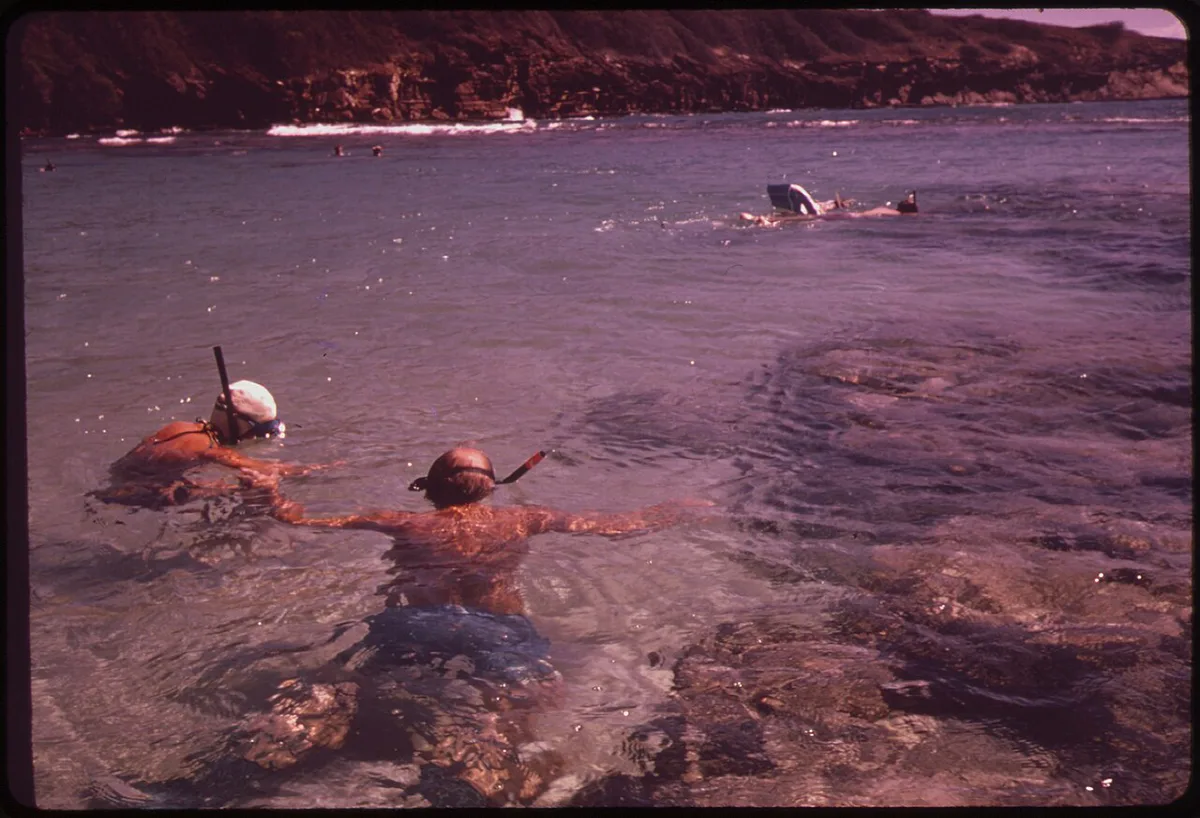
Goggles work better than a full mask and snorkel for toddlers and non-swimmers. A tight mask seal is hard to achieve on a small face, and a snorkel adds a skill most toddlers have not practiced. The entry area is shallow, which makes fins awkward for little legs still learning to balance in the sand. Keep young kids within arm's reach at all times. Shallow water blackout is a real risk in preserve conditions, so treat close supervision as non-negotiable, not optional.
- Pack goggles instead of a full mask and snorkel for kids under about 5.
- Skip fins for toddlers; the shallow, sandy entry makes them more of a hazard than a help.
- Stay within arm's reach in the water at all times, even in the shallow zone.
Snorkeling With School-Aged Kids
School-aged kids who have practiced mask-and-snorkel breathing in a pool tend to pick up the skill quickly at Hanauma Bay. Fins can still trip kids up in the shallow, sandy entry point before the water deepens. Water shoes protect small feet from sharp reef rock better than bare feet, and they matter as much as any snorkel gear on this trip. Reinforce the no-touch rule before kids reach the water: reef contact damages coral and can cut small hands and feet.
Five-year-olds typically graduate from goggles-only to practicing mask-and-snorkel in a pool first, marking the shift from toddler hand-holding to independent shallow-water snorkeling.
- Practice mask-and-snorkel breathing in a pool before the trip if possible.
- Bring water shoes for the walk in and the shallow, rocky entry.
- Repeat the no-touch-coral rule right before kids enter the water.
Fish Kids Can Actually Spot at Hanauma Bay
Hanauma Bay's shallow reef makes fish-spotting realistic for young kids, even without deep diving. Give kids two or three species to look for before they get in the water; it keeps the game focused instead of overwhelming.
- Humuhumunukunukuapuaʻa, the reef triggerfish and Hawaii's state fish, is a favorite name for kids to practice.
- Parrotfish are easy to spot biting at coral and often appear in bright colors.
- Butterflyfish, tang, and Moorish idols swim in shallow, well-lit water close to the sand.
- Sea cucumbers sit still along the coral edge, which makes them an easy first find for younger kids.
Planning Your Hanauma Bay Morning: A Simple Timeline
Mornings work better than afternoons for Hanauma Bay with kids, since the parking lot has historically filled between 7 and 9 a.m. Families staying in Waikiki hotels with kids should factor drive time to the southeast coast into that window. Plan a three-hour block from arrival to departure, and keep expectations realistic: young kids tend to get cold and tired well before adults do.
- Arrive by 7 a.m. if possible; the 300-car lot can fill before 9 a.m. on busy days.
- Budget about 20 minutes in line for the ticket booth and the nine-minute educational film.
- Plan roughly an hour in the water for young kids before they get cold and want a break.
- Get a hand stamp before heading up the hill for the snack bar, so you skip the film a second time.
- Because mornings run long here, avoid stacking this with a same-day Pearl Harbor visit; split the two across separate days instead.
What to Pack for Hanauma Bay With Kids
Pack light but pack specifically; the preserve has limited on-site gear since rentals were suspended after the 2020-2021 closure. Confirm current rental availability before you count on it, and consider buying affordable gear at a Waikiki ABC Store ahead of a longer trip instead of renting by the day.
- Reef-safe, mineral-based sunscreen or a UV rash guard; the preserve asks visitors to skip sunscreens that harm coral.
- Mask, snorkel, and fins for kids who have practiced them, or goggles for toddlers and beginners.
- Water shoes for the shallow, rocky entry area.
- A wetsuit top if your kids chill easily; the water cools fast for small bodies.
- A cooler with water and snacks; glass and alcohol are not allowed, and size limits apply, so confirm current rules.
- Cash for the paid trolley between the parking lot and the beach.
- A waterproof phone case or dry bag for keys, cards, and photos.
Mistakes to Avoid at Hanauma Bay With Kids
A few avoidable mistakes cause most of the frustration for families at Hanauma Bay.
- Skipping the reservation and assuming walk-in entry will work for a non-resident family.
- Arriving after 9 a.m. and finding the 300-car lot already full.
- Not preparing kids for a roughly 20-minute line and a nine-minute film before entry.
- Letting kids touch or stand on coral, which damages the reef and can cut small feet.
- Forgetting a hand stamp before heading up for food, which means sitting through the film again to get back in.
- Leaving cash at the hotel and getting stuck without trolley fare for the walk back up.
Alternatives for Families Without a Hanauma Bay Reservation
If the two-day booking window sells out before you can grab a slot, build a backup day instead of waiting on a cancellation. The North Shore snorkeling spots give families a reservation-free alternative for calm, shallow water. Slot either stop into the rest of an Oahu week rather than treating it as a make-or-break morning.
Getting Down to the Beach: The Hill and Trolley
The parking area and visitor center sit above Hanauma Bay, not beside the sand. Families must descend a steep paved road after the required orientation film.
Walking downhill is manageable for many children, but the return climb can be tiring after swimming. Heat, wet gear, and a tired toddler make the uphill trip harder. Allow extra time before your planned departure.
A trolley runs between the upper level and the beach. It can save energy for snorkeling, especially for families carrying coolers or several gear bags. Service and fares can change, so check the posted schedule and bring cash rather than relying on a card.
- Use the trolley downhill if a child struggles with steep slopes.
- Keep towels, water, and snorkel gear in one easy-to-carry bag.
- Expect a possible wait when many families leave together.
- Do not schedule a tight pickup immediately after your swim.
Families with toddlers should treat the hill as part of the visit, not a quick beach entrance. Save enough energy and water for the return to the parking lot.
For trip-planning details, see Hanauma Bay on Wikipedia and Go Hawaii — official Oahu travel site.
Frequently Asked Questions
Do you need a reservation to bring kids to Hanauma Bay?
Yes, non-resident families need an online reservation before arrival. Hawaii residents and military with ID have historically skipped this step, but confirm the current policy on the official reservation site before your trip.
What days is Hanauma Bay closed in 2026?
The preserve has historically closed every Monday and Tuesday to give the reef a rest. Confirm the current 2026 closure schedule on the official site, since holiday closures like Christmas and New Year's Day have applied in the past.
How much does Hanauma Bay cost for a family with kids?
Earlier visitors paid $12 per person for guests 13 and older, with younger kids admitted free alongside a paying adult, and non-resident parking ran about $3 per car. Rates have risen since then, so check current 2026 pricing on the reservation site before you budget.
What age is right for snorkeling with kids at Hanauma Bay?
In our editorial assessment, kids around age 5 and up handle the nine-minute educational film and the walk down to the beach more easily than toddlers. Younger children can still enjoy the shallow shoreline with goggles instead of a full snorkel setup.
Is the Hanauma Bay trolley free for kids?
The trolley between the parking lot and the beach has run on a paid, cash basis. Confirm the current per-rider fare on-site, since posted rates change.
Can toddlers snorkel at Hanauma Bay?
Toddlers can wade and use goggles in the shallow entry area, but full mask-and-snorkel gear and fins work better for kids who have practiced in a pool first. Keep close supervision at all times, since shallow water blackout and sharp reef sections are real risks for small children.
Free guide: Stress-Free Flying with Kids
The pre-flight checklist, carry-on packing list, and in-flight survival plan we use on every family trip — from toddlers to teens.
You might also like


Continue reading
More guides you'll find useful


