

Costa Rica With Kids: 4 Best Regions for Your 2026 Family Trip
Costa Rica with kids, planned right: compare four family bases, real transfer times, park closures, and age-specific tips for toddlers through teens in 2026.
On this page
4 Best Regions to Visit in Costa Rica With Kids
Last updated July 2026, Costa Rica with kids is one of the more workable international trips for families new to Central America. Wildlife sightings, volcano views, and beach time sit within a few hours of each other, but mountain roads mean short map distances still take real time. This guide breaks the country into family-proven bases, flags the friction points guidebooks skip, and points to age-specific advice for toddlers through teens.
Free guide: Stress-Free Flying with Kids
The pre-flight checklist, carry-on packing list, and in-flight survival plan we use on every family trip — from toddlers to teens.
Is Costa Rica Good for Kids? Age-by-Age Reality Check
Costa Rica works differently depending on the age riding in the back seat. Toddlers face real friction, since sidewalks are inconsistent and jungle trails and hanging bridges aren't stroller-friendly. A baby carrier does more work than a stroller on this trip. School-age kids get the most out of the country. They're old enough for short hikes, sloth walks, and hanging bridges, but still find wildlife spotting exciting rather than routine. Teens are ready for ziplining, surf lessons, and longer hikes like the Rio Celeste waterfall trail. Families traveling with kids under three should read the Costa Rica with toddlers guide before booking, since stroller access and nap-time logistics reshape the whole itinerary. On safety, Costa Rica has stronger tourist infrastructure than many Central American neighbors, and the main family hubs see heavy year-round family traffic. That doesn't remove the basics: standard precautions around rental-car break-ins at trailheads and beach parking lots still apply, the same as anywhere with a tourist economy.
- Toddlers (roughly 0-3)
- Stroller access is limited on jungle trails and hanging bridges, so plan on a baby carrier instead.
- Shorter, slower days work better than long park hikes; hotel pools and hot springs fill the gaps well.
- School-age (roughly 4-11)
- This is the age group Costa Rica suits best: sloth walks, hanging bridges, and gentle Class I-II rafting all fit.
- Rio Celeste's waterfall hike runs about 30 minutes each way on a flat path, workable for most kids this age, though the 200 steps down to the falls can slow a group.
- Teens (12+)
- Ziplining, surf lessons in Santa Teresa or Nosara, and Rio Celeste tubing all suit this age best.
- Night walks, which run about two hours, work better for teens who can handle a later bedtime than for younger siblings.
4 Best Regions for a Costa Rica Family Trip With Kids
Instead of one long loop, anchor a Costa Rica trip with kids in a handful of regional bases and settle in for a few nights at each. These four cover the country's main draws for families.
Travel between hubs routinely takes three to five hours because of mountain terrain and unpaved roads. Settling across three regional bases over ten days minimizes transfers and maximizes park time with kids.
- La Fortuna and Arenal: the adventure hub
- The Arenal Volcano backdrop gives families some of the most accessible volcano views anywhere in the country, and La Fortuna's hot springs turn a hike day into a soak by evening.
- Mistico Park's hanging bridges cover six to eight spans in about 1.5 to 2 hours self-guided; add a guide with a viewing scope to actually spot wildlife instead of a wall of green leaves.
- Sloth walks run locally in La Fortuna and pair well with a hot-spring afternoon. See the full La Fortuna and Arenal guide for hotel picks and day-by-day pacing.
- Manuel Antonio: the wildlife hub
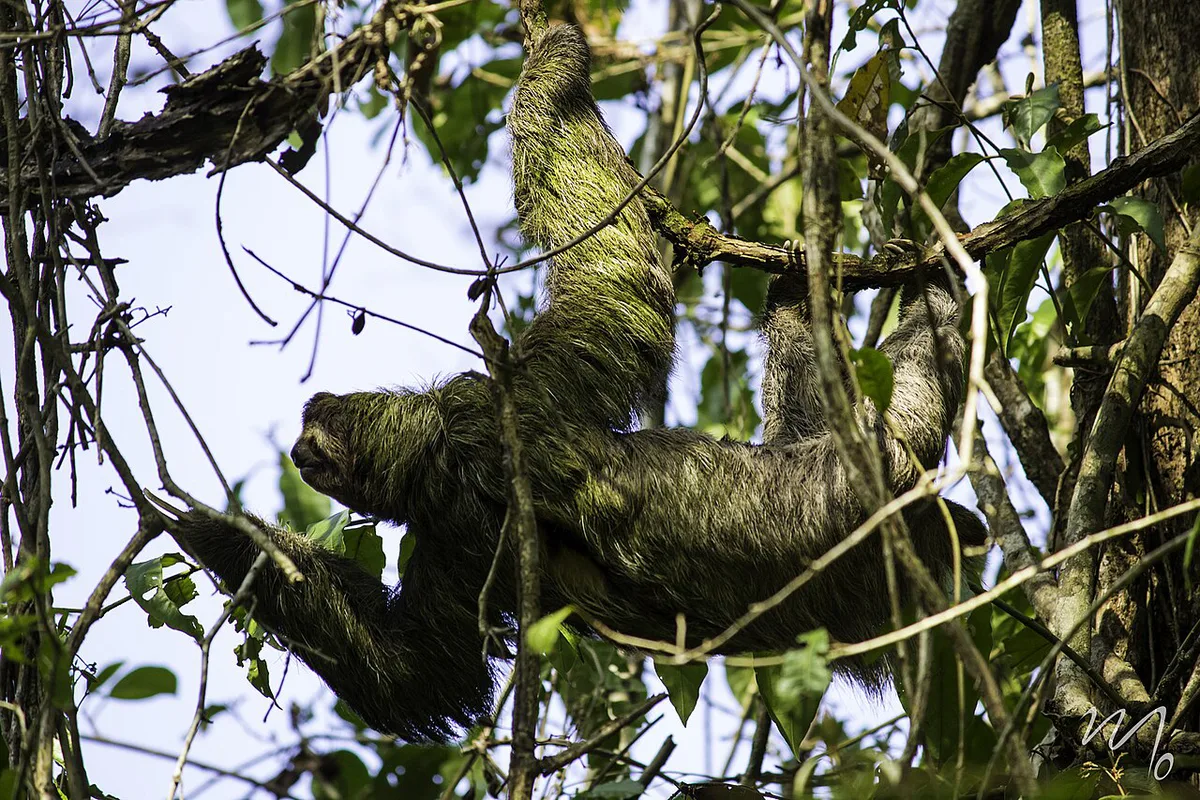
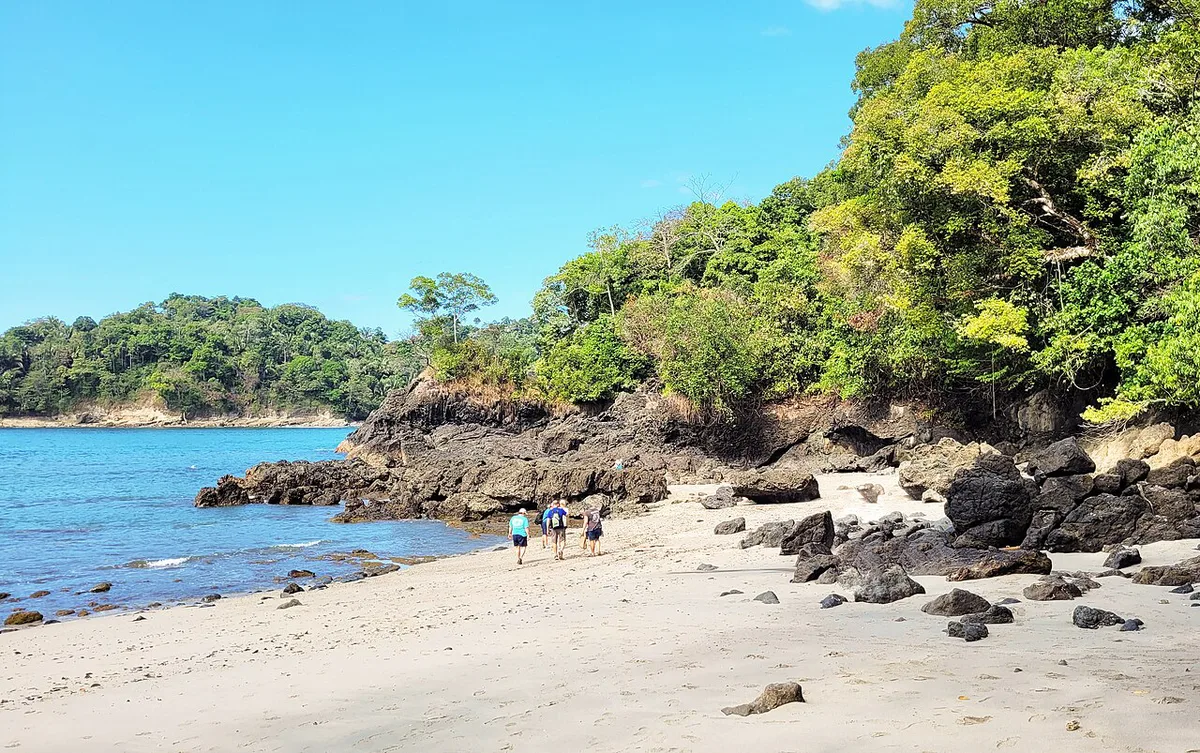
- Manuel Antonio National Park packs sloths, monkeys, iguanas, and the occasional boa into a compact trail system next to a beach.
- The park is closed on Tuesdays, so build that into any plan before booking a guide or transport. Go early to beat the heat, and hire a guide with a scope, since guides make the difference between staring at foliage and actually finding a sloth.
- The Manuel Antonio with kids guide covers park timing, beach safety, and where families stay near the entrance.
- Monteverde: the cloud-forest hub
- Temperatures run cooler here than on the coast, which matters on a hike with toddlers who overheat fast lower down.
- Selvatura and Treetopia both run hanging-bridge walks and zipline circuits; Treetopia adds a canopy gondola and a bike zip line for kids who want a different pace.
- Check the Monteverde with kids guide for which bridge walk suits younger children versus teens ready to zipline.
- Guanacaste and the Nicoya Peninsula: the beach hub
- Santa Teresa, Nosara, and Samara run family-friendly surf lessons, and instructors there work routinely with school-age first-timers.
- This region suits families who want fewer transfers and more beach days, whether tacked onto the Arenal-Monteverde-Manuel Antonio loop or booked as a standalone beach week.
- Roads here are flatter than the mountain routes further north, which means less time strapped into a car seat.
The Best Things to Do in Costa Rica with Kids
Beyond picking a base, the activities themselves separate a good Costa Rica trip from a rushed one. Some suit toddlers, some need a strong swimmer, and a few are worth skipping if attention spans run short.
School-age children (4–11) get the most from Costa Rica since activities like bridge walks and waterfall hikes span thirty minutes to two hours—enough to feel adventurous without taxing attention spans.
| Bridge site | Region | What makes it different |
|---|---|---|
| Mistico Park | La Fortuna / Arenal | Self-guided walk covers six to eight bridges in about 1.5-2 hours, with volcano views |
| Selvatura | Monteverde | Cloud-forest bridge walk paired with an on-site zipline circuit |
| Treetopia | Monteverde | Adds a canopy gondola and a bike zip line to the standard bridge walk |
- Wildlife encounters
- Sloth walks in La Fortuna and monkey and iguana spotting inside Manuel Antonio National Park are the two most reliable wildlife wins with kids.
- A guide carrying a viewing scope turns a hike into real sightings; without one, sloths blend straight into the canopy. See the Costa Rica wildlife with kids guide for a species-by-species rundown.
- Coastal add-ons like the Tarcoles Bridge crocodile viewpoint, seasonal sea turtle nesting, and whale-watching trips extend the wildlife list beyond the jungle.
- Hanging bridges
- Mistico Park's self-guided walk covers six to eight bridges in about 1.5 to 2 hours near La Fortuna, with volcano views along the way.
- Monteverde's Selvatura and Treetopia both run cloud-forest bridge walks in cooler air than the coast.
- Skip the full Rio Celeste waterfall descent with toddlers who refuse a carrier; the hike itself is a flat 30 minutes each way, but the final 200 steps down to the falls are steep for small legs.
- Adventure sports
- Ziplining at Selvatura and Treetopia in Monteverde includes tandem rides and slower circuits for younger kids, though each operator sets its own minimum age and weight limits, so confirm directly before booking.
- Rio Celeste tubing trips accept children as young as two on some guided runs, though a confident swimmer around four or five is a safer bet for a first try.
- Gentle jungle rafting on Class I-II water suits families who want river time without real rapids.
- Cultural and educational tours
- Cacao farm stays that end in hands-on chocolate-making score high engagement with younger kids who want to touch and taste, not just watch.
- Coffee tours run slower and generally suit older kids or parents more than children under eight, who tend to lose interest partway through the processing steps.
- A bioluminescence tour after dark can work for older kids who handle a late boat trip well.
Getting Around: Rental Car vs Private Shuttle
Distances that look short on a map, like La Fortuna to Manuel Antonio, routinely take three to five hours by road because of mountain terrain, unpaved sections, and slow-moving trucks. Build in a half-day for any hub-to-hub transfer, and skip scheduling an activity on arrival day. A rental car gives control over nap-time stops and lets families leave early to beat crowds at parks like Manuel Antonio. It also means navigating potholed back roads and unmarked turns that make driving harder than on a US highway. A private shuttle or transfer removes the driving stress and suits families who'd rather watch the scenery than the GPS, though it costs more per seat than a rental car split across four people.
| Option | Best for | Trade-off |
|---|---|---|
| Rental car | Flexible nap-time stops and early park arrivals | Navigating potholed back roads and unmarked turns |
| Private shuttle/transfer | Families who'd rather not drive mountain roads | Costs more per seat than a shared rental car |
Planning Your Budget and Timing for Costa Rica with Kids
Costa Rica runs two broad seasons: a drier, busier high season roughly December through April, and a wetter green season the rest of the year with thinner crowds and lower lodging rates. Green-season afternoon showers are usually short, and mornings still work for hikes and wildlife walks. For entry fees at Manuel Antonio National Park and hanging-bridge tickets at Mistico Park, check each site's own page directly before travel, since posted rates shift year to year. As a rule of thumb, a guided park visit with a scope-carrying naturalist costs more than a self-guided walk, but it delivers far more actual wildlife sightings for the extra spend. Most families spread a Costa Rica trip with kids across three regional bases over about ten days, which keeps transfer days to a minimum. The 10-day Costa Rica family itinerary lays out one version of that pacing hub by hub.
| Season | Months | Trade-off |
|---|---|---|
| High season | Roughly December-April | Driest weather, but busiest parks and highest lodging rates |
| Green season | Roughly May-November | Lower rates and thinner crowds, with short afternoon showers |
Mistakes to Avoid in Costa Rica with Kids
A few recurring mistakes turn a good Costa Rica trip with kids into an exhausting one. Pura vida isn't just a greeting; it's the pace the itinerary should follow too.
- Over-scheduling the trip
- Three regional bases over about ten days is the workable sweet spot for most families; a fourth or fifth stop usually adds more transfer days than actual activity days.
- Fewer, longer stays beat a rushed loop when kids are the ones sitting in the car seat.
- Skipping the guide
- A guide carrying a viewing scope is often the difference between staring at a wall of leaves and actually finding a camouflaged sloth.
- Self-guided walks like Mistico's save money but cost real wildlife sightings, especially for younger kids who won't spot movement on their own.
- Turning up to Manuel Antonio on a Tuesday
- Manuel Antonio National Park is closed on Tuesdays, a detail that catches families who plan day-by-day on the ground instead of in advance.
- Book Rio Celeste park tickets ahead too; they aren't sold at the gate, and cell signal near the entrance is unreliable.
Where to Stay in Costa Rica With Kids
Choose family lodging by location and daily routine, not only by the pool or room size. Staying near planned activities reduces early starts and long drives on narrow roads.
- In La Fortuna, stay near town for easy access to restaurants, sloth walks, and Arenal-area hot springs.
- Near Manuel Antonio, look along the road between Quepos and the national park. Confirm whether the property provides a park shuttle or requires taxis.
- In Monteverde, staying near Santa Elena simplifies meals and supplies. Rural cloud-forest lodges offer quieter surroundings but may require driving on steep, rough roads.
- In Guanacaste, beach resorts with pools work well for rest days. Samara offers a compact beach base, while the Nicoya Peninsula often involves longer road transfers.
Ecolodges suit wildlife-focused families, while cacao farm stays add hands-on learning without another day trip. Ask about air conditioning, crib availability, laundry, and refrigerator access before booking. Families arriving during the green season should also confirm road access and covered communal areas.
For trip-planning details, see Visit Costa Rica — official tourism board.
More Family Destinations
Planning the next trip? Explore more of our family guides across more family destinations.
Frequently Asked Questions
Is Costa Rica good for a family vacation with young kids?
Yes, for most ages. School-age kids get the most out of the wildlife walks, hanging bridges, and hot springs, while toddlers face more friction from limited stroller access and long hike days. Teens are old enough for ziplining, surfing, and Rio Celeste tubing.
How many days do you need for Costa Rica with kids?
About ten days lets a family cover three regional bases, such as La Fortuna, Manuel Antonio, and Monteverde, without over-scheduling transfer days. Shorter trips work better focused on just one or two hubs.
Is Manuel Antonio National Park open every day?
No. The park is closed on Tuesdays, so build that into any Manuel Antonio day plan before booking a guide or transport.
Do you need a rental car for a Costa Rica family trip?
Not necessarily. A rental car gives more control over nap-time stops, but many families choose a private shuttle instead to avoid navigating potholed mountain roads themselves.
What's the best age for kids to visit Costa Rica?
School-age kids, roughly four through eleven, tend to get the most from the trip since they can handle short hikes and hanging bridges but still find wildlife spotting exciting. Toddlers can still go, though stroller access is limited in most parks.
Explore More Costa Rica Guides
Keep planning your family adventure in Costa Rica with these guides.
Regions & Bases
- Arenal With Kids: A Realistic Guide to La Fortuna Family Travel
- Manuel Antonio with Kids: A Stress-Free Family Guide (2026)
- Monteverde With Kids: A Complete Family Guide to the Cloud Forest
Wildlife & Planning
Free guide: Stress-Free Flying with Kids
The pre-flight checklist, carry-on packing list, and in-flight survival plan we use on every family trip — from toddlers to teens.
You might also like


Continue reading
More guides you'll find useful


