Virginia Aquarium With Kids: The Complete Parents' Guide (2026)
Visiting the Virginia Aquarium with kids? Get toddler program times, North vs. South building logistics, boat tour details, and 2026 ticket tips in this guide.
On this page
Visiting the Virginia Aquarium with Kids: Buildings, Exhibits, and Tips
Last updated July 2026: visiting the Virginia Aquarium with kids means splitting your day between two connected buildings, a shark tank, and a 1/3-mile nature trail over Owl Creek. Families with toddlers get dedicated weekday programming, while elementary-age kids gravitate toward the loggerhead turtle tank and the Norfolk Canyon shark exhibit. Plan on three to five hours to cover both buildings without rushing.
Free guide: Stress-Free Flying with Kids
The pre-flight checklist, carry-on packing list, and in-flight survival plan we use on every family trip — from toddlers to teens.
Is the Virginia Aquarium Good for Kids?
Yes. The Virginia Aquarium & Marine Science Center works for children from toddler age through middle school. Touch pools, the climb-on Wildlife Rescue exhibit, and an outdoor nature trail give younger kids hands-on breaks between tanks. Plan on three to five hours to see both buildings without rushing. Families with a full day can add a boat tour or a behind-the-scenes tour on top of that base visit. Use the table below to prioritize when your schedule is tighter.
| Feature | Best For | Location | Time Needed |
|---|---|---|---|
| Discovery Garden | Toddlers and preschoolers | South Building | 45-60 minutes |
| Wildlife Rescue | All ages, photos | North Building | 30 minutes |
| Nature Trail | High-energy kids | Between buildings | About 20 minutes each way |
| Boat Tours | Ages 5 and up | Dock near North Building | 90-120 minutes |
North Building vs. South Building: Navigating the Campus
The campus splits across two buildings joined by an outdoor nature trail. Knowing the layout before arrival saves stroller trips back and forth. The elevated boardwalk gives views over Owl Creek itself, so factor in extra minutes if kids want to stop and look for wildlife along the way. Both buildings have restrooms and small gift shops, so a bathroom break rarely means walking the full length of the trail. Treat the nature trail as part of the visit rather than a hallway to rush through.
The nature trail boardwalk has no shade and takes 20 minutes each direction; pack sunscreen and budget extra time if kids want to stop and watch wildlife along Owl Creek.
- North Building: the Norfolk Canyon shark exhibit, the loggerhead sea turtle habitat, and the climb-on Wildlife Rescue exhibit.
- Nature Trail: a 1/3-mile elevated boardwalk over Owl Creek connects the two buildings, roughly a 20-minute walk each way.
- South Building: river otters, marshland exhibits, and the Discovery Garden toddler play area.
- Pro tip: start at the building that matches your child's attention span first, and confirm at guest services whether a shuttle is running between buildings that day.

Toddler Programs at the Virginia Aquarium (Ages 0-4)
All three weekly toddler programs are included with regular admission, and free for members, according to the aquarium's own program listing. Confirm exact times on the official calendar before visiting, since weekly schedules can shift by season. Because the toddler programs run on weekday mornings, families staying for a full day should plan the program first, then move on to open exploration afterward. Bring weather-appropriate clothing for Toddler Trek, since that walk continues regardless of rain. Strollers move easily through both buildings and along the paved nature trail. Both buildings have guest services desks that can point you to the nearest family restroom or nursing area. A fourth seasonal program, Toddler Meet & Move, is on pause as of mid-2026. The aquarium's own site notes a planned return later in the year, so check before planning a visit around it specifically. For a broader toddler itinerary beyond the aquarium, see the Virginia Beach toddler guide.
- Toddler Tuesdays: 9:15 AM and 10:15 AM, alphabet and animal-story literacy activities.
- Discovery Garden: Wednesdays at 9:00 AM, open-play nature exploration in the South Building.
- Toddler Trek: Thursdays at 10:00 AM, a guided nature-trail walk that runs rain or shine.
Must-See Exhibits for Every Age Group
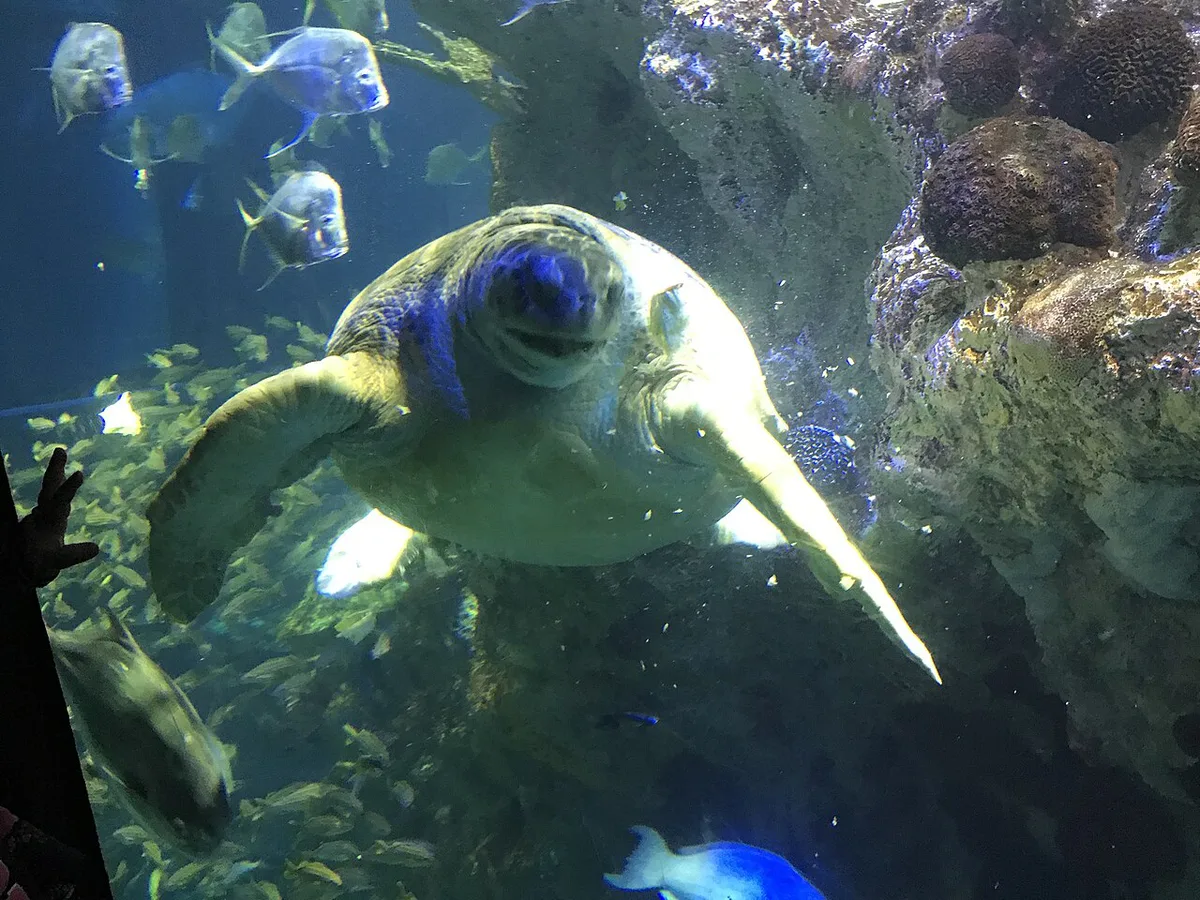
Exhibits break down naturally by age. Toddlers gravitate toward the touch pools and the river otter habitat in the South Building, both low-key enough for short attention spans. Elementary-age kids get the most out of the loggerhead sea turtle tank, a 70,000-gallon habitat, and the Norfolk Canyon shark exhibit in the North Building. Loggerheads are the most common sea turtle species nesting in the United States, and adults average around 250 lb, according to the aquarium's own animal profile. Tweens and older kids tend to linger longest at the Komodo dragons and the climb-on Wildlife Rescue exhibit. There, guests can climb a leatherback sea turtle shell replica and stand next to a bald eagle for photos. Because Wildlife Rescue is billed as a changing exhibit, the specific animals on display may shift over time. Treat the shell climb and eagle photo spot as generally available features rather than guaranteed specifics. Harbor seals are seasonal visitors. They arrive in winter, swimming south from New England to escape colder water further north. Time a winter visit around feeding hours to catch them most active. The aquarium also runs themed programming, such as Shark Month, that layers extra activities onto the regular exhibits. If time is limited, prioritize the shark tank and turtle habitat over the marshland displays. Younger kids often lose interest in static wetland exhibits faster than in tanks with visible motion.
Boat Tours and Other Add-On Experiences
Add-on experiences extend a visit beyond the standard exhibits, though not all suit young children. Because boat tours run up to two hours with no midway exit, weigh a child's attention span before booking one. A toddler who tires of exhibits after 20 minutes is unlikely to sit through a 90-minute cruise, even with dolphins or whales in view. For families with only one child old enough to enjoy the water, consider splitting up. One adult can take older kids on the boat while another stays with younger siblings in the exhibit buildings. Sharks After Dark is a monthly, 21-and-up event. It is not a kid-friendly activity. Treat it as a date-night option for a separate trip rather than part of a family visit.
Boat tours run 90-120 minutes continuously with no exit option; schedule them after the morning building-and-trail exploration, not before, and allow buffer time so kids aren't rushed through the exhibits to catch a departure time.
- Boat Tours: dolphin-watching cruises run in summer, whale-watching cruises run in winter. Each trip runs about 90-120 minutes and suits kids age 5 and up.
- Behind-the-Scenes Tours: a closer look at animal-care areas. Best suited to kids age 8 and older with a real interest in marine biology.
- Creek Cleanup: a monthly family volunteer morning, 8-10 AM at the North Building. Register by noon the Tuesday before the event. It suits local families or long-stay visitors more than a one-day trip.
- Nature Excursion - Fishing: a catch-and-release outing recently priced around $50 for members and $55 for the public. Confirm current pricing and whether gear is provided when booking.
Tickets, Membership, and Best Times to Visit
A single-day ticket works for a one-time visit. Families planning more than two trips a year typically save money with a membership. Under the aquarium's pricing structure, membership tends to pay for itself in about two single-day visits. Members also get free admission to all three toddler programs, and the general public pays the standalone admission price to attend those same programs. If a family visits three or more times a year, member perks like free toddler programming and summer evening hours add value beyond ticket price alone. Because admission is typically sold as timed entry, buy tickets online before arriving, especially during summer weekends when demand runs highest. Walking up without a reservation risks a sold-out entry window, particularly in July and August. During summer, the aquarium has offered member-only evening hours from 6 to 9 PM, alternating between the North and South buildings on select dates. These evenings are designed to give members lighter crowds during peak season. Check the current events calendar for the 2026 schedule before planning around member hours specifically. For the smallest crowds generally, arrive at opening on a weekday, or visit on a weekday afternoon after school field-trip groups have typically left for the day.
Food, Parking, and Logistics
On-site dining is available, and picnic areas suit families who prefer to bring their own food between exhibits. Snacks help bridge the gap between the two buildings, especially for kids who get hungry mid-walk on the nature trail. Parking is split between lots at the North and South buildings, so confirm which building matches your ticket entrance before you park. A few small mistakes tend to derail an otherwise smooth visit. Avoid them with the checklist below.
- Skipping sunscreen: the nature trail boardwalk between buildings has little shade.
- Arriving without a timed-entry ticket: admission is typically ticketed for a specific entry window, so book ahead rather than walking up.
- Underestimating the walk: budget close to 20 minutes each way on the nature trail if a shuttle isn't running.
- Booking a boat tour too late in the visit: leave enough buffer before departure so kids aren't rushed through the exhibits beforehand.
Extending the Day Beyond the Aquarium
A half-day at the aquarium pairs naturally with other stops nearby. Families who start in the morning often spend the afternoon at the Virginia Beach Boardwalk, where flatter, shorter distances suit kids already tired from the nature trail walk. The aquarium alone may not fill a full day on its own. On days like that, the trails and beach access at First Landing State Park give high-energy kids more room to move. Many families sequence a morning at the aquarium, an afternoon at the beach or boardwalk, and dinner nearby. Spreading high-stimulation stops across the day helps kids avoid sensory overload. Either pairing works within a broader trip. See the full Virginia Beach kids guide for how to sequence a multi-day visit.
Best Plan for Big Kids Ages 5 and Up
Older kids usually get more value from the North Building first. Start with the Norfolk Canyon Aquarium, where sharks and larger fish give the visit an immediate payoff. Then move to the 70,000-gallon loggerhead sea turtle habitat before spending time in Wildlife Rescue.
If attention spans are still strong, add the Komodo dragons and any staffed science talks posted for that day. Kids who like animals, boats, or marine biology may also be ready for a dolphin-watching or whale-watching cruise. Those trips usually run 90 to 120 minutes, so book them only if your child can handle sitting through the full ride.
- Best first stop: Norfolk Canyon shark exhibit in the North Building.
- Best hands-on break: Wildlife Rescue, especially the climb-on sea turtle shell.
- Best add-on: boat tour for patient kids, or a behind-the-scenes tour for marine-biology fans.
For trip-planning details, see Virginia Aquarium & Marine Science Center official site.
Further reading: Virginia Beach on Wikivoyage · Virginia Beach on Wikipedia
Frequently Asked Questions
How much time should you plan for a Virginia Aquarium visit with kids?
Budget three to five hours to see both buildings and the nature trail without rushing. Families visiting with only toddlers may need less time, since the South Building's Discovery Garden and touch pools cover most of what younger kids enjoy.
Is Sharks After Dark appropriate for kids?
No. Sharks After Dark is a monthly, 21-and-up event, according to the aquarium's own program listing. Treat it as a date-night option rather than part of a family visit.
What ages do the toddler programs suit?
Toddler Tuesdays, Discovery Garden, and Toddler Trek are built for children roughly ages 0-4. All three are included with regular admission and free for members.
Are boat tours worth booking with young kids?
Boat tours run about 90-120 minutes, which works best for kids age 5 and up. Toddlers and very young children often do better sticking to the exhibit buildings and the shorter nature trail.
Should you start at the North Building or the South Building?
Either works well. Start with whichever building matches your child's attention span. A roughly 20-minute nature trail walk connects the two, so confirm at guest services whether a shuttle is running that day.
What should you pack for a Virginia Aquarium visit with kids?
Pack sunscreen for the outdoor nature trail, since the boardwalk has little shade. Bring a light layer for Toddler Trek if rain is possible, since that program runs rain or shine regardless of weather. A stroller works fine in both buildings and along the paved trail.
How do you avoid the biggest crowds at the Virginia Aquarium?
Arrive at opening on a weekday, or visit on a weekday afternoon after school groups leave. Member-only summer evening hours, from 6 to 9 PM on select dates, offer another lower-crowd window for members.
Is a Virginia Aquarium membership worth it for one visit?
Probably not for a single trip. Membership tends to pay for itself around the second visit in a year, so it makes more sense for families planning repeat trips or living nearby.
Free guide: Stress-Free Flying with Kids
The pre-flight checklist, carry-on packing list, and in-flight survival plan we use on every family trip — from toddlers to teens.
You might also like


Continue reading
More guides you'll find useful