
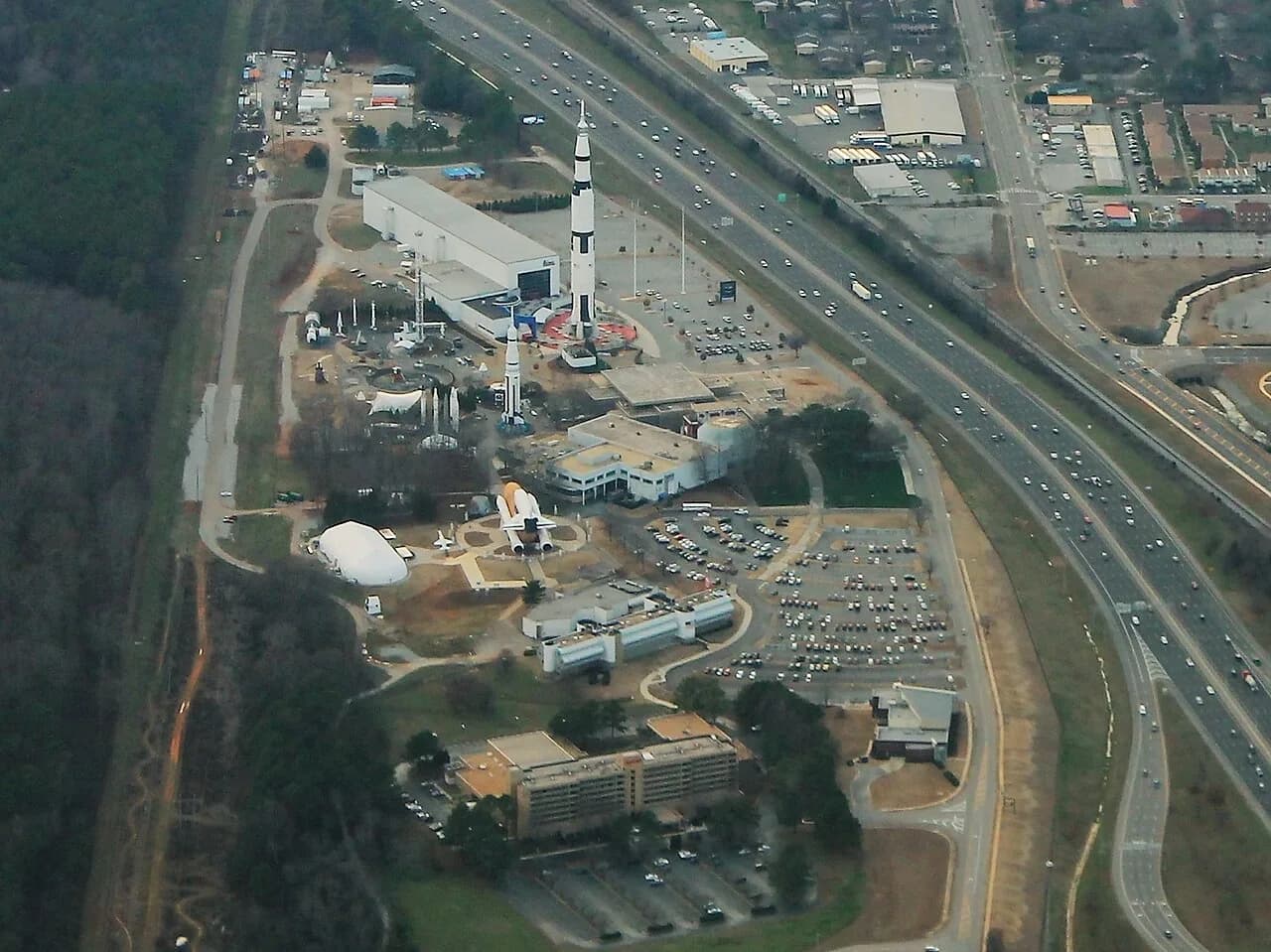
US Space and Rocket Center Huntsville With Kids: 2026 Family Guide
US Space and Rocket Center Huntsville with kids: ages, simulator height rules, crowd-timing tips, and the drive from Atlanta, updated for 2026.
On this page
U.S. Space and Rocket Center Huntsville With Kids
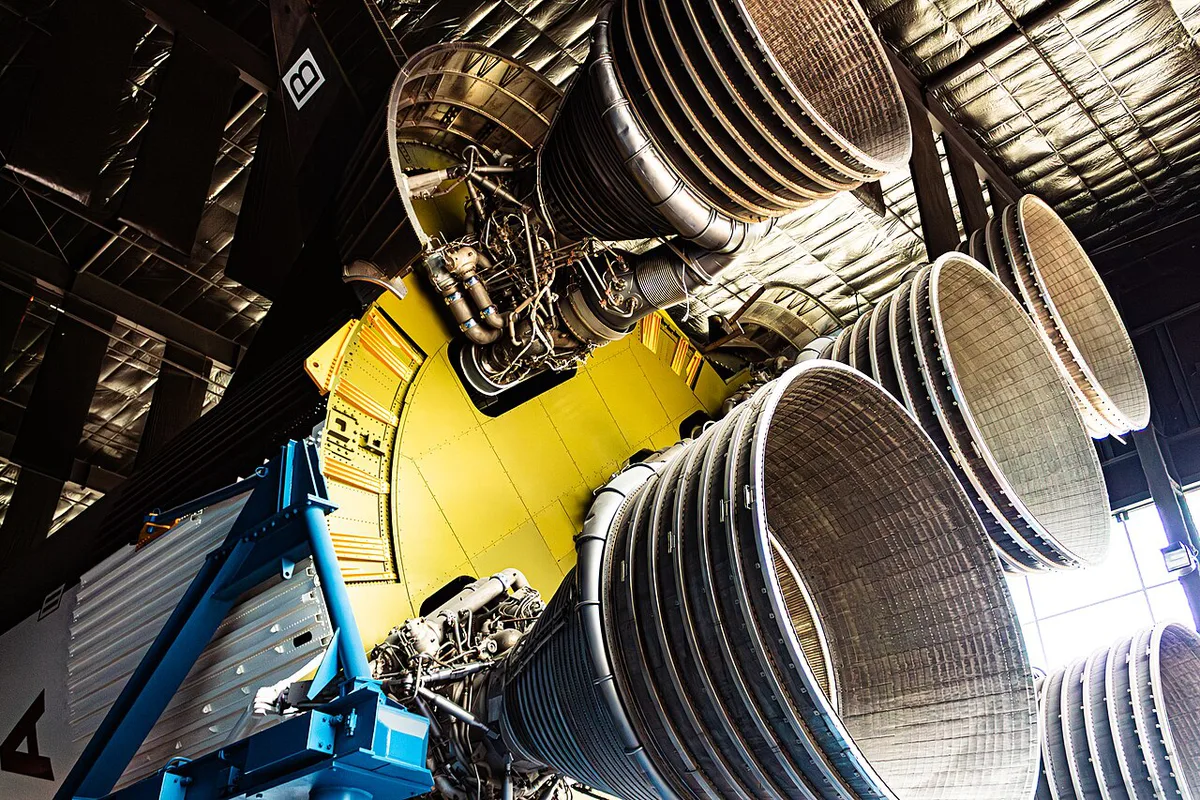
Last updated July 2026: the U.S. Space and Rocket Center in Huntsville, Alabama, ranks among the top STEM stops for Southeast road-trip families. It rewards families willing to make the 3.5-hour-plus drive from Atlanta. Inside the Davidson Center, a full-length Saturn V moon rocket hangs overhead, one of the most-photographed sights for space-obsessed kids in the region.
Free guide: Stress-Free Flying with Kids
The pre-flight checklist, carry-on packing list, and in-flight survival plan we use on every family trip — from toddlers to teens.
Is the U.S. Space and Rocket Center Huntsville Worth It With Kids?
Yes. The U.S. Space and Rocket Center (USSRC) in Huntsville, Alabama, is one of the premier STEM destinations for families in the Southeast. It runs Space Camp, the youth program that put Huntsville on the map, and holds Smithsonian affiliate status. The signature draw is the Saturn V moon rocket inside the Davidson Center for Space Exploration. It hangs horizontally at full length, so you walk beneath five stories of stacked rocket stages. Kids who already know the Apollo missions treat this as a pilgrimage stop. Kids who have never heard of Apollo still feel the scale of the rocket overhead. Exhibit halls are also updated to track NASA's current Artemis moon program, so displays connect Apollo-era hardware to missions happening now. Most parents searching for a us space and rocket center huntsville with kids guide really want two answers: whether the age fit works, and how to budget the day. This guide covers both, plus the height rules that decide which simulators a kid can ride.
Is the Drive From Atlanta to Huntsville Worth It?
Huntsville sits roughly 180 miles from downtown Atlanta. The drive takes 3.5 to 4 hours, depending on traffic through Birmingham. Crossing into Alabama also means crossing from Eastern into Central time, so you effectively gain an hour heading there and lose it again on the way home. A car leaving Atlanta at 8 a.m. Eastern can be parked at the Space Center by around 11 a.m. Central. Compare that to a local outing at Stone Mountain Park or an afternoon of outdoor adventures near Atlanta. Those stay easy half-days, while a Huntsville trip asks for a full day at minimum. That makes it compete more with a Georgia theme-park day like Six Flags Over Georgia than with a quick local outing. A single-day round trip from Atlanta is possible, but it is ambitious. Seven-plus hours of driving plus a 5- to 6-hour visit makes for a long day with kids in car seats. A weekender is the easier call. Drive up Friday evening or Saturday morning. Spend a full day at the Space Center. Use a second morning for Huntsville extras before heading home.
A weekend arrival enables a full Space Center day plus time for nearby attractions like Lowe Mill or Monte Sano State Park before the return drive to Atlanta. The route back allows for a midway stop in Chattanooga.
- Distance from Atlanta: about 180 miles, mainly via I-20 West and I-59 North.
- Drive time: 3.5 to 4 hours each way, before stops.
- Time zone shift: Eastern in Atlanta, Central in Huntsville.
- Recommended time on-site: 5 to 6 hours minimum inside the Space Center.
Tickets, Parking, and Accessibility
The U.S. Space and Rocket Center sits at 1 Tranquility Base, Huntsville, AL 35805. Enter that exact address in GPS, since a plain search for 'space center' can surface secondary listings. General admission covers the Davidson Center, Rocket Park, Shuttle Park, and the core exhibit halls. The planetarium shows, the Intuitive Planetarium, and rotating traveling exhibits are ticketed separately. Factor add-ons into the visit before arrival if a kid has a must-see show in mind, and confirm current 2026 admission and add-on pricing when booking, since ticket tiers are revised periodically. If the visit falls during a special traveling exhibit run, expect an extra line and possibly a timed-entry ticket for that exhibit specifically. Parking is on-site. Arriving near opening secures a spot close to the entrance before school buses claim the nearer rows. Accessibility differs by zone. The Davidson Center's Saturn V Hall is fully paved and stroller-friendly, with elevators connecting its levels. The outdoor Rocket Park mixes paved paths with gravel sections around some rocket displays, which is harder going for a jogging stroller than a standard one. Budget extra time for Rocket Park with a stroller, especially after rain.
Age-by-Age Guide to the U.S. Space and Rocket Center
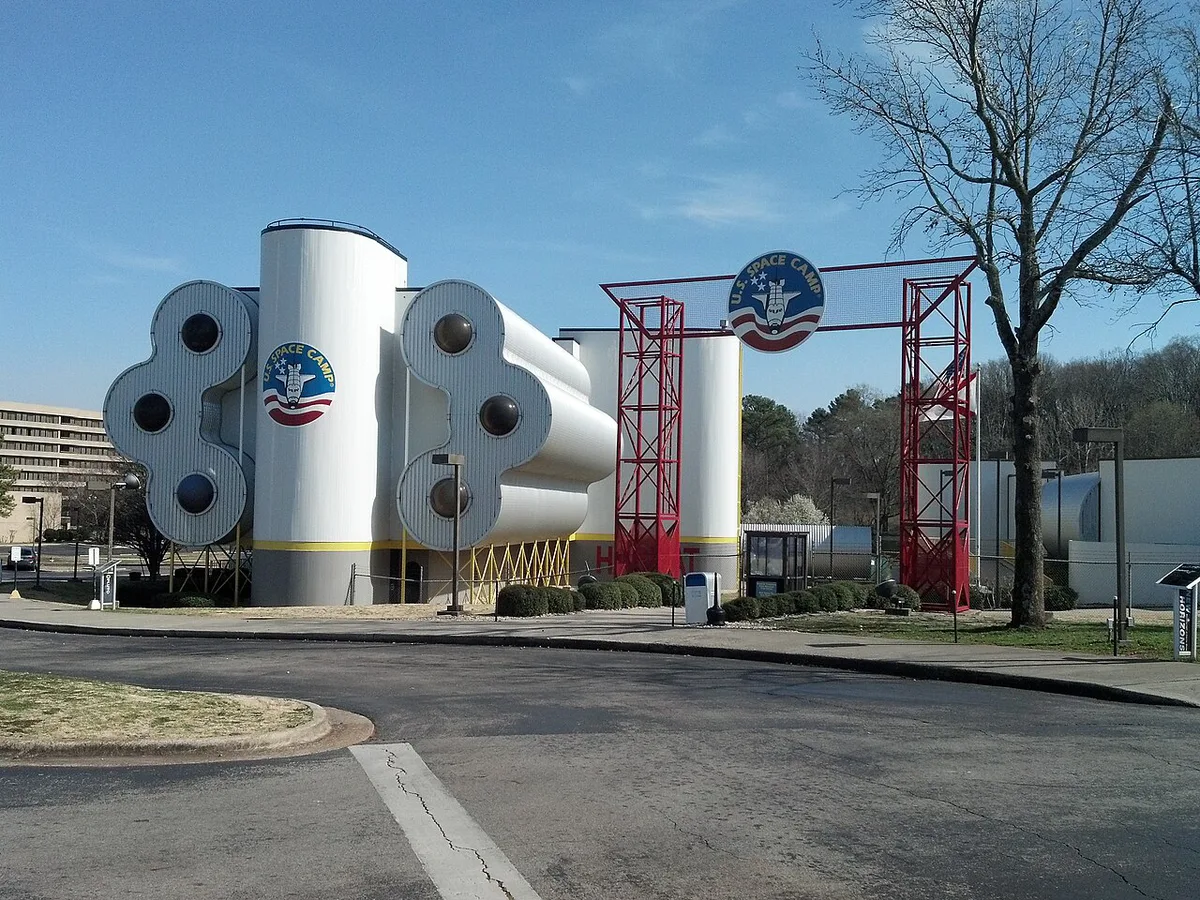
The USSRC spans indoor halls and an outdoor rocket park, and different ages get different payoffs. Toddlers and preschoolers do best with hands-on, low-stimulation areas. School-age kids get the most out of the simulators and the Saturn V Hall. Teens gravitate toward the highest-intensity rides and the Space Race history exhibits. Families interested in a deeper commitment can also look into Space Camp itself, a multi-day residential program for kids and teens that runs separately from a general-admission day visit. It requires advance registration and is a bigger undertaking than a single day at the museum. Younger siblings tagging along for a Space Camp weekend can still spend the day in general-admission exhibits while an older kid trains separately.
School-age children (6–11) find peak enjoyment in simulators, but the Saturn V Hall's hangar-scale ceiling amplifies crowd noise. Alternating between high-intensity exhibits and outdoor Rocket Park for reset breaks balances simulation excitement with quieter, lower-stimulation zones.
- Toddlers and preschoolers: the Science on a Sphere display and ground-floor play areas work well; skip the loudest simulator bays.
- School-age kids, roughly 6 to 11: this is the sweet spot for most simulators and for standing under the Saturn V rocket.
- Teens: the G-Force Accelerator, Space Shot, and Space Race history galleries hold their attention longest.
Top Must-See Exhibits for Families
Three exhibits anchor a first visit, and none of them require a simulator stomach. Acoustics inside the Saturn V Hall carry, since engine sounds and crowd noise echo off the hangar-scale ceiling. If a child is sound-sensitive, the outdoor Rocket Park is the quieter counterpart, since noise thins out in open air.
- Saturn V Hall, inside the Davidson Center for Space Exploration: walk the length of a real Saturn V rocket, suspended overhead.
- Rocket Park and Shuttle Park: an outdoor walking route past full-size rocket replicas, with the Pathfinder space shuttle as the main photo stop.
- The Moon Crater: an interactive lunar-surface area built for kids to walk across and explore on foot.
Simulators: Height Requirements and Safety
Not every simulator is open to every kid. Height and health restrictions apply, and they are worth checking before you build a visit around one ride. The G-Force Accelerator is the more physically intense of the two, in our editorial assessment, since it sustains multiple g-forces through a spin rather than a single quick drop. Riders prone to motion sickness may want to start with Space Shot instead, or skip both and stick to Rocket Park, which involves no motion at all. Outside the two flagship simulators, several lower-intensity motion exhibits carry no height rule at all, which keeps the day accessible for kids who don't clear 48 inches. Height and health requirements are set at each ride and can change season to season, so confirm current rules at the simulator entrance before promising a ride to a kid who might not clear the bar.
| Simulator | What it does | Typical height requirement |
|---|---|---|
| G-Force Accelerator | Centrifuge that spins riders through multiple g-forces | Around 52 inches, per posted rules |
| Space Shot | Rapid vertical launch and drop | Around 48 to 52 inches, per posted rules |
Beating the Crowds: A Reverse-Flow Strategy
School field trips fill the Space Center on weekday mornings in spring, especially April and May. Most visitors start at the entrance and move forward through the exhibits in order, which crowds the Saturn V Hall first. Head to the Davidson Center first thing instead, then work backward through Rocket Park once the school buses have thinned out. Weekday mornings outside the April-to-May school-trip window tend to run calmer, and a midweek visit generally beats a Saturday for elbow room. On the way home, a lot of Atlanta families split the drive with a night in downtown Chattanooga, which sits roughly on the route back south.
Dining and Amenities
The on-site Mars Grill covers basic meals like burgers, chicken tenders, and pizza. It is a single cafeteria-style stop serving a full-day crowd, so lines build around lunchtime. Picnic tables near Rocket Park give you the option to eat outside if the Mars Grill line runs long, weather permitting. Packing snacks and a refillable water bottle cuts down on mid-visit meltdowns and long waits. Nursing rooms and family restrooms are located inside the Davidson Center, the same building as the Saturn V Hall. Plan a stop there partway through the visit rather than doubling back across campus.
Beyond the Space Center: Huntsville for Families
A weekend in Huntsville has more to offer than the Space Center. Lowe Mill ARTS and Entertainment is a converted cotton mill packed with working artist studios and casual food stalls, an easy stop for a second afternoon. Monte Sano State Park sits on the edge of town with hiking trails and overlook views, good for burning off energy before the drive home. Families weighing Huntsville against other regional weekends can compare it to Gatlinburg and the Smoky Mountains for a mountain-town alternative. Huntsville's downtown core is easier to navigate with a stroller than a bigger coastal draw like Myrtle Beach, since distances between stops stay short. Those stitching together a longer multi-state loop sometimes chain Huntsville with a stop at Mammoth Cave National Park in Kentucky before looping back south.
Sensory Planning for Noise, Darkness, and Breaks
The loudest family moments are usually inside the Davidson Center and simulator areas, not outside in Rocket Park. Saturn V Hall is dramatic, but its hangar-like ceiling can make crowd noise and exhibit audio carry. Start there early if your child is sensitive to echoes, then move outdoors before lunch.
- Use Rocket Park or Shuttle Park for reset breaks, especially after the Saturn V Hall or a simulator queue.
- Bring headphones for children who dislike engine sounds, amplified show audio, or school-group noise.
- Preview Space Shot and G-Force Accelerator before joining the line.
- Save the planetarium for kids comfortable with dark rooms and a fixed seated show.
Mars Grill can also feel busy at peak lunch. Eating slightly early and then returning to the Davidson Center keeps the afternoon calmer. If your child needs a lower-stimulation route, pair Saturn V Hall with outdoor rockets and the Moon Crater instead of stacking multiple simulators.
For trip-planning details, see U.S. Space & Rocket Center official site.
Further reading: Atlanta on Wikivoyage · Atlanta on Wikipedia
Frequently Asked Questions
What is the best age for the U.S. Space and Rocket Center?
Most simulators suit kids around 7 and older who clear the posted height requirements, but the age range works well beyond that. Toddlers and preschoolers still get real value from the ground-floor play areas and the Science on a Sphere display, and teens tend to gravitate toward the highest-intensity rides.
Can you do the Space Center in one day from Atlanta?
Yes, though it makes for a long day. Budget 3.5 to 4 hours each way plus 5 to 6 hours inside the Space Center. The Eastern-to-Central time zone shift effectively adds a practical hour on the outbound leg, which helps if you leave Atlanta early.
Are strollers allowed at the U.S. Space and Rocket Center?
Yes. Strollers move easily through the paved Davidson Center, and elevators connect its levels. The outdoor Rocket Park mixes pavement with gravel sections around some displays, so a standard stroller handles it better than a lightweight umbrella stroller.
Is the planetarium included in general admission?
No. Treat the planetarium, the Intuitive Planetarium, and any traveling exhibit as separate add-on tickets. Confirm current 2026 add-on pricing when you book general admission, since these tickets are sold apart from the base entry.
How far is Huntsville from Atlanta?
About 180 miles, roughly a 3.5- to 4-hour drive via I-20 West and I-59 North, before accounting for stops or traffic through Birmingham. The route also crosses from Eastern into Central time.
Free guide: Stress-Free Flying with Kids
The pre-flight checklist, carry-on packing list, and in-flight survival plan we use on every family trip — from toddlers to teens.
You might also like


Continue reading
More guides you'll find useful


