

California Science Center With Kids: The 2026 Family Planning Guide
Planning the California Science Center with kids? Get the 2026 guide to free admission, the Endeavour's current status, age-by-age exhibits, parking, and Metro access.
On this page
California Science Center With Kids: A Family Planning Guide
Last updated July 2026. The California Science Center with kids is one of the few Los Angeles outings where general admission costs nothing, leaving room in the day's budget for parking or a special exhibit instead. Exposition Park's hands-on galleries, from the multi-story kelp forest tank to a high-wire bicycle, hold young attention spans in a way a purely observational museum can't. This guide covers tickets, the Space Shuttle Endeavour's current status, and which wings to prioritize by age.
Free guide: Stress-Free Flying with Kids
The pre-flight checklist, carry-on packing list, and in-flight survival plan we use on every family trip — from toddlers to teens.
Planning a California Science Center Visit With Kids: Tickets, Endeavour, and Timing
General admission to the California Science Center is free every day. That makes it one of the few marquee family stops in Los Angeles with no price barrier at the door, unlike most theme parks nearby. The free tier covers permanent galleries including Ecosystems, Creative World, and Life World. Paid components sit outside that free tier: the IMAX theater and any current special ticketed exhibition. The official site lists current pricing for those add-ons, so check it before your visit rather than assuming a fixed number. Some visit dates require timed-entry reservations during busier periods, so confirm whether your date needs one before you arrive. The Space Shuttle Endeavour, one of the center's signature draws, is mid-move as of 2026. The Samuel Oschin Air and Space Center, its future permanent home, is under construction, and the shuttle itself is being positioned vertically for that future display. Viewing access can be limited or different than in past years while that work continues, so check the official site's current exhibit status if the shuttle is the main reason for your trip. On timing, weekday mornings during the school year draw the heaviest field-trip traffic, since that's when class visits cluster. Weekday afternoons and weekend mornings right at opening tend to run calmer for families with young kids who need room at the touch tanks.
Scheduling for weekday afternoons or weekend mornings sidesteps morning field-trip crowds, giving toddlers and school-age kids the space they need for hands-on galleries like touch tanks and climbing structures.
| Quick fact | Details |
|---|---|
| Best age range | Toddlers through middle-schoolers, plus IMAX and space exhibits for teens |
| Typical visit length | 3 to 4 hours; a half day if you add IMAX or the Natural History Museum next door |
| General admission | Free, every day |
| Extra costs | IMAX screenings and special ticketed exhibitions; check the official site for current rates |
| Parking | On-site Exposition Park structure, or the Metro E Line to the Expo Park/USC station |
Exhibit Guide by Age: Toddlers, School-Age Kids, and Teens
Exhibit priorities shift a lot by age at this museum. Knowing which wing to head for first saves you from wandering the full building with a tired toddler in tow, and it helps prevent the museum fatigue that can hit multi-hour visits with young kids.
- Toddlers and preschoolers: go straight to the Discovery Rooms, Creative World and Life World, built for climbing and sensory play at a small-kid scale. The animatronic character Tess is a reliable hit for pre-readers. For a toddler-specific plan across the rest of the city, see Los Angeles with Toddlers: A Practical Guide to Logistics and Fun.
- School-age kids, roughly 6 to 12: the Ecosystems wing is the payoff, anchored by a multi-story kelp forest tank and touch pools where staff let kids handle sea stars and other tide-pool life under supervision. The high-wire bicycle and the Fire! science and safety exhibit round out this age group's must-see list.
- Tweens and teens: the IMAX theater's large-format science and space films hold attention longer than static display cases, and the space-artifact galleries go deeper into engineering than most kids' museums attempt. Rotating special exhibitions have covered subjects from ancient civilizations to the human body in past years; check the current schedule for what's showing during your visit.
Getting to Exposition Park and Eating With Kids
Getting to Exposition Park and feeding kids once you're there both have a few concrete options worth knowing ahead of time.
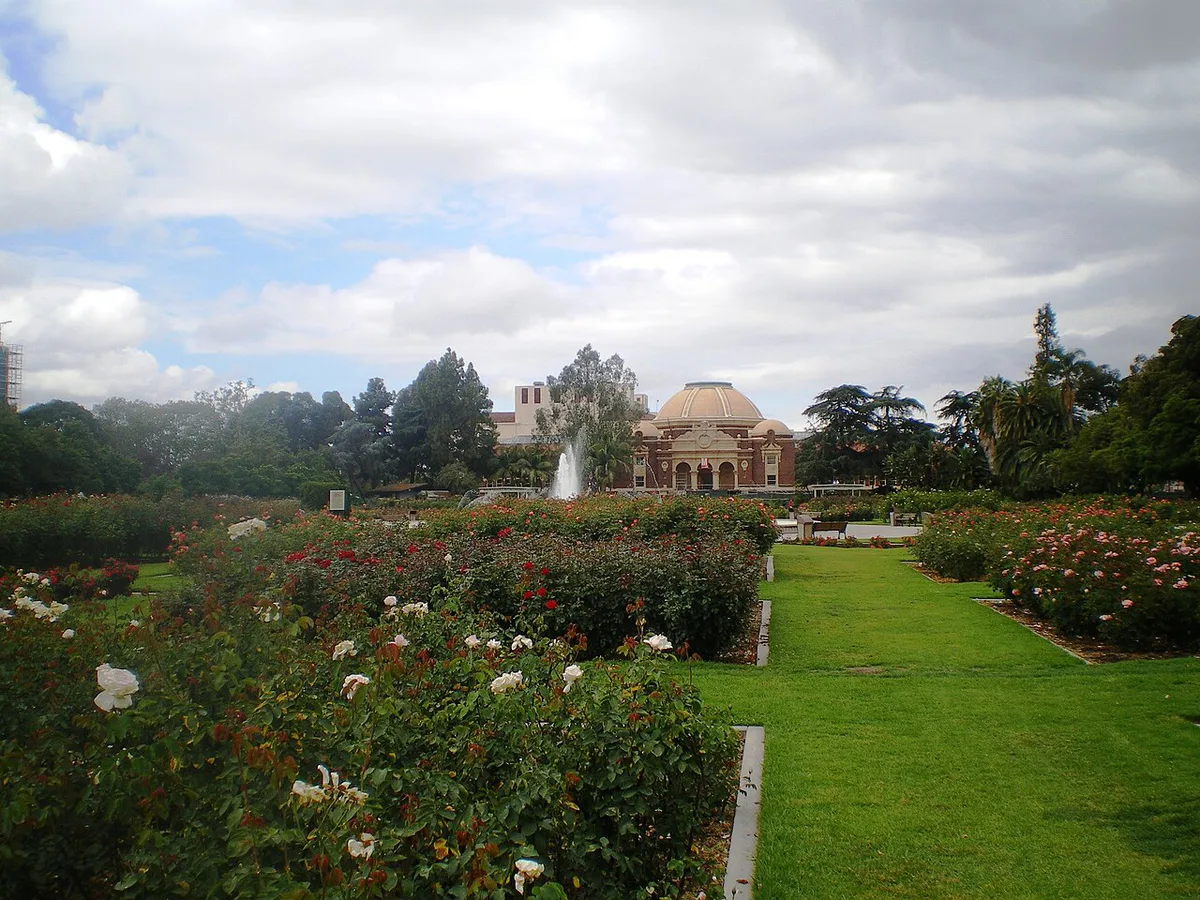
Budget three to four hours for core galleries, plus additional time for dining—the on-site Trimana Grill or Rose Garden picnic enable a sustained multi-hour visit that can extend to the Natural History Museum next door.
- Driving: use Exposition Park's own parking structure. Rates are posted at the lot and change periodically, so check the current rate there or on the official site rather than budgeting a fixed number.
- Public transit: ride the Metro E Line to the Expo Park/USC station and walk the short distance to the museum entrance. This sidesteps parking-structure queues on high-traffic weekends.
- On-site food: Trimana Grill covers quick-service basics for a mid-visit refuel without leaving the building.
- Packed lunch: eat in the Exposition Park Rose Garden, a shaded, free green space a short walk from the museum entrance.
- Nearby dinner: University Park, the neighborhood around Exposition Park, has casual family-friendly restaurants within a short walk or drive.
Making a Full Day of Exposition Park
The Natural History Museum sits next door in Exposition Park, and pairing the two makes a full doubleheader for families staying more than a single day in LA. Budget the whole day if you're attempting both, since one afternoon rarely covers two museums with young kids in tow. The Rose Garden works well as a decompression stop between the two, giving kids room to run before or after gallery time. If today is a science-and-nature day, tomorrow can go a different direction: LA's family-friendly beaches give kids room to run after a day spent mostly indoors, and a longer stay can pull from Day Trips from Los Angeles with Kids: A 2026 Family Planning Guide for the rest of the week. Slot this whole visit into the broader Los Angeles itinerary for families rather than planning it in isolation.
California Science Center vs. Griffith Observatory and Universal Studios Hollywood
The California Science Center's biggest edge is how hands-on it is: kids touch, climb, and operate exhibits instead of mostly looking and reading. Griffith Observatory's family programs reward older kids interested in astronomy and add city views, but younger kids tend to disengage faster there than in the Science Center's activity-dense galleries. Against Universal Studios Hollywood, the cost comparison isn't close: general admission at the Science Center is free, while a single day at Universal is a major per-person ticket expense before parking, food, or extras. Treating the Science Center as a free anchor day and Universal as the one splurge day is a workable way to spread cost across a multi-day trip.
| Attraction | Hands-on level | Cost | Best for |
|---|---|---|---|
| California Science Center | High: touch tanks and hands-on galleries | Free general admission | Toddlers through school-age kids |
| Griffith Observatory | Lower: mostly observational displays and viewing | See linked guide for current admission details | School-age kids and teens interested in space |
| Universal Studios Hollywood | Ride- and show-based | Per-person day ticket; see linked guide for current pricing | School-age kids through teens |
For trip-planning details, see California Science Center official site.
Further reading: Los Angeles on Wikivoyage · Los Angeles on Wikipedia
Frequently Asked Questions
Is the California Science Center really free?
General admission is free every day. The IMAX theater and any current special ticketed exhibition cost extra, and the official site lists current pricing for those add-ons.
How long do you need at the California Science Center?
Most families need 3 to 4 hours for the permanent galleries. Add IMAX or a stop at the Natural History Museum next door and plan on a half day or more.
Is the California Science Center stroller-friendly?
Yes. It's a modern, accessible building, and strollers move easily through most galleries, though the Ecosystems wing's touch-pool area can get tight when it's crowded.
Do you need to buy IMAX tickets in advance?
Advance booking isn't required, but IMAX shows can sell out on busy weekends and holidays. Check the official site for showtimes and current ticket availability before you go.
Can you still see the Space Shuttle Endeavour right now?
Viewing is in flux while the Samuel Oschin Air and Space Center is under construction and the shuttle is moved into its future vertical display position. Check the official site's current exhibit status before planning a visit around Endeavour specifically.
Free guide: Stress-Free Flying with Kids
The pre-flight checklist, carry-on packing list, and in-flight survival plan we use on every family trip — from toddlers to teens.
You might also like


Continue reading
More guides you'll find useful


