

Boston with Toddlers: A Practical Guide to Logistics and Play
Plan a Boston trip with toddlers using this guide to stroller-friendly routes, the best under-3 attractions, and local logistics that save time and money.
On this page
Boston with Toddlers: The Stress-Free Guide to Beantown
Last updated July 2026, this guide slows Boston down to toddler speed, covering stroller-friendly routes and nap-proof stops for exploring Boston with toddlers. It flags where the full Freedom Trail overshoots a two-year-old's attention span, and which shorter stretch works instead. It also breaks down which Boston attractions waive admission for the youngest kids, and which neighborhoods trip up an umbrella stroller.
Free guide: Stress-Free Flying with Kids
The pre-flight checklist, carry-on packing list, and in-flight survival plan we use on every family trip — from toddlers to teens.
Is Boston With Toddlers a Good Match? The Quick Verdict
Boston's downtown core is compact. The Public Garden, Faneuil Hall, and the New England Aquarium sit within about a mile of each other, so a toddler-paced day rarely needs long transfers between stops. New York's sightseeing core spans multiple boroughs and often requires subway transfers with stairs. Boston's core sits inside a single walkable loop, which removes several of those transfer points and matters when a nap window only lasts about 90 minutes. The tradeoff is uneven ground: Beacon Hill's brick sidewalks and the North End's narrow, congested streets slow an umbrella stroller down. Budget extra time for those neighborhoods, or swap the stroller for a carrier there. Most families spread the toddler-paced version of Boston over three to four days, mixing one paid attraction with plenty of park time each day. The short verdict: build the day around the compact downtown core, and treat the Public Garden as a default reset stop when a toddler needs a break.
Top Boston Attractions for Toddlers
A handful of Boston's best-known attractions work specifically well at toddler scale, either because they've built a space for the youngest visitors or because the pace is naturally slow. Pair one indoor stop with one outdoor stop each day. Toddlers handle a single paid attraction better than a packed itinerary of three.
- Boston Children's Museum Playspace: a reservation-only room for ages 0-3 with crawling tunnels, a play kitchen, a toddler gym, and a dedicated water-play area; older toddlers can also try the museum's three-story climbing structure. See museum and aquarium ticket details before booking a Playspace reservation.
- New England Aquarium: a four-story viewing area wraps a central tank, plus a touch tank with rays (barbs trimmed) and scheduled sea lion training sessions. Arrive close to opening to avoid school groups, which tend to fill the ramps by mid-morning.
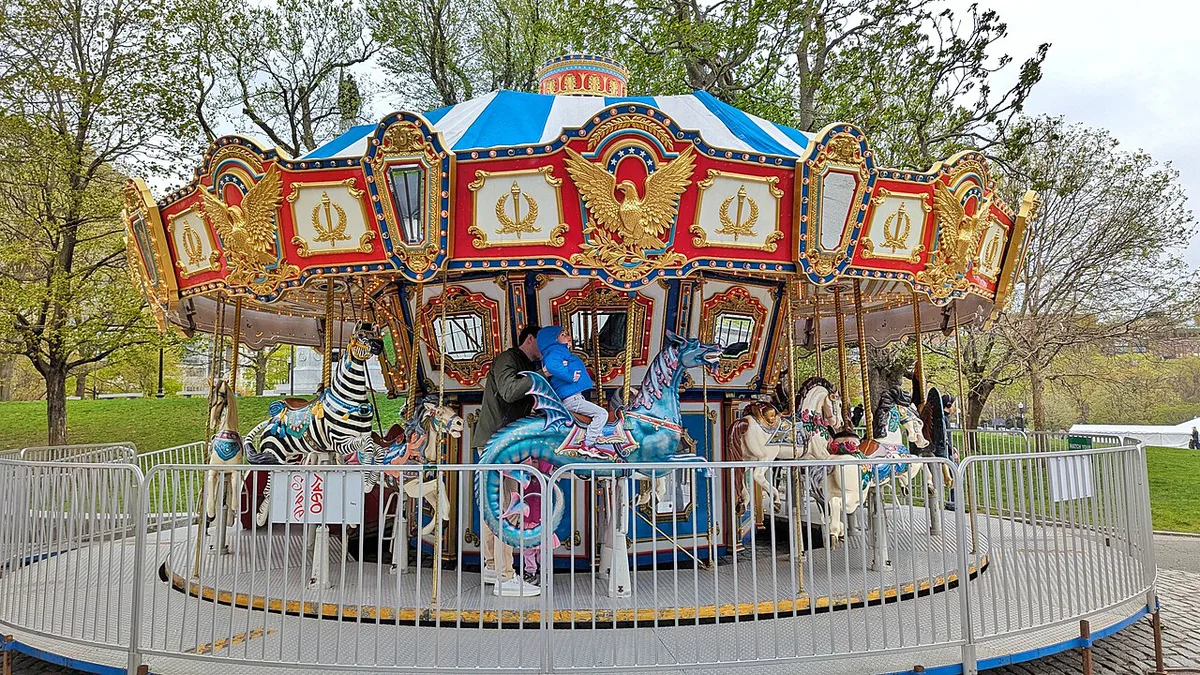
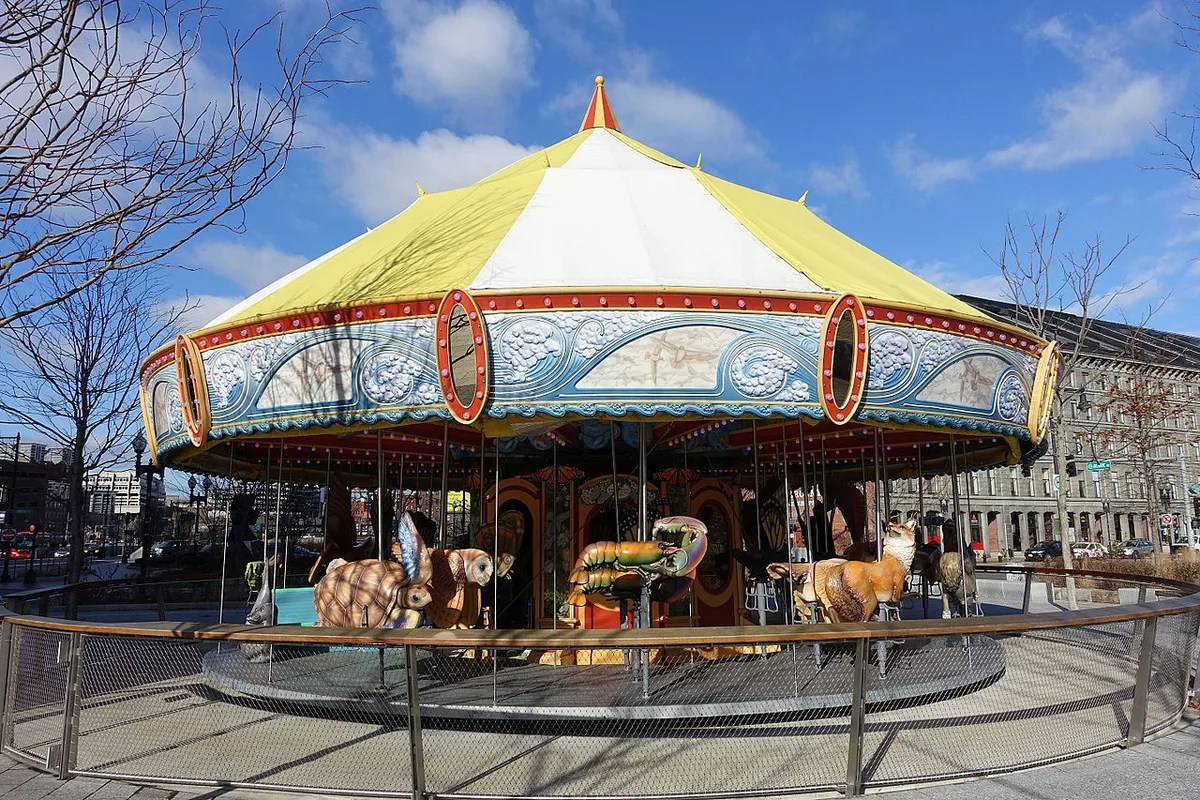
- Rose Kennedy Greenway: the Greenway Carousel and the Mother's Walk give toddlers a lower-sensory break between the waterfront and downtown, useful as a stroller-nap stop away from traffic noise.
- Boston Common and Public Garden: the bronze Make Way for Ducklings statues, the seasonal Swan Boats, Tadpole Playground, and the Frog Pond (a spray pool in summer, a skating rink in winter) cover a full toddler day on their own.
The Toddler Mile: A Shorter Freedom Trail
The full Freedom Trail runs 2.5 miles, too long and too history-dense for most toddlers' attention spans. Shorten it to what functions as a Toddler Mile: start at Boston Common, pass the Massachusetts State House, and end at Faneuil Hall. That stretch mixes open lawn for running around with a payoff at the end. Faneuil Hall's marketplace offers a natural stopping point with snacks and street performers. That payoff works as positive reinforcement after the walk. The route also skips the North End extension entirely, so a stroller stays usable start to finish. Consider timing the walk for the morning, before naptime, when a toddler's tolerance for standing-and-listening history stops is highest. For the complete 2.5-mile route and stop-by-stop detail once kids are older, see the full Freedom Trail route guide.
A toddler's typical 90-minute nap window rules out the full 2.5-mile Freedom Trail, making the shortened Toddler Mile route from Boston Common to Faneuil Hall essential for morning exploration.
Boston Duck Tours With a Toddler
The amphibious Duck Tours vehicles cover both a road leg and a stretch on the Charles River, and the horn-quacking gimmick is genuinely loud, which can startle a noise-sensitive toddler. Car seats aren't used onboard, and strollers are typically folded and stowed, so plan to hold a toddler on your lap for the tour. Confirm current car-seat, lap-child, and stroller-storage policy before booking, since procedures can change season to season. Tours typically depart from a stop near the Museum of Science, according to published route descriptions, making it easy to pair with a science-museum morning. Some families schedule the tour right after a nap, since a rested toddler tolerates the noise and motion better than an overtired one. The Duck Tours stroller policy guide covers these logistics in more depth.
Getting Around Boston With a Stroller
In our editorial assessment, stroller friendliness varies sharply by neighborhood in Boston. Downtown and Back Bay are the easiest bases. Beacon Hill and the North End are the hardest.
| Neighborhood | Stroller Friendliness | Why |
|---|---|---|
| Downtown/Waterfront | Good | Wide, flat sidewalks; close to the Aquarium and Children's Museum |
| Back Bay | Good | Broad avenues; close to the Public Garden and Newbury Street |
| Beacon Hill | Poor | Narrow brick sidewalks and uneven surfaces |
| North End | Poor | Congested narrow streets, especially around mealtimes |
- The T allows folded strollers on board, but not every downtown station has a working elevator. Check current ADA accessibility for Park Street, Aquarium, and South Station on the MBTA website before relying on one, since outages happen without much notice.
- On regional trains into North Station or South Station, strollers must be folded and either carried on or stowed with oversized luggage, per standard rail policy.
- Massachusetts law requires an appropriate car seat in any rideshare vehicle, and most Uber and Lyft cars don't carry one. Pack a compact travel car seat if rideshare is part of the plan, or stick to the T and walking for stroller-friendly legs.
Where to Stay: Downtown vs Back Bay vs Beacon Hill
Downtown puts a family within walking distance of the Aquarium, Children's Museum, and Faneuil Hall, cutting the number of transfers a nap-time toddler has to sit through. Back Bay trades a few extra minutes of walking for proximity to the Public Garden and Newbury Street shopping, plus generally roomier hotel floor plans, useful when a crib needs its own footprint. Beacon Hill is scenic but its brick sidewalks make it a harder stroller base. Treat it as a stop, not a base for the trip. Whichever area you choose, call ahead to confirm the hotel actually stocks a crib; not every downtown property does despite high family demand. Arriving by car adds cost and complexity. Downtown hotel parking runs expensive, and many streets are narrow and one-way. Confirm parking costs before you book if driving in. For school-age activities that toddlers usually skip, the broader Boston kids guide covers Fenway Park visits and other options.
Downtown parking costs combine with one-way, narrow streets to make car travel doubly inefficient for stroller trips; rely on the T or walking for less friction.
Dining With a Toddler in Boston
Boston Public Market beats Quincy Market for toddlers on a few counts: more seating, an enclosed space that works in bad weather, and lighter crowds at peak lunch hours. Quincy Market's food-hall energy and longer lines suit older kids better than toddlers who won't wait in a queue. For a break from restaurant seating, pack a lunch and head for the Public Garden or the Rose Kennedy Greenway, both of which have open lawn for a toddler to move after sitting through a meal. Two local treat stops are worth building into a walk: J.P. Licks for ice cream, and Mike's Pastry, where the line can run long. Time a visit outside the lunch rush if a toddler won't wait. Both spots work well as a lunch stop between downtown sightseeing blocks, without requiring a sit-down reservation.
Saving Money on Boston Attractions for Toddlers
Boston's family passes bundle differently, and the right pick depends on how many paid attractions are on the list.
| Pass | What It Covers | Best For |
|---|---|---|
| Boston CityPASS | Museum of Science and New England Aquarium, plus a choice of two more from Boston Harbor City Cruises, Franklin Park Zoo, Harvard Museum of Natural History, or View Boston | Families visiting 4 or more paid attractions |
| Go City Pass | Boston Children's Museum bundled with the Museum of Science | Families focused on just the two hands-on museums |
| Individual tickets | Pay per attraction; book timed entry ahead for the Aquarium in busy summer months | Families doing one or two attractions only |
- As of 2026, CityPASS advertises savings of up to 45% versus buying each attraction separately. Confirm current pricing before checkout, since bundle pricing updates yearly.
- Check each attraction's age cutoff for free entry before buying any pass. Several, including the Aquarium and Children's Museum, don't charge for the youngest toddlers, and paying for a pass that includes a free-entry toddler wastes money.
- Free options can fill a full day on their own: the Public Garden, the Greenway's fountains, and story times at Boston Public Library branches cost nothing and tire out a toddler as effectively as a paid museum visit. Some free options, like the Greenway's interactive fountains, run seasonally, so check current operating dates before planning around them.
Day Trips From Boston for Little Legs
Two short-haul options suit a toddler's limited tolerance for car time better than a full day trip further out. The Discovery Museum in Acton is built specifically around hands-on play for younger children, which lowers the odds of a look-don't-touch meltdown. The Legoland Discovery Center in Somerville is a shorter drive from downtown and works as a rainy-day backup without giving up a full day away from the hotel. Both destinations work well as a single flex day if Boston plans get rained out, since neither requires an overnight away from the downtown hotel base.
Common Mistakes to Avoid With a Toddler in Boston
A few planning missteps show up repeatedly in toddler trips to Boston.
- Overscheduling the Freedom Trail: the full 2.5-mile walk overshoots a toddler's attention span. Use the Toddler Mile from Boston Common to Faneuil Hall instead.
- Booking rideshare without a car seat: Massachusetts law requires an appropriate car seat, and most Uber and Lyft vehicles don't carry one.
- Traveling during Move-In Weekend: early September brings university move-in crowds citywide, pushing hotel prices up and sidewalks fuller than usual.
- Ignoring the sports calendar: hotel prices near Fenway Park and TD Garden spike on game nights and during finals, so check the schedule before booking.
Nap-Friendly Reset Spots Downtown
Build one low-sensory stop into each sightseeing block, especially between the Aquarium, Faneuil Hall, and the Public Garden. These are not full attractions. They are places to sit, snack, or let a toddler calm down before the next ticketed stop.
- Public Garden: use the benches near the Lagoon and the quieter Arlington Street side, away from the busier Swan Boats queue.
- Rose Kennedy Greenway: the Armenian Heritage Park area has paths, lawn, and shade close to the waterfront without the tight crowds of Quincy Market.
- Christopher Columbus Waterfront Park: this works well after the Aquarium, with harbor views, benches, and open space before heading back downtown.
For stroller naps, avoid pushing straight through the North End at lunch or dinner. The sidewalks narrow quickly, and restaurant lines create bottlenecks. A better plan is Aquarium first, waterfront reset second, then food once the toddler has had quiet time.
For trip-planning details, see Meet Boston official tourism site.
Further reading: Boston on Wikivoyage · Boston on Wikipedia
Frequently Asked Questions
Is Boston walkable with a toddler and a stroller?
Downtown and Back Bay are walkable with a standard stroller. Beacon Hill's brick sidewalks and the North End's congestion are harder going, so treat those as short stops rather than a stroller-heavy base.
What is the toddler-friendly version of the Freedom Trail?
Cover the stretch from Boston Common to Faneuil Hall and skip the North End extension. Use the Frog Pond or Public Garden as a reset stop if a meltdown starts.
Are Boston attractions free for toddlers under three?
Several major attractions, including the New England Aquarium and Boston Children's Museum, waive admission for the youngest children. The exact age cutoff is subject to change, so confirm current policy on the attraction's own site before buying tickets.
Can you use Uber or Lyft with a toddler in Boston?
Massachusetts car seat law applies to rideshare vehicles the same as any car, and most Uber and Lyft vehicles don't carry one. Bring a compact travel car seat, or use the T for shorter, stroller-friendly legs instead.
How much time should you plan for Boston with a toddler?
Three to four days covers the core downtown attractions, the Public Garden, and one day trip without overloading nap windows. A two-day trip works if the itinerary sticks to the Toddler Mile and skips day trips entirely.
When is the best time of year to visit Boston with a toddler?
Late spring and early fall bring milder weather for stroller walking than the humidity of midsummer. Avoid Move-In Weekend in early September and check the sports schedule, since hotel prices spike around Fenway Park and TD Garden game nights.
Free guide: Stress-Free Flying with Kids
The pre-flight checklist, carry-on packing list, and in-flight survival plan we use on every family trip — from toddlers to teens.
You might also like


Continue reading
More guides you'll find useful


